Joint pain and arthritis affect hundreds of millions of people worldwide, and for many, the search for relief eventually leads them to Ayurveda – India’s 5,000-year-old system of medicine. Joint pain can make ordinary activities-walking, climbing stairs, working, or sleeping-unnecessarily difficult.
As a senior Ayurvedic physician who has treated joint disorders for decades, it is worth explaining, plainly and honestly, what Ayurveda actually offers for arthritis: not a miracle cure, but a well-tested, holistic framework of herbs, therapies, diet, and lifestyle changes that many patients find genuinely helpful alongside conventional care.
Ayurvedic care may include herbs, therapeutic oils, gentle movement, dietary adjustments, external therapies, and-in selected cases-physician-supervised medicines.
How Ayurveda Understands Joint Pain
In Ayurveda, the body is governed by three doshas – Vata, Pitta, and Kapha – which represent movement, transformation, and structure respectively. Joint pain and most forms of arthritis are classified under Sandhivata (a Vata-dominant joint disorder, closely resembling osteoarthritis) or Amavata (an inflammatory joint condition linked to toxin accumulation, or “Ama,” often compared with rheumatoid arthritis).
- Sandhivata occurs when aggravated Vata dries out the synovial fluid, leading to stiffness, cracking sounds, and degeneration – much like age-related wear and tear.
- Amavata occurs when weak digestion (Agni) fails to metabolize food properly, producing a sticky toxic residue (Ama) that circulates and lodges in the joints, causing swelling, redness, and inflammation.
This distinction matters because the treatment approach differs: Sandhivata generally needs lubrication, nourishment, and warmth, while Amavata needs detoxification and digestive correction before any nourishing therapy is introduced.
[read my blog on How to Know If You Have Vata, Pitta, or Kapha Dosha]
How Vata Dosha May Cause Joint Stiffness
In Ayurveda, joint stiffness is often associated with an imbalance of Vata dosha, particularly a condition traditionally described as Sandhigata Vata. Vata governs movement in the body and is associated with qualities such as dryness, coldness, lightness, roughness, and irregularity. When these qualities become excessive, they may affect the joints and surrounding tissues.
Ayurveda commonly links aggravated Vata with ageing, excessive physical activity, injury, insufficient nourishment, irregular routines, poor sleep, stress, and exposure to cold or windy weather. According to this traditional explanation, Vata may accumulate in vulnerable joints and contribute to pain, stiffness, weakness, restricted movement, and cracking or popping sounds.
However, these features cannot independently diagnose arthritis. Heat, redness, marked swelling, prolonged morning stiffness, fever, or severe pain may indicate inflammatory arthritis, gout, infection, or another condition requiring medical evaluation.
Ayurvedic approaches traditionally used
Ayurvedic care for Vata-associated stiffness commonly emphasizes warmth, regularity, nourishment, and measured movement. A qualified practitioner may consider:
- Gentle oil massage with an appropriate oil, often sesame-based.
- Local warmth or supervised fomentation.
- Gentle yoga, mobility exercises, walking, or strengthening.
- Regular meals and adequate sleep.
- Avoiding prolonged exposure to cold and excessive physical strain.
- Individualized herbal preparations.
Vata offers a traditional framework for understanding joint stiffness, but it should complement-not replace-medical diagnosis. Persistent, worsening, swollen, hot, or function-limiting joint pain should be assessed by a qualified healthcare professional.
Key Ayurvedic Herbs for Joint and Arthritis Pain
Herbal medicine is central to Ayurvedic treatment. Several herbs have been studied for their anti-inflammatory and joint-supportive properties, and are widely used in Ayurvedic clinics today.
- Guggul (Commiphora mukul) Guggul is one of the most respected herbs for joint disorders. It is used in classical formulations such as Yogaraj Guggul and Kaishore Guggul, which are traditionally prescribed for Vata-related joint stiffness and inflammatory arthritis respectively.
- Shallaki (Boswellia serrata) Often called “Indian frankincense,” Shallaki is one of the best-researched Ayurvedic herbs for arthritis. Its resin contains boswellic acids, which have been studied for helping reduce joint swelling and improving mobility, particularly in osteoarthritis of the knee.
- Ashwagandha (Withania somnifera) Known as a rasayana (rejuvenative), Ashwagandha helps strengthen tissues, reduce stress-related inflammation, and support overall vitality – useful for patients whose joint pain is worsened by fatigue or chronic stress.
- Turmeric (Curcuma longa) Turmeric, and its active compound curcumin, is perhaps the most globally recognized Ayurvedic herb. It is traditionally used both internally and as an external paste to reduce swelling and support joint comfort.
- Guduchi (Tinospora cordifolia) Guduchi is prized for its role in Amavata treatment. It supports digestion, helps the body clear Ama, and has immune-modulating properties that are particularly relevant for autoimmune-type joint conditions.
- Nirgundi (Vitex negundo) and Rasna (Pluchea lanceolata) Both are traditionally used for their analgesic and anti-inflammatory effects, often applied as oils or included in decoctions for localized joint pain.
- Sunthi (Dry Ginger) Ginger is used both in the diet and in medicated formulations to kindle digestive fire and reduce Ama – an important step before other therapies begins.
A note of caution: these herbs can interact with medications (including blood thinners, diabetes medication, and immunosuppressants) and are not automatically safe for pregnant women, nursing mothers, or people with certain liver or kidney conditions. They should be taken under the guidance of a qualified Ayurvedic practitioner, and ideally with the knowledge of one’s regular doctor, rather than self-prescribed based on an internet article alone.
Ayurvedic Oils and External Therapies
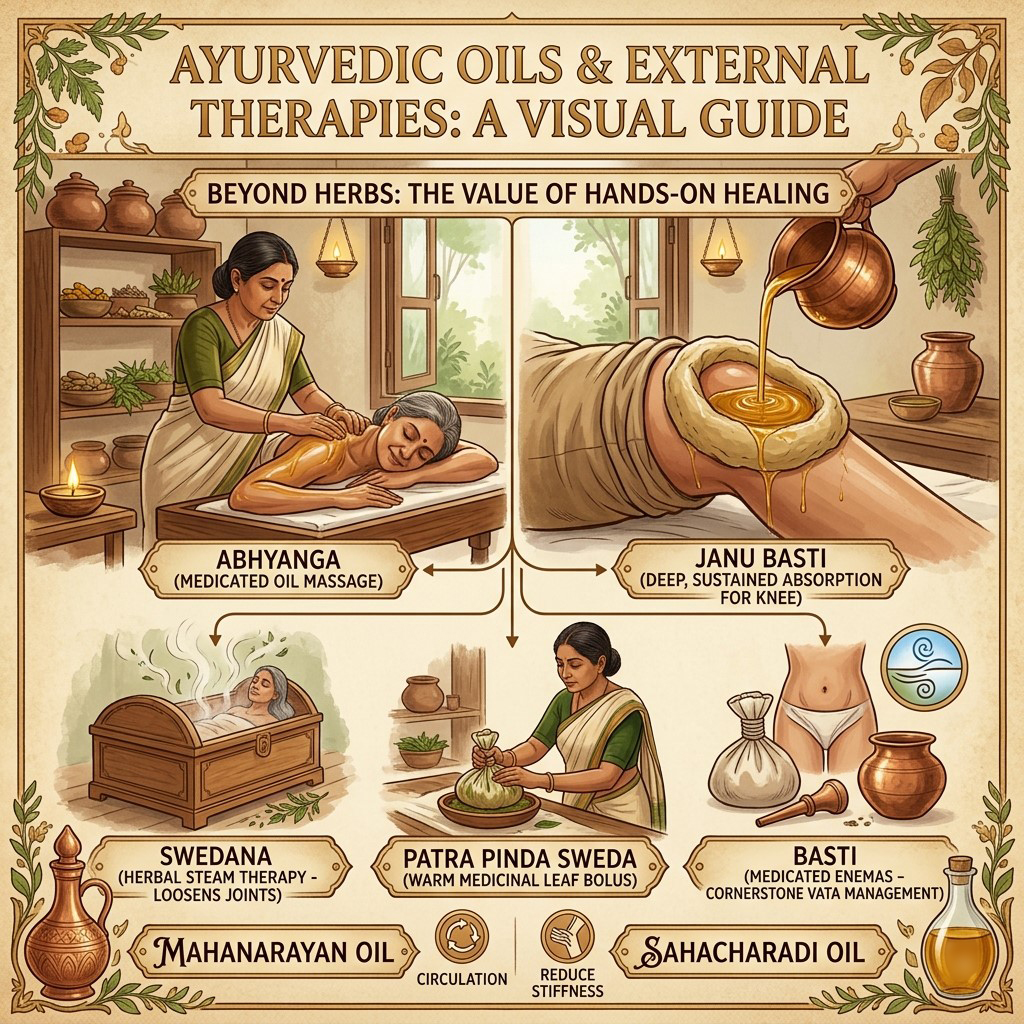
Beyond herbs, Ayurveda places enormous emphasis on external, hands-on therapies – many of which patients find as valuable as the medicines themselves.
- Abhyanga (Medicated Oil Massage): Warm herbal oils such as Mahanarayan or Sahacharadi oil are massaged into affected joints to improve circulation and reduce stiffness.
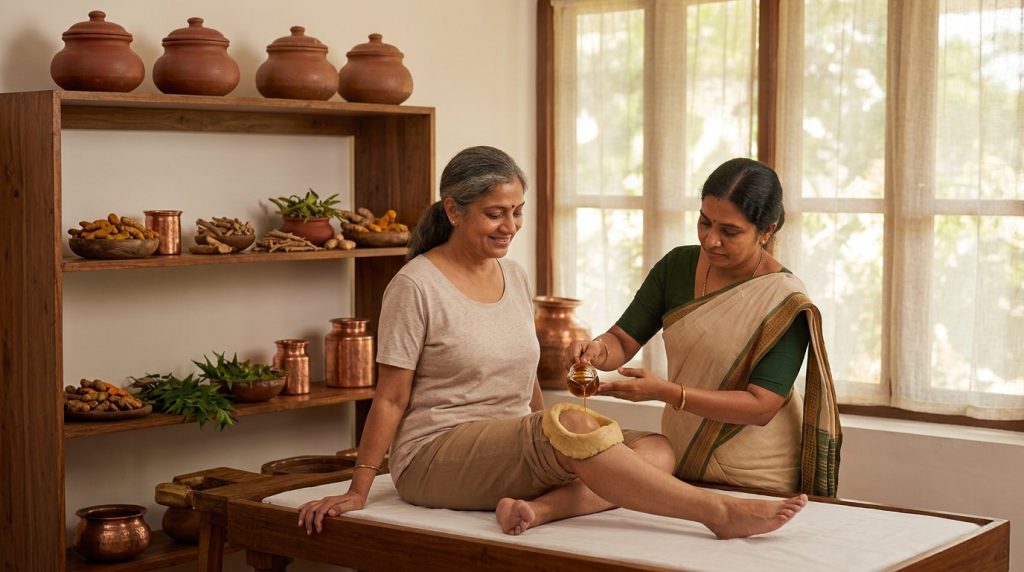
- Janu Basti (for knee pain): Warm medicated oil is pooled over the knee joint using a dam made of dough, allowing deep, sustained absorption – a therapy particularly popular for knee osteoarthritis.
- Swedana (Herbal Steam Therapy): Steam infused with anti-inflammatory herbs helps loosen stiff joints and muscles, usually performed after oil massage.
- Patra Pinda Sweda: A therapeutic massage using warm boluses (a small, rounded mass) of medicinal leaves, especially effective for swollen or painful joints.
- Basti (Medicated Enemas): Considered one of the most important treatments for Vata disorders, Basti therapy uses herbal decoctions and oils to balance Vata from within, and is a cornerstone of classical Sandhivata management.
These therapies are typically administered over a structured course of days or weeks at an Ayurvedic clinic, under professional supervision, rather than as one-off treatments.
[read my blog on Importance of regular massage for simple and scientific secret of healthy Longevity]
Diet and Lifestyle: The Ayurvedic Foundation
No Ayurvedic treatment plan is considered complete without dietary and lifestyle correction, since diet directly affects Agni (digestion) and Ama formation.
Generally recommended:
- Warm, cooked, easily digestible meals over cold or raw food
- Healthy fats such as ghee, which Ayurveda considers nourishing for joints
- Warming spices – ginger, cumin, turmeric, garlic, black pepper
- Adequate hydration with warm water throughout the day
Generally discouraged, especially during flare-ups:
- Excess cold, frozen, or leftover food
- Curd (yogurt) and heavy, hard-to-digest foods in Amavata
- Nightshade vegetables e.g. include tomatoes, potatoes (not sweet potatoes), eggplants (brinjal), bell peppers, and chili peppers for some patients who report sensitivity (this varies by individual and is not a universal Ayurvedic rule)
- Sedentary habits and irregular sleep, both of which aggravate Vata
Lifestyle practices such as gentle yoga (particularly joint-friendly asanas like Tadasana, Vrikshasana, and gentle Surya Namaskar variations), daily oil self-massage, and maintaining a consistent daily routine (Dinacharya) are all considered supportive for long-term joint health.
[read my blog on How to create an Ayurvedic routine for your lifestyle]
A Responsible Ayurvedic Treatment Plan
The most responsible approach combines Ayurvedic principles with evidence-based diagnosis and monitoring. An experience ayurveda practitioner may first identify the pattern of pain, assess digestion and lifestyle, examine the joints, and coordinate investigations or referrals when necessary.
For mild, established osteoarthritis, a plan might include gentle exercise, weight management when relevant, local oil massage, heat if comfortable, dietary improvements, and one carefully selected herbal product. Progress should be measured through walking ability, stiffness, sleep and daily lifestyle function.
Ayurvedic herbs may complement conventional treatment, but they should not be used to discontinue disease-modifying medicines for rheumatoid arthritis, prescribed gout treatment, or other essential therapies.
When Joint Pain Needs Medical Attention of a Doctor
Ayurvedic treatment should not delay medical evaluation when symptoms suggest a potentially serious condition.
Urgent assessment is particularly important when joint pain is accompanied by fever, significant redness or warmth, sudden severe swelling, unexplained weight loss, major trauma, inability to bear weight, or rapidly worsening symptoms.
Persistent morning stiffness involving several joints, especially when accompanied by swelling or fatigue, may also warrant evaluation for inflammatory arthritis.
The strongest model for modern Ayurvedic care is therefore not “Ayurveda versus conventional medicine.” It is appropriate diagnosis followed by evidence-informed, coordinated care.
Frequently Asked Questions Best Ayurvedic Treatments for Joint and Arthritis Pain
Ayurveda attributes most joint disorders to an imbalance in Vata dosha, which governs movement and is associated with dryness and cold. Conditions resembling osteoarthritis are often called Sandhivata, while rheumatoid-arthritis-like symptoms fall under Amavata, linked to the buildup of “ama” (toxins from poor digestion) combined with vitiated Vata.
Frequently mentioned herbs include:
- Ashwagandha – for general strength and reducing inflammation
- Guggul – used for its anti-inflammatory properties
- Shallaki (Boswellia serrata) – studied for joint support and mobility
- Turmeric (curcumin) – widely used for inflammation
- Nirgundi and Rasna – traditional pain-relief herbs
Panchakarma is Ayurveda’s detoxification protocol, often recommended for chronic joint issues. Common therapies include:
- Abhyanga (warm oil massage)
- Swedana (herbal steam therapy)
- Basti (medicated enemas, considered key for Vata disorders)
- Janu Basti or Greeva Basti (localized oil pooling on knees/neck)
Warm herbal oils like Mahanarayan oil or Dhanwantharam oil are used for external application to ease stiffness and improve circulation. Many people report symptomatic relief, though this is largely based on traditional uses.
Typically: warm, cooked, easily digestible foods; reduced intake of cold, raw, or processed foods; limiting nightshades (tomatoes, potatoes) for some Amavata cases; and adding warming spices like ginger and turmeric to support digestion (Agni), which Ayurveda considers central to preventing toxin buildup.
Many people use them together, but this should be discussed with both your doctor and an Ayurvedic practitioner. Some herbs can interact with medications (e.g., blood thinners, diabetes drugs), so combining treatments without guidance isn’t advisable.
Final Thoughts
Ayurvedic treatment for joint and arthritis pain is best understood as a personalized system involving herbs, external therapies, daily routine, nutrition, movement, and careful observation. Shallaki, turmeric, ginger, ashwagandha, Guduchi, and Guggulu may have traditional or emerging research relevance, but none should be considered universally safe or guaranteed to cure arthritis.
A qualified Ayurvedic physician can help distinguish appropriate supportive care from delayed diagnosis, unsafe self-medication, or contaminated products. The goal should be better movement, reduced pain, preserved independence, and long-term safety-not simply a label of “natural” treatment.
Medical Disclaimer:
This article is for educational purposes and does not replace diagnosis or individualized medical advice. Anyone with persistent, severe, inflammatory, or unexplained joint pain should consult a qualified healthcare professional or Ayurveda Physician. However, arthritis is not one disease, and Ayurvedic treatment should not replace appropriate diagnosis or emergency medical care.
Share this post: