Migraine is one of the most common neurological disorders that has a major negative influence on productivity loss and quality of daily life. The disorder is higher in women than men. In India, migraine is 25%; higher than the global percentage of 15%.
Migraine is more than an a “bad headache”. It is a neurological disorder that may cause one-sided throbbing pain or pulsating head pain, nausea, vomiting, sensitivity to light and sound, and sometimes visual or sensory disturbances known as aura. For many people, attacks interfere with work, family life, sleep and emotional wellbeing.
Modern medicine manages migraine well with painkillers and preventive drugs, but many patients keep coming back to Ayurveda looking for something different and long-lasting: an explanation for why the migraine keeps returning, and a way to reduce how often it strikes, not just numb the pain when it does.
Migraine in Ayurveda
Ayurveda approaches migraine through the classical condition known as Ardhavabhedaka, a disorder traditionally associated with severe, often one-sided pain affecting the head, temples, eyes or forehead. Ayurvedic care generally aims to identify the individual’s constitution, possible dosha involvement, digestive health, sleep pattern, stress level, diet and environmental triggers.
How Ayurveda Understands Migraine
In Ayurvedic theory, migraine-like symptoms may involve an imbalance of Vata dosha, Pitta dosha or both. Vata is traditionally associated with movement, nerve activity and pain, while Pitta is associated with heat, metabolism, inflammation and sensitivity.
A Vata-dominant pattern may include:
- Throbbing or variable pain.
- Headache triggered by irregular meals, poor sleep, travel or mental overwork.
- Anxiety, constipation, dryness or restlessness.
- Relief from warmth, quiet and regular routines.
A Pitta-dominant pattern may include:
- Burning, intense or sharp pain.
- Sensitivity to sunlight, heat, alcohol or spicy foods.
- Irritability, nausea, acidity or a feeling of heat in the body.
- Relief from cooling, darkness and rest.
This classification is part of the Ayurvedic framework, not a substitute for modern neurological diagnosis. Migraine has complex biological mechanisms involving the brain, trigeminal nerve pathways and blood vessels. Therefore, a sound integrative plan should respect both traditional assessment and contemporary medical evaluation.
An Ayurvedic practitioner may also examine digestion, known in Ayurveda as Agni. Irregular eating, indigestion, constipation and excessive intake of processed foods are traditionally considered contributors to systemic imbalance. Modern migraine care similarly recognises skipped meals, dehydration, sleep disruption and stress as common triggers.
[read my blog on Best Ayurveda Management and Care for Trigeminal Neuralgia]
Ayurvedic Herbs for Migraine
Several herbs are traditionally used in Ayurvedic practice for headache, stress, digestion and nervous-system support. Their usefulness can vary considerably according to the preparation, dose, quality and the individual’s health condition.
Ginger
Ginger, or Zingiber officinale, is one of the more practical herbs for migraine-associated nausea. It may also have anti-inflammatory and pain-modulating properties. Some modern reviews report favourable effects from ginger supplementation.
Ginger may be consumed as a mild tea or incorporated into food. Concentrated extracts can cause heartburn, stomach irritation or an increased tendency to bleed in susceptible people. Individuals taking warfarin, antiplatelet medicines or medicines for diabetes should seek professional advice before using medicinal doses.
Brahmi
Brahmi commonly refers to Bacopa monnieri, although the name is sometimes used for other plants in commercial products. In Ayurveda, it is traditionally associated with memory, mental calmness and nervous-system support. It may be considered when stress, mental fatigue or poor sleep appear to aggravate migraine. Brahmi can also cause digestive symptoms and may interact with sedative medicines or thyroid-related treatment.
Peppermint
Used topically, diluted in oil and applied to the temples and forehead; some clinical research has looked at topical peppermint oil for tension-type headache with encouraging results.
Ashwagandha
Ashwagandha, or Withania somnifera, is traditionally used as a rejuvenative herb and for stress resilience. It is not an established acute treatment for a migraine attack. Some practitioners may consider it when persistent stress, fatigue or poor sleep are prominent triggers.
Ashwagandha is not appropriate for everyone. It may be unsuitable during pregnancy, in some thyroid disorders, autoimmune conditions or liver disease, and it may interact with sedatives, immunosuppressants and other medicines.
Shankhpushpi (Convolvulus pluricaulis)
Used to calm the mind and support memory; often combined with Brahmi in nervine (a medicinal plant or pharmaceutical agent) formulations.
Coriander and cooling herbs
Coriander, fennel and certain cooling preparations may be used in Ayurvedic routines when headaches appear associated with heat, acidity or excess sun exposure. These may support hydration and digestion, but they should not be presented as proven migraine treatment.
Feverfew (Tanacetum parthenium)
Feverfew is not a central classical Ayurvedic herb, but it is often discussed in natural migraine care. Research findings are mixed. Feverfew may cause nausea, digestive discomfort or bloating. It may also be unsuitable for people with allergies to daisy-family plants or those taking blood-thinning medicines.
Jatamansi (Nardostachys jatamansi)
Known as a natural nerve tonic and mild sedative, traditionally used to soothe the nervous system and improve sleep, which in turn can reduce migraine frequency.
Butterbur (Petasites hybridus)
Butterbur has been studied for migraine prevention, but raw or inadequately processed butterbur can contain pyrrolizidine alkaloids, which are toxic to the liver it’s a major safety warning.
These herbs are rarely given as single supplements in classical practice. More often, they’re combined into formulations such as Sitopaladi Churna, Brahmyadi Churna, or tablets like Shirashoolari Vati, which are specifically indicated for Shirashoola and Ardhavabhedaka. A qualified Ayurvedic physician will select and dose these based on your dosha pattern, digestive strength, and any other health conditions – self-prescribing herbo-mineral formulations is not advisable, since some contain purified metals or minerals (bhasmas) that require professional preparation and supervision.
Ayurvedic Therapies for Relief
For chronic or severe migraines, Ayurvedic practitioners often recommend structured therapies, especially Panchakarma, a comprehensive detoxification process.
Panchakarma (Detoxification): This aims to purify the body and remove toxins that may be contributing to migraines. Specific therapies within Panchakarma include:
- Nasya
Nasya involves administering medicated oil or another preparation through the nose. In traditional Ayurveda, the nose is described as an important route for therapies affecting the head. Some Ayurvedic studies have reported symptom improvement. Nasya should be performed only under guidance from a trained professional. It may be inappropriate during an acute respiratory infection, nasal obstruction, recent nasal surgery or certain medical conditions. Oils should not be forcefully inhaled, particularly in children.
- Shirodhara
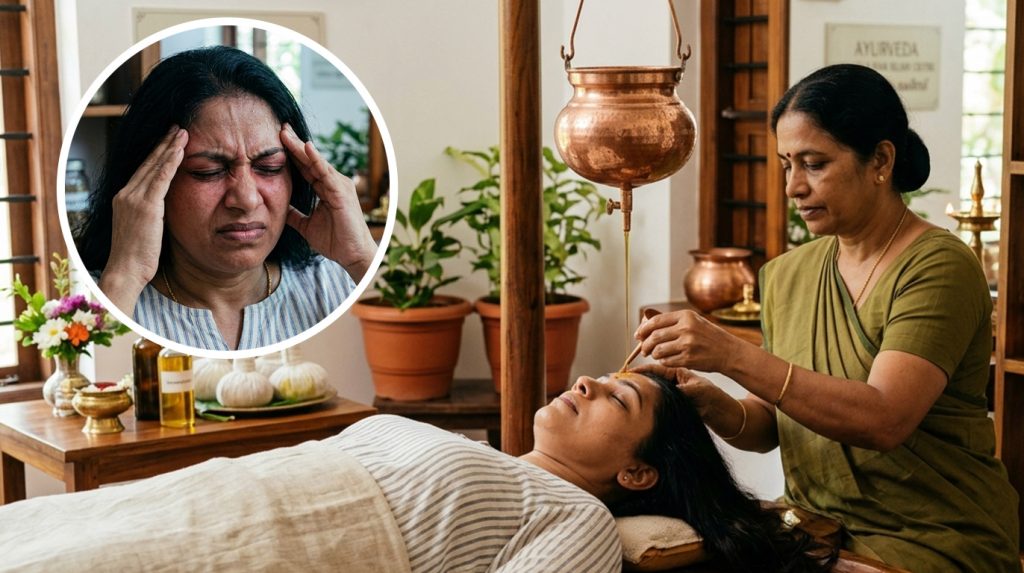
Shirodhara involves gently pouring a continuous stream of oil or another liquid over the forehead. It is often used to promote relaxation and may be considered when stress and sleep disturbance contribute to migraine. Its likely value may relate more to relaxation and autonomic calming than to a proven disease-modifying effect. A therapist should check for oil allergies, scalp conditions, dizziness and discomfort. Shirodhara should not delay evaluation of a new, severe or unusual headache.
- Abhyanga and gentle massage
Warm oil massage of the scalp, neck and shoulders may help some individuals relax muscle tension and establish a calming routine. Pressure should remain gentle because vigorous neck manipulation can be unsafe. Massage is best avoided over inflamed skin, injuries or areas of infection.
- Shirolepa
A cooling herbal paste applied to the forehead, mainly used for Pitta-type, heat-aggravated headaches.
Shirovasti
Medicated oil is retained on the scalp using a fitted cap, intended to calm Vata and reduce stress-related tension.
Virechana
A supervised purgation therapy aimed at clearing excess Pitta from the system; used more for chronic, recurrent migraine as part of a broader detoxification protocol rather than for acute relief.
Agnikarma
A precise, therapeutic heat-cautery technique sometimes used as a counter-irritant for stubborn cases, always performed by a trained practitioner.

Daily Diet and Lifestyle Routine
Ayurvedic migraine care often places strong emphasis on Dinacharya, or a consistent daily routine. Practical measures may include:
- Regular meal and sleep timings – irregular routines are considered a major aggravator of Vata and a common migraine trigger in both Ayurvedic and modern medicine.
- Drinking sufficient water, especially in hot climates.
- Adequate hydration and warm herbal teas, such as ginger or fennel tea, to support digestion gently.
- Maintaining consistent sleep and wake times.
- Limiting individually identified triggers such as alcohol, dehydration, intense heat or excessive caffeine.
- Avoiding known dietary triggers – for Pitta-type migraine, this often means cutting back on excessively spicy, fried, sour, or fermented foods, and reducing direct sun exposure during peak afternoon.
- Taking breaks from prolonged screen exposure.
- Practising gentle yoga, breathing exercises or meditation.
- Keeping a headache diary to record food, sleep, menstruation, stress, weather, medication use and symptoms.
A headache diary can reveal patterns that are missed during a consultation. It can also help distinguish a presumed food trigger from coincidence. Restrictive diets should be avoided unless a qualified clinician identifies a genuine need.
[read my blog on How to create an Ayurvedic routine for your lifestyle]
When Medical Care Is Urgent
Ayurvedic self-care is not appropriate for every headache. Urgent medical evaluation is needed for a sudden “thunderclap” headache, a new neurological deficit, fainting, confusion, seizures, fever with neck stiffness, a headache after head injury, a progressive change in an established pattern, or a new headache during late pregnancy or the postpartum period. Headache guidelines also flag new headaches after age 50, headaches triggered by exertion or coughing, and headaches associated with cancer or impaired immunity.
A person experiencing frequent attacks, persistent vomiting, medication-overuse headaches or significant disability should consult a physician or neurologist. Ayurvedic care may be used as a complementary approach after serious causes have been excluded and the treatment plan has been coordinated.
Ayurvedic Medicines and Formulations
Ayurvedic practitioners may prescribe formulations such as Pathyadi Kashaya, Brahmi Ghrita, Ksheerabala Taila or other preparations according to the patient’s symptoms and assessment. Some small clinical studies and reviews have reported improvements with interventions including Nasya, Shirodhara and selected herbal formulations. Note: A formulation should never be selected solely because it appears in an online article. The same process may be unsuitable for someone with pregnancy, hypertension, liver disease, kidney disease, gastritis, epilepsy or multiple prescription medicines. Particular caution is needed with products containing bhasma, rasa or mineral ingredients.A Balanced Approach
Ayurveda may offer useful support for some people with migraine, particularly through regular routines, stress reduction, gentle therapies, dietary consistency and carefully selected herbs. Yet “natural” does not automatically mean safe, and promising traditional use is not the same as high-quality clinical proof.
The most responsible approach combines an accurate diagnosis, a migraine diary, evidence-based medical options and personalised Ayurvedic supervision. Herbs should be sourced from reputable manufacturers, checked for interactions and stopped if adverse effects appear. With that balance, Ayurveda can contribute to migraine relief without encouraging false promises or avoidable risks.
Frequently Asked Questions on Ayurveda for Migraine Treatment and Relief
Ayurveda may help manage migraine symptoms by focusing on diet, daily routines, stress reduction, sleep, digestion, and individualized therapies. Some people use Ayurvedic practices such as yoga, meditation, oil massage, and herbal preparations as complementary support. However, Ayurveda should not replace a medical diagnosis or prescribed migraine treatment.
In Ayurveda, migraine-like symptoms may be associated with an imbalance of the doshas, particularly Vata and Pitta, along with factors such as poor digestion, irregular sleep, stress, dehydration, excessive screen exposure, and exposure to strong light or odors. The exact approach depends on the person’s symptoms, constitution, triggers, and overall health.
Depending on individual assessment, Ayurvedic practitioners may recommend:
- Regular sleep and meal timings.
- Adequate hydration and avoidance of prolonged fasting.
- Gentle head or foot massage with a suitable oil.
- Relaxation practices, meditation, and breathing exercises.
- Yoga focused on relaxation and neck, shoulder, and posture awareness.
- Dietary adjustments based on personal migraine triggers.
- Specific Ayurvedic herbs or formulations prescribed by a qualified practitioner.
Herbal medicines should be used cautiously because their safety, dosage, purity, and interactions with prescription medicines can vary.
Migraine triggers differ from person to person. Commonly reported triggers include alcohol, excessive caffeine, aged or processed foods, artificial sweeteners, skipped meals, dehydration, and foods containing additives. Ayurveda may also recommend reducing foods that appear to aggravate an individual’s symptoms, such as very spicy, oily, sour, or heavily processed foods. Keeping a food and symptom diary can help identify personal patterns.
Oil massage and selected Ayurvedic therapies may promote relaxation and may help some people manage stress-related symptoms. However, there is not enough reliable evidence to claim that they cure migraine. Panchakarma should only be undertaken after an individualized assessment by a qualified Ayurvedic physician, particularly if the person is pregnant, elderly, taking medication, or has another medical condition.
Some Ayurvedic practices, such as relaxation techniques, regular sleep, and gentle massage, may be used alongside conventional care. However, herbs and mineral-based preparations can interact with migraine medicines or other drugs, and some untested products may contain contaminants or undeclared ingredients. Inform both your physician and Ayurvedic practitioner about every medicine and supplement you use.
Seek urgent medical care for a sudden, extremely severe headache; a headache after a head injury; weakness, numbness, confusion, fainting, seizures, vision loss, fever, stiff neck, or difficulty speaking. Medical evaluation is also important when headaches are new, progressively worsening, unusually frequent, or significantly different from previous migraine attacks.
Final Thoughts
Ayurveda offers a thoughtful, personalized, and often genuinely helpful approach for managing migraine, especially for prevention, lifestyle correction, and reducing frequency over time. If you experience a sudden, severe headache unlike any before, a headache with fever, stiff neck, confusion, vision loss, or weakness, or a change in your usual headache pattern, seek emergency medical care immediately. For every day, recurrent migraine, working with a qualified Ayurvedic physician alongside your regular doctor – rather than instead of them – tends to give the best of both worlds: symptom control when you need it, and a long-term plan to reduce how often you need it at all.
Medical Disclaimer:
This article is for general educational purposes and does not replace personalized medical advice. Please consult a qualified Ayurvedic physician and your primary healthcare provider before starting any new herb, formulation, or therapy, particularly if you are pregnant, nursing, or taking other medications.
Share this post: