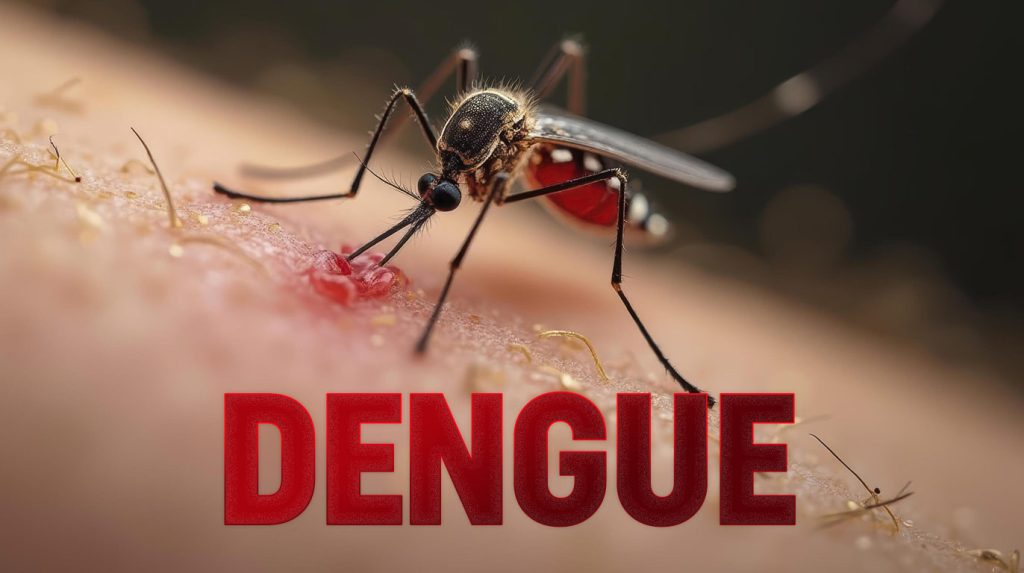
What Is Dengue Fever? Symptoms, Stages & Recovery Timeline
Dengue fever can be approached in Ayurveda by treating it as a “Sannipatik Jwara” – an aggressive, multi-humor fever historically described as Raktastheevi Jwara, whose signs closely resemble modern dengue and hemorrhagic fevers. Ayurveda describes this condition as arising from an excess of vitiated Pitta – comparable to a surge of inflammatory cytokines – circulated rapidly through the body by disturbed Vata. Ayurvedic management focuses on cooling this vitiated Pitta, hydrating the body, and supporting marrow and platelet function through diet and specific herbs, always alongside, not instead of, standard medical monitoring for platelet counts and plasma leakage.
Raktashtheevi Jwara whose signs & symptoms are written in Sanskrit as follows:
निष्ठीवो रुधिरस्य रक्त सदृशं कृष्णं तनौमण्डलं
लौहित्यं नयने तृषारुचि वमि श्वासातिसारभ्रमा:
आध्मानञ्च विसंज्ञता च पतनं हिक्कांगं पीडाभृशं
रक्तष्ठीविनि सन्निपात जनिते लिंग ज्वरे जायते
।। भाव प्रकाश- ज्वर रोग – 1/574
In Raktashtheevi Jwara (fever) patients presents with Direct Meaning
“When a patient suffers from Sannipata Jwara (a severe fever caused by the vitiation of all three biological mismanaged -Vata, Pitta, and Kapha doshas) with Raktasthivini (blood-spitting/hemoptysis), the following symptoms manifest: spitting of bright red or dark blood, dark circular patches on the skin, redness in the eyes, excessive thirst, vomiting, breathlessness, diarrhea, vertigo, abdominal distension, loss of consciousness, fainting, hiccups, and intense body aches.“
– Bhava Prakasha, fever and disease – 1/574
The Word-by-Word Symptom Breakdown English translation & meaning of this verse is as follows & has got distinct similarities with today’s Dengue fevers:
- निष्ठीवो रुधिरस्य रक्त सदृशं (Nishthivo rudhirasya rakta sadrisham): Spitting or coughing up blood that looks bright red.
- कृष्णं तनौमण्डलं (Krishnam tanoumandalam): Appearance of dark or blackish circular patches/spots on the body (petechiae or ecchymosis).
- लौहित्यं नयने (Lauhityam nayane): Redness or bloodshot eyes.
- तृषारुचि वमि (Trisha-aruchi vami): Intense thirst (Trisha), loss of appetite/taste (Aruchi), and vomiting (Vami).
- श्वासातिसारभ्रमा: (Shwasa-atisara-bhramah): Difficulty breathing (Shwasa), diarrhea (Atisara), and dizziness or vertigo (Bhrama).
- आध्मानञ्च विसंज्ञता च (Aadhmanancha visangyata cha): Abdominal distension/bloating (Aadhmana) and loss of consciousness or delirium (Visangyata).
- पतनं हिक्कांगं पीडाभृशं (Patanam hikkangam peedabhrisham): Fainting/collapsing (Patana), hiccups (Hikka), and severe pain all over the body (Anga peeda bhrisham).
- रक्तष्ठीविनि सन्निपात जनिते लिंग ज्वरे जायते: These are the clinical features (Linga) that arise (Jayate) during a severe typhoid-like or hemorrhagic fever (Sannipata Jwara) characterized by the spitting of blood (Raktasthivini).
What Is Raktastheevi Jwara? The Ayurvedic View of Dengue
Classical Ayurvedic texts describe thirteen categories of special or “Sannipatik” fevers considered especially dangerous, requiring a vigilant physician who can recognize them early. One of these, Raktashtheevi Jwara, is described in Sanskrit with signs and symptoms that are strikingly similar to modern dengue or even hemorrhagic fevers like Ebola.
This isn’t presented as a coincidence – supporters argue it as a reason to revisit these formulations as leads for modern drug discovery, not as validated cures in themselves. Ayurveda has historically been a source for several important modern drugs: antimalarials like artemether and quinine, cardiac drugs like digoxin and atropine, the diabetes medication metformin (whose roots trace to the plant Galega officinalis), the antihypertensive reserpine (from Rauwolfia serpentina), and cancer drugs including Taxol, vincristine, and podophyllotoxin all originated from plant sources.
The Pitta-Vata Framework, in Plain Terms
| Ayurvedic Concept | Modern Correlate | What It Explains |
| Vitiated Pitta | Surge of pro-inflammatory cytokines | High fever, capillary damage, bleeding tendency |
| Vitiated Vata | Circulatory/ kinetic disturbance | Rapid spread of inflammation, severe body pain |
| Pitta affecting eyes / brain | Neuro-ocular involvement | Retro-orbital pain, headache, drowsiness |
| Pitta affecting gastrointestinal (GI) tract | Reduced digestive secretions | Nausea, vomiting, loose motions, dehydration, excessive thirst |
The Core Goals of Ayurvedic Dengue Management
Traditional protocols organize treatment around six goals:
- Control the fever
- Detoxify vitiated Pitta and Vata to reduce inflammatory burden
- Restore hydration as fluid is drawn out by internal heat
- Stop active bleeding
- Prevent further haemorrhagic complications
- Support longer-term immunity against future episodes
These goals mirror, in traditional language, what modern dengue management also prioritizes: fever control, hydration, and close monitoring for bleeding or plasma leakage – which is exactly why Ayurvedic and allopathic care are best used together.
Ayurvedic Diet for Dengue: What to Eat and What to Avoid
Diet is treated as central to recovery – the goal is food that is light, nourishing, and doesn’t further aggravate Pitta or Vata.
| Avoid | Why | Eat Instead |
| Spicy, oily, fried, stale food; pickles, garam masala, garlic, ginger, black pepper | Aggravates Pitta and inflammation | Khakra, ragi/ jowar puffs, upma, dosa, idli, wheat/ ragi/ jowar porridge |
| Maida/ flour -based foods – bread, pav, biscuits, pizza, burgers; cold drinks | Considered inflammatory and non-nourishing | Moong daal khichadi with rice |
| Toor daal (arhar daal) | Believed to increase Pitta | Moong daal (green or yellow) – believed to reduce Pitta and Vata |
| Frequent snacking / binge eating | Burdens digestive “fire,” increasing free-radical load | Small, spaced, light meals |
Safe supportive care for Dengue Treatment
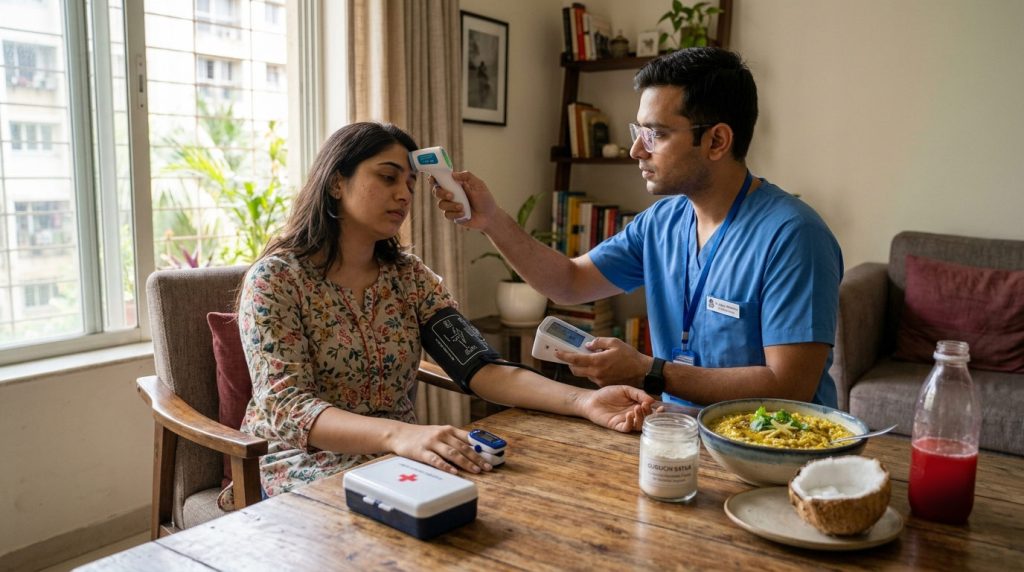
- Hydration: Take frequent small sips of water, oral rehydration solution, coconut water, clear soups, rice water, fresh lime juice, rose sharbat, and pomegranate juice or other electrolyte-containing fluids. If vomiting or diarrhoea prevents drinking, seek medical care. Supportive care and hydration are central to dengue management. Black raisins, roughly 20–25 per day, are suggested as an additional way to support hydration, vitals, and energy levels. Vegetable soups – bottle gourd, carrot, and beetroot – are also traditionally used to help pacify Pitta and Vata.
- Rest: Avoid exercise, strenuous work, travel, alcohol, and unnecessary massage.
- Fever relief: Use paracetamol/acetaminophen only as directed by a clinician. Do not exceed the recommended dose, and do not combine multiple products containing paracetamol because overdose can injure the liver.
- Avoid bleeding-risk medicines: Do not use aspirin, ibuprofen, diclofenac, naproxen, mefenamic acid, or other NSAIDs unless a doctor specifically instructs you. These can increase bleeding and other complications in dengue.
- Monitoring: Track temperature, fluid intake, urination, vomiting, bleeding, alertness, and laboratory results if advised. A falling fever does not always mean recovery; deterioration may occur around the time the fever subsides.
Key Ayurvedic Herbs Traditionally Used in Dengue Management
| Herb / Formulation | Traditional Source | Traditional Role |
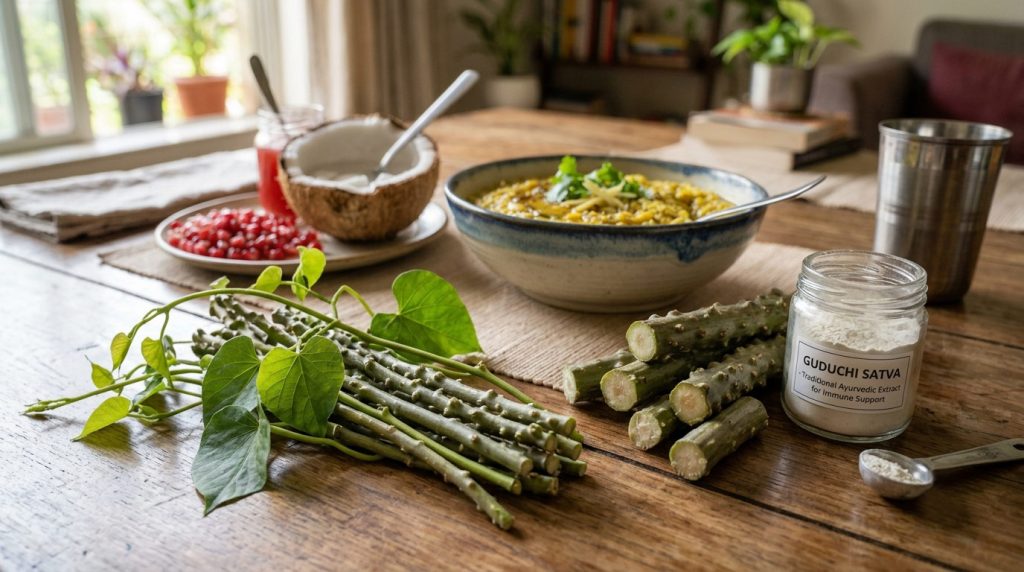
| Guduchi Satva (from Tinospora cordifolia stems) | Ayurvedic pharmacology | Believed to support marrow function and phagocytosis; used as a gentle anti-inflammatory, analgesic, and antipyretic |
| Paripathadi Kashayam | Classical poly-herbal decoction | Traditionally used across viral illnesses including measles, chickenpox, and herpes |
| Nagkeshar, Durva, Mochrasa, Adulsa (combination) | Classical herbal preparation | Traditionally used to help control bleeding tendencies |
| Aqueous extract of Albizia lebbek (Shirish) | Classical herbal tablet | Traditionally used to reduce itching without suppressing marrow function |
| Medicated cooling water (red sandalwood, khas, bilva, coriander seeds, pomegranate powders) | Classical formulation | Used for cooling and to support hydration and reduce bleeding tendency |
| Rose water sponging | External application | Traditionally used to help bring down fever and body heat |
⚠️ Important:
These formulations, dosages, and preparations should only be taken under the direct guidance of a registered Ayurvedic physician who is aware of the patient’s platelet count, hydration status, and any co-existing conditions. Self-medicating with any of these during an active dengue infection is not recommended.
“Quinine, digoxin, metformin, and Taxol it all started as plants. Ayurveda’s oldest fever texts describe dengue-like bleeding fevers centuries before the virus had a name – the real opportunity isn’t choosing between old and new medicine; it’s making them talk to each other.”
Papaya Leaf Juice for Dengue: What the Evidence Actually Shows
Papaya leaf juice is the most widely searched platelet count increase home remedy for dengue, and it deserves a straight answer rather than a repeat of internet legends: the evidence is real but genuinely mixed, not settled.
- A 2013 open-label randomized controlled trial of 228 dengue patients found a statistically significant faster rise in platelet count in the group given Carica papaya leaf juice, alongside gene-expression changes in ALOX12 and PTAFR linked to platelet production.
- A separate, more rigorously blinded placebo-controlled trial (the PLEAD trial) found no significant difference in platelet counts between the papaya leaf extract group and the placebo group.
- A 2019 systematic review and meta-analysis pooling nine controlled trials found that most studies showed an increase in platelet counts with papaya leaf extract, and some evidence of a shorter hospital stay, but rated the overall quality of evidence as low and concluded there isn’t yet enough data to confirm its role in dengue treatment.
- Researchers reviewing this body of evidence consistently flag the same problem: studies vary in leaf preparation, dosing, and patient population, and almost none measure the outcomes that actually matter – plasma leakage, shock, or death – focusing on platelet numbers alone.
What this means practically: papaya leaf juice appears reasonably safe in the doses studied and may modestly speed up platelet recovery in some patients, but it should never be treated as a way to avoid hospital monitoring, and it hasn’t been shown to prevent the complications that make dengue dangerous in the first place. If you or your doctor decides to try it, it’s an addition to standard care and platelet monitoring – not a replacement for either.
Dengue Warning Signs – A Day-by-Day Guide to the Critical Phase and Seek Emergency Care
This is the single most important section of this article, and it isn’t optional in any responsible discussion of dengue management – Ayurvedic or otherwise. Dengue can progress from mild to severe (dengue hemorrhagic fever / dengue shock syndrome) within hours, particularly between days 3–7 of illness.
Seek immediate medical attention if you or someone, you’re caring for experiences any of the following:
- Severe abdominal pain or persistent vomiting
- Bleeding from gums, nose, or blood in vomit/stool
- Cold, clammy skin or restlessness/lethargy
- Difficulty in breathing
- Rapid drop in platelet count in blood report or on lab monitoring
- Fever that suddenly drops alongside worsening symptoms (this can signal the critical phase, not recovery)
No herb, decoction, or dietary change described in this article is a substitute for hospital-based fluid and platelet monitoring once any of these signs appear.
Frequently Asked Questions on Dengue Treatment in Ayurveda
They aren’t necessarily different diseases – Raktastheevi Jwara is a classical Ayurvedic description whose symptom pattern closely resembles dengue and other hemorrhagic fevers, described centuries before the dengue virus was identified. The frameworks describe the same clinical picture through different systems of medicine.
No. Ayurvedic diet and herbs are traditionally used to support hydration, comfort, and recovery, but dengue requires medical diagnosis and monitoring – particularly of platelet counts and plasma leakage – that only a doctor can provide.
Guduchi is traditionally used to support marrow function and reduce inflammation, but it should only be taken in the form, dose, and duration advised by a qualified Ayurvedic physician who knows your platelet count and overall condition.
Spicy, oily, fried, and processed foods, along with maida/flour -based products and cold drinks, are traditionally avoided as they’re believed to increase inflammation; light, easily digestible foods like khichadi and porridge are preferred instead.
Immediately, if you notice bleeding, severe abdominal pain, breathing difficulty, cold/clammy skin, or a sudden fever drop with worsening symptoms – these can indicate the critical phase of dengue, which requires emergency monitoring.
Next Step
If you or a family member has been diagnosed with dengue, the safest path is to combine standard medical monitoring with Ayurvedic support under the guidance of both your treating physician and a qualified Ayurvedic doctor – not one instead of the other.
Medical Disclaimer:
“This article is for educational purposes only and does not replace diagnosis or treatment by a qualified doctor. Dengue fever can become life-threatening within hours. Any Ayurvedic approach described here should only be used as a physician-supervised complement to standard medical monitoring – never as a substitute for it, and never if warning signs are present.”
Share this post: