The baby is here, the congratulations have quieted, and a mother is sitting in a body that has just done one of the hardest things a body can do. She may be bleeding, stitched, sore, leaking milk and surviving on fragments of sleep. Somewhere between a grandmother’s advice and a social media feed, she has heard that Ayurveda has a lot to say about this stage. It does.
Rather than “bouncing back,” the classical approach is about rebuilding: warming, oiling, feeding, resting and protecting the new mother so her strength returns steadily.
This guide explains that approach as Ayurvedic physicians describe it, including the herbs and formulations used. It also says plainly where the evidence is thin and where caution is needed.
The Ancient Ayurveda Wisdom of Sutika Paricharya
The postpartum period (puerperium) is a critical recovery phase for new mothers, involving many physical and emotional adjustments. About 6-8 weeks (sometimes up to 6 months) are needed for the body to return to its pre-pregnancy state. Modern guidelines echo this, recommending follow-up visits within the first few days, at 6 weeks and beyond. Ayurveda offers a detailed care plan for this time, known as Sutika Paricharya. In Ayurvedic texts, a mother after childbirth is called a Sutika and is considered physically “empty” of vital fluids (she has lost blood, moisture and strength). The goal of Sutika Paricharya is to replenish depleted tissues and vitality. By following Ayurvedic postnatal regimens (involving diet, lifestyle and herbs), a woman can restore her strength (Bala) and health as if returning to her pre-pregnancy state.
In classical Ayurveda, postpartum care is described in terms of Ahara (food), Vihara (routine) and Aushadha (medicines) for the new mother. Key treatments include gentle oil massages, warm baths and special foods. For example, texts recommend giving snehana (medicated ghee or oil internally) and Yavagu (gruel made with barley, rice or milk) during the first few days. Later weeks introduce nourishing herbal soups and solid foods like rice cooked in ghee or lean meat broth. This phased diet and care plan helps gradually rebuild strength and nourish depleted tissues.
Ayurveda also lists “Pathya” (wholesome) and “Apathya” (unwholesome) practices for postnatal care. Pathya (what to do) includes: warm oil massages (abhyanga) and pouring lukewarm medicated water on the body, warm sitz baths, restful sleep and drinking boiled or herbal water. The diet should consist of nourishing, easily digestible foods that cleanse the uterus (garbhashayashodaka) and promote lactation (stanyakshipan). By contrast, Apathya (what to avoid) includes cold/raw foods and drinks, exposure to cold air, strenuous activity or heavy lifting, sensual intercourse, and excessive stress or grief. In short, new mothers are kept warm and well-rested, with simple warm foods and therapeutic oils to pacify the aggravated Vata dosha.
Sutika Paricharya vs. Garbhini Paricharya
These two terms are often confused online. Garbhini Paricharya is the month-by-month regimen for pregnancy. Sutika Paricharya is the care of the woman after delivery (Sutika, or Prasuti). The classical texts, including the Charaka Samhita, Sushruta Samhita and Ashtanga Hridaya, treat them as two connected chapters of one story. A well-supported pregnancy tends to make for an easier recovery, but the two treatments differ in goals, foods and therapies.
Why Ayurveda sees the Postpartum Body as Vulnerable
Childbirth involves blood loss, fluid loss and hours of intense physical work. In Ayurvedic language, this depletes the body’s tissues (dhatus), especially rasa (the nourishing fluid that includes plasma and milk precursors) and rakta (blood). It also aggravates Vata dosha, the principle of movement, which governs nerves, the colon, the joints and the mind.
The classical picture of excess Vata looks very familiar to new mothers: dryness, constipation, back and joint pain, light and broken sleep, anxiety, and weak appetite (mandagni, low digestive fire). The classical answer is the opposite of the qualities Vata carries. Care should be warm, moist, soft, heavy enough to nourish but light enough to digest, and calm.
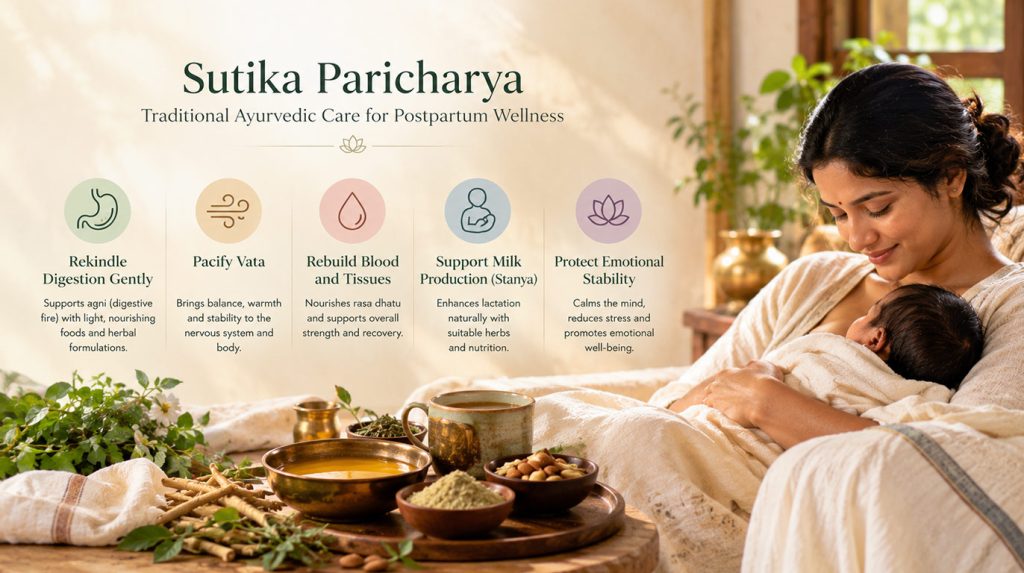
Sutika Paricharya therefore aims to:
- rekindle digestion gently
- pacify Vata
- rebuild blood and tissues
- support milk production (stanya)
- protect emotional stability
How Long Does Sutika Kala Last?
Most Ayurvedic clinicians describe about six weeks, or 45 days. That roughly matches the time lochia (postpartum discharge) takes to settle and the uterus takes to return toward its pre-pregnancy size. Some texts describe the Sutika state as lasting until menstruation returns, which varies widely, especially in breastfeeding mothers. In practice, a sensible clinician treats 45 days as the intensive phase and three to six months as the longer rebuilding period. A calendar does not decide recovery, but the mother’s actual condition does.
The Pillars of Sutika Paricharya
- Abhyanga: warm oil massage
Daily massage with warm medicated oil is the signature therapy. Oils commonly used include Bala taila, Ksheerabala taila, Dhanvantaram taila, Lakshadi taila and plain sesame oil (tila taila). The massage is traditionally followed by a warm bath. The water is often boiled with Dashamoola or Nirgundi (Vitex negundo) leaves.
The logic is that oil counters Vata’s dryness and roughness, while warmth eases muscle tension and promotes rest. Many mothers simply find it comforting, and that counts for something.
Cautions: Do not massage over a cesarean incision or episiotomy until it has healed and your doctor agrees. Patch-test any oil first, because some contain many herbs and a baby’s skin may react through contact. Avoid massaging the breasts with herbal oils right before feeding.
[read blog on Importance of regular massage for simple and scientific secret of healthy Longevity]
- Swedana and abdominal binding
Gentle warm fomentation (swedana) and a soft cloth wrap around the abdomen (udara bandhana) are used for comfort and support. It should never be tight, restrict breathing or be applied over a fresh cesarean wound without medical clearance.
- Ahara: the postpartum diet
Food is treated as the first medicine. The traditional sequence respects a weakened digestive fire. It starts light and warm, then builds richness as appetite returns.
First days: Thin gruels (peya, manda) of rice cooked with ginger, cumin and a little long pepper, and clear mudga yusha (moong dal soup).
As appetite returns: Soft rice and moong khichdi with ghee, cooked vegetables, and spices such as cumin (jeeraka), carom seeds (yavani), fennel or dill, turmeric and black pepper.
Rebuilding foods: Cow’s ghee in moderation, sesame, dates, soaked almonds, and warm milk. Some families use lasuna ksheerapaka (garlic simmered in milk), and some use dink or gond laddu made with edible gum, nuts and jaggery.
Traditionally avoided: Cold drinks, raw salads, leftovers, very dry or heavy food, and deliberate dieting or fasting.
Two honest cautions apply. First traditional postpartum foods can be heavy in sugar and fat, so a mother with gestational diabetes or other conditions needs an individualized plan. Second “avoid cold foods” is cultural wisdom, not a proven rule. Ayurveda’s emphasis on warm, easily digested meals. It should not be turned into a long list of anxious restrictions.
- Vishrama: rest and mind care
Rest, sleep when the baby sleeps, a warm and draft-free room, scalp oiling (shiro abhyanga), quiet company and limited visitors are all part of the regimen. Ayurveda recognized what modern medicine now calls “the fourth trimester” long before the phrase existed. A mother who is emotionally held tends to recover better, and that is the real heart of the tradition.
Ayurvedic Herbs for New Mothers
The herbs below are traditionally associated with postpartum care. Treat this as a list to discuss with a qualified practitioner, not a self-prescribed shopping list.
| Herb | Botanical name | Traditional use | Remarks |
| Shatavari | Asparagus racemosus | Nourishing tonic; milk support | Trials on supply are small and mixed |
| Methika (fenugreek) | Trigonella foenum-graecum | Milk support, digestion | May cause gas, lower blood sugar; rare infant reactions |
| Shunthi (dry ginger) | Zingiber officinale | Digestion, warmth, pain | Well-tolerated in food amounts |
| Pippali (long pepper) | Piper longum | Digestive fire, Vata, cough | Small amounts only |
| Jeeraka (cumin) | Cuminum cyminum | Digestion, gas | Common in food and water |
| Yavani (carom) | Trachyspermum ammi | Bloating, uterine comfort | Often cooked into meals |
| Shatapushpa (dill or fennel) | Anethum sowa / Foeniculum vulgare | Milk support, colic | Identity varies by text; food-level use |
| Dashamoola | Ten roots | Vata-calming, body aches | Decoction or arishta; physician-guided |
| Haridra (turmeric) | Curcuma longa | Healing, anti-inflammatory | In food or warm milk |
| Ashwagandha | Withania somnifera | Strength, stress | Breast-feeding safety data short |
Chronological Breakdown: A Phased Recovery Plan
Recovery does not happen all at once; it unfolds in distinct metabolic phases. Feeding a mother rich, heavy, building foods immediately after delivery will overload her fragile digestive fire, leading to indigestion and toxin build-up. Ayurveda divides the traditional 45-day post-delivery regimen into distinct chronological stages.
Phase 1:
Days 1 to 12 – Cleansing, Pain Management, and Digestive Ignition
The initial goal is to settle the abdominal cavity, clear remaining lochial discharge safely, relieve post-labor uterine contractions (Maccula Shula), and gently kindle Agni.
Key Clinical Interventions
- Snehapana & Deepana: Small, controlled amounts of warm, spiced clarified butter (Ghee) processed with Panchakola (a traditional digestive compound of Long Pepper, Long Pepper root, Wild Pepper, Ginger, and Plumbago zeylanica) are administered. This soothes Vata while gently reigniting digestion.
- Warm Medicated Waters: Drinking plain cold water is discouraged. Instead, water boiled with seeds like Jeeraka (Cumin) or Dhanyaka (Coriander) is served warm throughout the day. Cumin acts as a gentle uterine tonic, reducing spasms and dispelling intestinal gas.
- Gruels (Yagu): The primary dietary staples during this phase are liquid rice or millet gruels (Manda and Yagu) cooked with ginger, cumin, and small amounts of rock salt (Saindhava Lavana). These light foods require minimal digestive effort while providing immediate hydration and cellular energy.
Phase 2:
Days 13 to 28 – Tissue Nourishment and Uterine Toning
Once the digestive fire has stabilized and initial lochial discharge transitions naturally, the focus shifts from clearing space to rebuilding tissues (Dhatu Poshana) and toning the pelvic floor and uterine musculature.
Key Clinical Interventions
- Introduction of Semi-Solid Foods: Diets expand to include soft, warm Kitcharis (basmati rice cooked with split yellow mung dal), cooked root vegetables, and soups made from red lentils or long-simmered bone broths (traditionally recognized in classical texts as Mamsa Rasa for intense Vata pacification).
- Incorporation of Specific Oils: Cooking integrates high-quality sesame oil and pure cow’s ghee. Sesame oil is exceptionally grounding, penetrating deep into the tissues to pacify Vata.
- Abhyanga (Therapeutic Body Massage): Daily external application of warm, herb-infused oils begins in earnest, followed by gentle, warm water baths.
Phase 3:
Days 29 to 45+ – Systemic Rebuilding, Rejuvenation, and Lactation Reinforcement
In this final phase of the core Sutika period, the mother’s digestion is fully functional, and her tissues are ready for deep rejuvenation (Rasayana). The primary objectives are enhancing milk production, restoring muscle tone, and stabilizing mental clarity.
Key Clinical Interventions
- Nutritive Confections and Tonics: The mother transitions to traditional Ayurvedic nutritive pastes (Lehyams), herbal wines (Arishtas), and medicated powders cooked with jaggery, nuts, and galactagogue herbs.
- Return to Balanced Solid Diets: A wide array of nutrient-dense, warm, freshly cooked foods are restored, ensuring ample caloric intake to support full lactation without overburdening the metabolic system.
Classical Formulations Used After Delivery
Ayurvedic physicians may prescribe these under supervision:
- Dashamoola kwatha (decoction) and Dashamoolarishta: for body aches, uterine recovery and Vata balance. Arishtas are self-fermented and contain small amounts of alcohol, which matters when breastfeeding. Ask your physician about alternatives.
- Jeerakarishta and Jeerakadyarishta: cumin-based tonics for digestion and appetite.
- Saubhagya Shunthi: a ginger-based preparation traditionally used in the postpartum period.
- Panchakola preparations: a group of five pungent herbs (pippali, pippalimula, chavya, chitraka, shunthi) that classical texts describe in medicated ghee or oil in the early days. Chitraka (Plumbago zeylanica) is potent and should only be used by a skilled physician.
- Ashtavarga and Shatavari-based preparations: used for rebuilding and lactation.
A word of caution on metals and minerals: some Ayurvedic products (rasa shastra preparations, including bhasmas) deliberately contain processed metals. A widely cited 2008 study in JAMA found detectable lead, mercury or arsenic in roughly one in five Ayurvedic products bought online. For a breastfeeding mother, this is a reason to buy only from reputable, quality-tested manufacturers and to avoid any mineral preparation unless a physician specifically prescribes it.
[read blog on Maa, Mother and Mitochondria]
What Does the Research Actually Say?
Honest answer: promising, but limited. Warm, nourishing, easily digested food and gentle massage are low-risk and plausibly helpful. Studies of massage mostly involve babies, with less on maternal recovery. Reviews of herbal galactagogues, including shatavari and fenugreek, find small trials of mixed quality, so no firm conclusion is possible. Whether the full Sutika Paricharya improves recovery has not been established in large, well-designed trials.
That doesn’t make the tradition worthless. It means Ayurvedic postpartum care should be viewed as complementary to obstetric and pediatric care, never a replacement for it.
Modern Adaptations for Today’s Postpartum Mother
While the Ayurveda classical texts were written centuries ago, their physiological principles remain entirely relevant. Modern mothers do not need to move into an ancient retreat to practice Sutika Paricharya; the core principles adapt smoothly to contemporary lifestyle demands.| Herb | Botanical name | Traditional use |
| Shatavari | Asparagus racemosus | Nourishing tonic; milk support |
| Methika (fenugreek) | Trigonella foenum-graecum | Milk support, digestion |
| Shunthi (dry ginger) | Zingiber officinale | Digestion, warmth, pain |
| Pippali (long pepper) | Piper longum | Digestive fire, Vata, cough |
- Meal Prep and Slow Cookers
- Practical Belly Binding
- Simplified Daily Abhyanga
Safety First
- Tell your obstetrician, midwife (a trained health professional who cares for mothers and newborns during pregnancy, labor, birth, and the postpartum period) or pediatrician about every herb, oil and formulation you use.
- Introduce one new herb at a time, and watch both yourself and your baby for rash, gas, fussiness or changes in stool.
- Use products with clear ingredient lists and third-party testing.
- Keep updated antenatal and postnatal appointments.
Seek urgent medical care for: soaking a pad in an hour or less, fever, foul-smelling discharge, severe headache or vision changes, chest pain, breathlessness, a swollen painful leg, a wound that opens or oozes, or any thoughts of harming yourself or your baby. Sadness, anxiety or irritability that lasts beyond two weeks, or feels overwhelming sooner, may be postpartum depression. It is a medical condition that deserves professional help, and herbs and massage are not enough on their own.
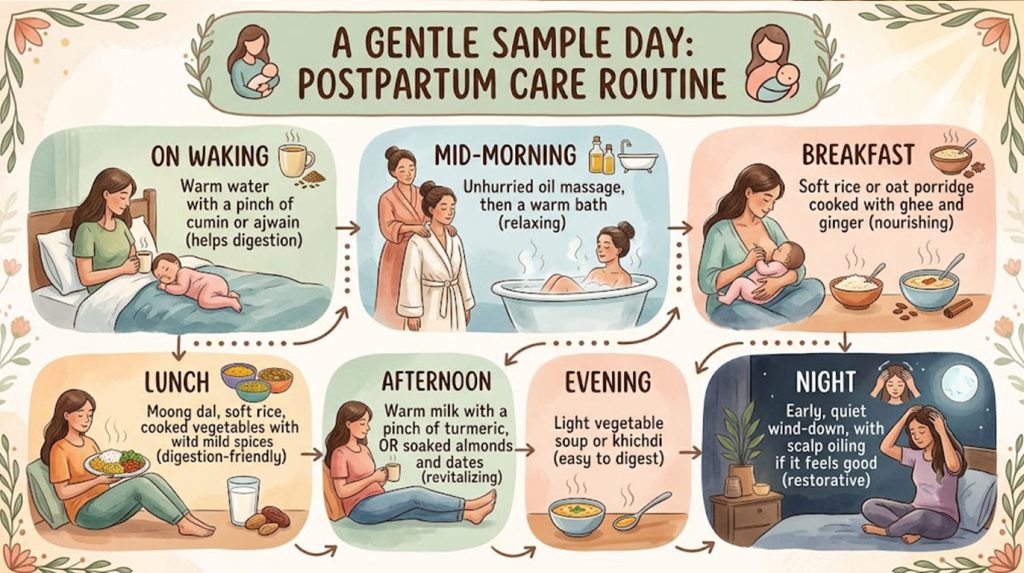
A Gentle Sample Day
- On waking: warm water with a pinch of cumin or ajwain
- Mid-morning: unhurried oil massage, then a warm bath
- Breakfast: soft rice or oat porridge cooked with ghee and ginger
- Lunch: moong dal, soft rice, cooked vegetables with mild spices
- Afternoon: warm milk with a pinch of turmeric, or soaked almonds and dates
- Evening: light vegetable soup or khichdi
- Night: early, quiet wind-down, with scalp oiling if it feels good
Adjust for your medical needs, culture and appetite. The point is warmth and rhythm, not perfection.
Frequently Asked Questions on Ayurveda Treatment for postpartum care
It is the traditional Indian medical practice of caring for a mother after birth. Ayurveda describes the postpartum period as Sutika Kala and provides detailed guidelines of diet, rest, therapies and emotional care to restore health after delivery traditionally followed for about 45 days.
No. Garbhini Paricharya covers pregnancy. Sutika Paricharya is Postpartum care.
Common ones include shatavari, fenugreek, ginger, long pepper, cumin, ajwain, fennel or dill, turmeric and Dashamoola. Use them under professional guidance.
Usually yes, in a modified form. Avoid massage and binding near the incision until your surgeon approves, and focus on rest, gentle meals and walking as advised.
Safety data are insufficient, so many clinicians advise caution. Ask your doctor first.
It is the traditional Indian medical practice of caring for a mother after birth. Ayurveda describes the postpartum period as Sutika Kala and provides detailed guidelines of diet, rest, therapies and emotional care to restore health after delivery traditionally followed for about 45 days.
Light, warm food and rest can begin immediately. Massage and other therapies begin once you are medically stable and your care team agrees.
No. Use it alongside standard care.
A postpartum diet emphasizes galactagogue foods: warm milk with ghee, barley or rice porridge, and herbal tonics. Shatavari is a prime example: clinical research showed it significantly boosts breastmilk volume. Other Ayurvedic lactation herbs include fennel, fenugreek and vidari, often given as teas or powders.
Ayurveda advises new mothers to avoid cold/raw foods and drinks, heavy exercise, sensual activity and excessive stress. Keeping the body warm and calm is key. Modern physicians similarly advise proper rest, a balanced diet and refraining from intense workouts during the early weeks.
Final Thoughts
The postpartum period is not a minor hurdle to overcome rapidly; it is a sacred, foundational window of deep physiological transformation. By honoring the mother through the time-tested principles of Sutika Paricharya-balancing Vata, rekindling Agni, using restorative herbs like Shatavari and Dashamula, and embracing warm, slippery care-we protect long-term maternal health. At its best, Ayurvedic postpartum care is less about any single herb and more about a philosophy: a mother who has given so much should be fed, warmed, touched kindly and allowed to rest. Combined with good medical care and the guidance of a qualified Ayurvedic physician, Sutika Paricharya can help a new mother recover with more confidence, comfort and calm.
Medical Disclaimer:
“The postpartum period is not a minor hurdle to overcome rapidly; it is a sacred, foundational window of deep physiological transformation. By honoring the mother through the time-tested principles of Sutika Paricharya-balancing Vata, rekindling Agni, using restorative herbs like Shatavari and Dashamula, and embracing warm, slippery care-we protect long-term maternal health. At its best, Ayurvedic postpartum care is less about any single herb and more about a philosophy: a mother who has given so much should be fed, warmed, touched kindly and allowed to rest. Combined with good medical care and the guidance of a qualified Ayurvedic physician, Sutika Paricharya can help a new mother recover with more confidence, comfort and calm.”
Share this post: