A Vaidya’s Guide: Decoding the Blueprint of Your Body and How to Know If You Have Vata, Pitta, or Kapha Dosha
For more than thirty years, patients have walked into, sat across my desk, and offered me their wrists. They usually come armed with a list of modern names searched from google for their suffering-hyperacidity, insomnia, chronic fatigue, or joint inflammation. They look to me for a quick botanical equivalent herb from the colourful allopathic pills they can buy online pharmacy. I always tell them the same thing: I do not treat names. I treat people. I treat root cause of their disease.
According to scientific paper about Ayurgenomics – a field that bridges my ancient wisdom with modern science. The scientific paper explains that Ayurveda has been practicing what modern medicine now calls “P4 Medicine” (Preventive, Predictive, Personalized, and Participatory) for millennia. While modern doctors are only now discovering the importance of personalized medicine, we Ayurveda practitioners have been customizing treatments based on Prakriti since ancient times.
What Is This “Ayurgenomics” That Everyone Is Talking About?
In simple terms, Ayurgenomics is the meeting point between Ayurveda’s ancient understanding of human constitution and modern genetic science. It’s like someone finally found a way to translate what we’ve known for thousands of years into the language of DNA and genes.
The Concept of Prakriti: What Science Is Now Confirming
What We Know from Ayurveda
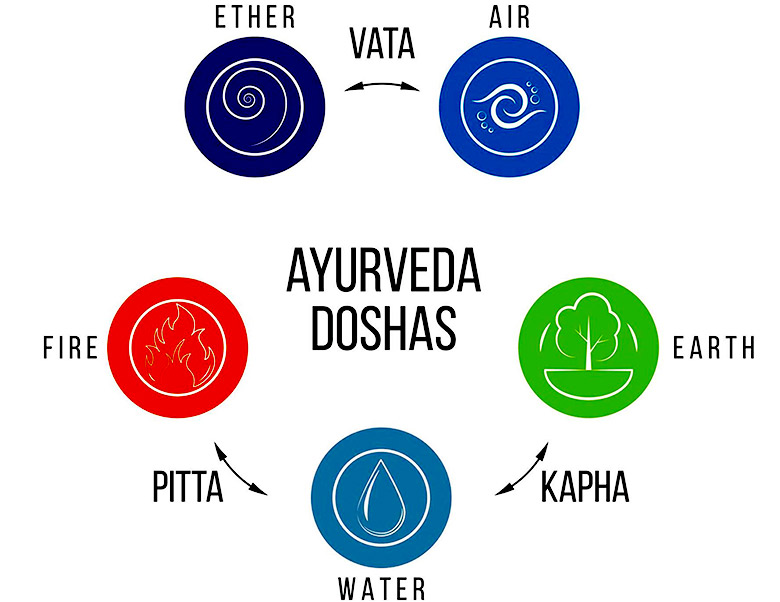
In our tradition, every person is born with a unique balance of three doshas:
| Dosha | What It Governs | Qualities |
| Vata | Movement, communication, signalling | Dry, light, cold, mobile |
| Pitta | Metabolism, digestion, transformation | Hot, sharp, oily, liquid |
| Kapha | Structure, stability, lubrication | Heavy, slow, cool, oily |
Dosha can be called as Functional units or Organising principles if the body, responsible for personality and primary etiological factors for disease.
Every individual has all three, but in different proportions. This determines their Prakriti-their inherent constitution. There are seven types: Vata-dominant, Pitta-dominant, Kapha-dominant, and four mixed types (VP, PK, VK, VPK).
What Modern Science Is Finding
Here’s what amazed me: modern genetic studies are now confirming what we’ve observed clinically for centuries!
The research shows that people with different Prakriti types actually have:
- Different gene expression patterns– Their genes work differently at a molecular level
- Different biochemical baselines– Their blood chemistry varies naturally
- Different gut microbiomes– Their intestinal bacteria differ by constitution
- Different disease susceptibilities– They’re prone to different health problems
- Different responses to stress and treatment– They respond differently to the same interventions
For example, the studies found:
- Vata Prakriti: The Double-Edged Sword of Rapid Cell Activity
Individuals with Vata Prakriti demonstrate distinctly higher cell proliferation and DNA repair activity at the molecular level. This is due to a hyper-expressive gene called Rad51 that Vata people carry. The practical effect of this genetic trait is twofold:
The Advantage: Vata individuals heal remarkably fast. When they get injured, their bodies mount a rapid repair response, mending tissues quicker than Pitta or Kapha types.
The Risk: This same rapid healing mechanism can backfire. The accelerated cell proliferation sometimes overshoots, leading to over-proliferation and the formation of excess tissue growth. This biological tendency makes Vata Prakriti individuals more susceptible to certain conditions compared to other constitutions:
- Faster relapse and metastasis of cancer – Their rapid cell division can fuel abnormal cell growth
- Psoriasis – Characterized by excessive, accelerated skin cell production
- Rheumatoid arthritis – Where rapid tissue changes can accelerate joint destruction
Vata people their quick healing ability can also make them vulnerable to specific diseases. In Ayurvedic practice, this understanding reinforces why Vata individuals need particular attention to maintain balance and prevent these conditions through diet, lifestyle, and timely interventions.
- Pitta Prakriti: High Metabolism, Fragile Capillaries, and Altitude Adaptation
Individuals with Pitta Prakriti naturally exhibit elevated metabolism and higher inflammatory markers at the molecular level. Their unique genetic profile includes lower expression of the EGLN1 gene (producing the PHD2 enzyme, a critical protein that acts as the body’s primary oxygen sensor), which creates both advantages and vulnerabilities.
The Advantage – Better High-Altitude Adaptation:
Because of this reduced EGLN1 expression, Pitta individuals adapt better to higher altitudes and are less susceptible to HAPE (High Altitude Pulmonary Edema), a dangerous condition where fluid accumulates in the lungs at high elevations.
The Trade-off – Fragile Capillaries and Bleeding Tendency:
The same lower EGLN1 expression causes Pitta people to develop increased capillary networking throughout their body to deliver oxygen efficiently to all tissues. However, these additional capillaries are inherently fragile, which creates two key vulnerabilities:
- Quick bleeding from trivial injuries – Their delicate capillaries rupture easily, causing bleeding even from minor bumps or scratches
- Rapid inflammation development – These “leaky” capillaries allow fluid and inflammatory mediators to escape more easily, triggering inflammation faster than Vata or Kapha types
We observe Pitta-dominant patients bleeding more readily and developing inflammation quickly. Their high metabolic nature and inflammatory baseline, combined with fragile vascular networks, make them uniquely prone to bleeding disorders and inflammatory conditions. Understanding this through Ayurgenomics helps us personalize treatment approaches for Pitta individuals, especially when managing injuries, inflammatory diseases, or planning travel to high-altitude regions.
- Kapha Prakriti: Thick Blood, Sticky Platelets, and Slow-Responding Growth
Individuals with Kapha Prakriti naturally demonstrate higher lipid profiles and elevated cell adhesion markers at the molecular level. Their genetic makeup includes increased adhesion proteins, which creates a distinct physiological profile with both strengths and vulnerabilities.
The Challenge – Tendency Toward Clotting:
Because of these extra adhesion proteins, Kapha individuals are prone to developing:
- Thrombosis(blood clots in vessels)
- Coagulation(excessive clotting)
- Sticky plateletsthat clump together easily
This makes them more susceptible to cardiovascular conditions where blood viscosity and clot formation play a role.
The Second Challenge – Slow-Responding Solid Growth:
Kapha Prakriti people also tend to develop solid, dense tissue growths that are slower to respond to treatment. Their cellular adhesion makes tissues more compact and less permeable, which means:
- Therapeutic agents (herbs, medicines) penetrate more slowly
- Healing and response to treatment takes longer compared to Vata or Pitta types
- Conditions like cysts, tumours, or fibrous growths may be more persistent
This is why, in Ayurvedic practice, we observe that Kapha-dominant patients often need longer treatment durations and more aggressive approaches to break down congestion. Their stable, heavy nature (which gives them strength and endurance) also makes their conditions more resistant to change. Understanding this through Ayurgenomics helps us explain to Kapha patients why they may see slower results and why patience with treatment is essential.
Why This Matters for Ayurveda Practice
Ayurveda provides personalised and precision treatment due to this Prakriti variation and it is absolutely scientific and present need.
- Prescribe Our Diagnosis Is Scientifically Valid
For years, critics have said Ayurveda lacks “scientific evidence.” But Ayurgenomics research shows that when we assess someone’s Prakriti through their physical characteristics, physiological responses, and behavioural traits, we’re actually identifying real molecular differences.
The scientific paper states: “The concordance between the two contrasting streams has been built through extensive explorations and iterations of the concepts of Ayurveda and genomic observations using state-of-the-art technologies.”
This means our traditional methods of diagnosis have a molecular basis that modern science can now detect!
- Personalized Treatment Is Not New-It’s Ancient Wisdom
Modern medicine is struggling with why the same drug works differently in different patients. They call it “inter-individual variability” and are developing “precision medicine.”
We already knew this! That’s why we never give the same treatment to everyone with the same disease. A diabetes patient with Vata Prakriti gets different treatment than one with Kapha Prakriti. Not because we’re arbitrary-but because their bodies respond differently at a fundamental level.
- Prevention Is Better Than Cure (We Always Said This!)
Ayurveda emphasizes preventive medicine-maintaining balance before disease appears. The research shows that Prakriti assessment can predict disease risk BEFORE symptoms appear.
For instance:
- Pitta individuals may have higher bleeding risk but better adaptation to high altitude
- Kapha individuals may be more susceptible to thrombosis and metabolic issues
- Vata individuals may be more prone to pain-related conditions and autonomic dysfunction
This is exactly what we’ve been teaching patients: know your constitution, live according to it, and disease will not touch you.
Bridging the Gap: What Ayurveda Doctors Need to Know
I’ll be honest-with my limited allopathic knowledge, I struggle with some of the scientific terminology. But here’s what matters for us as Ayurveda practitioners:
The Key Insights
| Ayurvedic Concept | Modern Scientific Correlate |
| Prakriti | Genetic and epigenetic constitution |
| Dosha imbalance (Vikriti) | Perturbation of molecular pathways |
| Tridosha principle | Homeostatic regulatory networks |
| Personalized treatment | Precision medicine based on biomarkers |
| Preventive approach | P4 medicine (Predictive, Preventive, Personalized, Participatory) |
What This Means for Our Practice
- We can be more confident in our traditional assessment methods
- We can communicate better with patients who want scientific explanations
- We can collaborate with modern medicine practitioners for integrative care
- We can contribute to research that validates and refines our treatments
The Future of Integrative Medicine
The paper describes how Ayurgenomics can help:
- Discover molecular biomarkers for early disease detection
- Understand how Ayurvedic herbs work at the molecular level
- Repurpose modern drugs based on Ayurvedic principles
- Create evidence-based protocols for integrative medicine settings
- Develop personalized intervention strategies for better patient outcome.
My Commitment as an Ayurveda Doctor
As an Ayurveda doctor, I see this as a wonderful opportunity. We need to continue our ancient wisdom but we need to understand how it connects with modern science so we can serve our patients better. After learning about Ayurgenomics, I am more:
- Continue practicing traditional Ayurvedawith confidence in its scientific basis
- Assess Prakriti in every patient visit
- Educate patientsabout their constitution and how to live according to it
- Stay open to learning how modern science validates our ancient wisdom
Final Thoughts
The ancient Sage Charaka wrote: “That which is the cause of disease, that is also the cure for disease.” This principle of balance and individuality is now being confirmed by modern genomics research.
Ayurgenomics is not about replacing Ayurveda with modern science-it’s about bridge building. It’s about creating a common language where Ayurveda practitioners and modern doctors can understand each other, collaborate, and most importantly, serve patients better.
As I continue my practice, I carry this new understanding with humility. Our ancient wisdom is not outdated-it’s ancient because it’s timeless. And now, modern science is finally catching up to what we’ve known all along.
Om Shanti, Shanti, Shanti (Peace, Peace, Peace)
For more reference, please read Ayurgenomics by Dr. Mitali Mukerji. Ayurgenomics Based frameworks in precision and integrative Medicine (https://pmc.ncbi.nlm.nih.gov/articles/PMC10953754/)
Share this post: