High blood sugar has become a global health concern. Diabetes now affects hundreds of millions of people worldwide, and the number continues to rise. The World Health Organization estimates that approximately 830 million people were living with diabetes. Long-term uncontrolled blood glucose can damage the heart, kidneys, eyes, nerves and blood vessels.
Against this background, many people are looking toward Ayurveda for a more natural and holistic approach to blood sugar management.
In Ayurveda, this condition aligns closely with Prameha-a group of urinary disorders-and its advanced form, Madhumeha (often equated with diabetes). Ayurveda has traditionally viewed metabolic health as more than simply a matter of blood glucose. Its approach considers digestion, food habits, physical activity, body composition, sleep, stress and the individual’s overall constitution. Several Ayurvedic herbs, including bitter melon, fenugreek, turmeric and certain traditional formulations, have been studied for their potential role in metabolic health.
However, an important distinction should be made: Ayurvedic herbs may have a supportive role, but they should not automatically be considered a substitute for diabetes medication.
A sensible approach therefore combines the traditional wisdom of Ayurveda with regular medical monitoring and evidence-based diabetes care.
Understanding High Blood Sugar in Ayurveda
In Ayurvedic texts, Prameha encompasses 20 subtypes, classified according to the predominance of doshas-the bio-energetic forces of Vata, Pitta, and Kapha. Early stages typically involve Kapha aggravation due to sedentary habits, excessive sleep, and overconsumption of sweet, heavy, and oily foods. This leads to impaired digestion (Agnimandya), accumulation of metabolic toxins (Ama), and obstruction of channels (Srotorodha), particularly those carrying fat (Medovaha) and urine (Mutravaha).
As the disease progresses, tissue depletion (Dhatukshaya) occurs, and Vata becomes vitiated, marking the transition to Madhumeha-characterized by excessive, turbid urination and systemic weakness. Modern correlates include insulin resistance progressing to pancreatic exhaustion, mirroring the shift from Kapha-dominant to Vata-dominant phases.
Core Ayurvedic Strategies for Blood Sugar Control
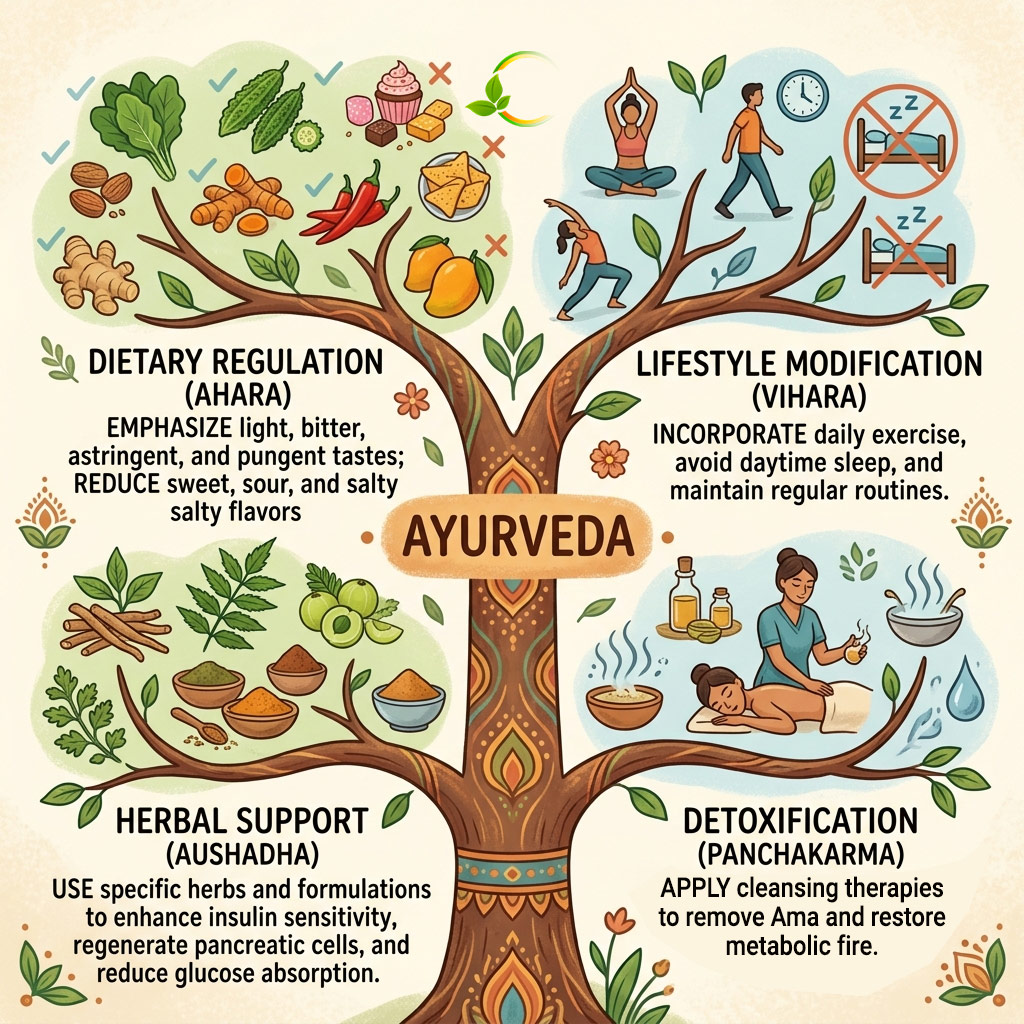
Ayurveda promotes a multi- branched approach:
- Dietary Regulation (Ahara): Emphasize light, bitter, astringent, and pungent tastes; reduce sweet, sour, and salty flavors
- Lifestyle Modification (Vihara): Incorporate daily exercise, avoid daytime sleep, and maintain regular routines.
- Herbal Support (Aushadha): Use specific herbs and formulations to enhance insulin sensitivity, regenerate pancreatic cells, and reduce glucose absorption.
- Detoxification (Panchakarma): Apply cleansing therapies to remove Ama and restore metabolic fire.
Key Ayurvedic Herbs for Blood Sugar Management
Several herbs have demonstrated hypoglycemic, antioxidant, and lipid-regulating properties in both classical texts and modern studies. Below are the most evidence-backed options:
- Gymnema sylvestre (Gudmar)
- Known as the “sugar destroyer,” Gudmar blocks intestinal sugar absorption and may regenerate pancreatic beta cells.
- Usage: preferably before meals.
- Momordica charantia (Karela – Bitter Melon)
- Often called “plant insulin,” Karela contains charantin and polypeptide-p, which mimic insulin action.
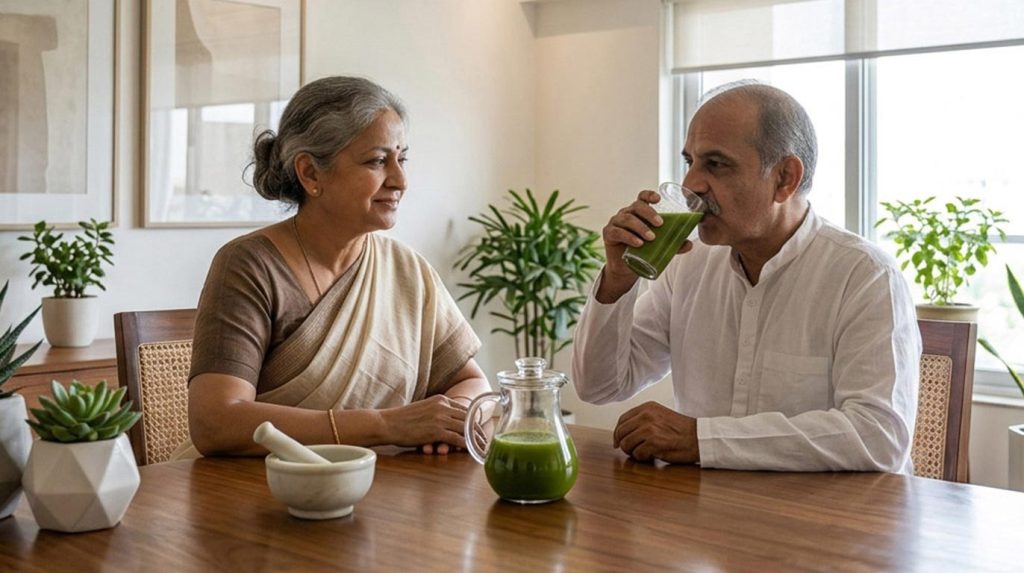
- Usage: Fresh juice mixed with Amla on an empty stomach each morning.
- Trigonella foenum-graecum (Methi – Fenugreek)
- Fenugreek seeds slow carbohydrate digestion and improves insulin sensitivity.
- Usage: Soak 1-2 teaspoons overnight; chew seeds and drink water in the morning.
- Syzygium cumini (Jamun – Indian Blackberry)
- Jamun seeds lower blood sugar and HbA1c through antioxidant and insulin-mimetic effects.
- Usage: Powder dried seeds; take 1 teaspoon with water twice daily.
- Curcuma longa (Haldi – Turmeric)
- Curcumin improves insulin sensitivity and reduces inflammation.
- Usage: Mix ¼ teaspoon turmeric powder with 1 teaspoon Amla powder in warm water daily and drink.
- Phyllanthus emblica (Amla – Indian Gooseberry)
- Rich in Vitamin-C and antioxidants, Amla supports pancreatic function and glucose metabolism.
- Usage: Consume fresh fruit or 1 teaspoon powder daily, often combined with Karela juice.
- Cinnamomum verum (Dalchini – Cinnamon)
- Cinnamon enhances insulin signalling and glucose uptake.
- Usage: Add ½-1 teaspoon powder to warm water, tea, or breakfast daily.
- Azadirachta indica (Neem)
- Neem exhibits hypoglycemic and antimicrobial properties, supporting overall metabolic health.
- Usage: Typically used in polyherbal formulations; consult an Ayurvedic practitioner for dosage.
Note: all above usage are generic and need to be consult with senior ayurveda practitioner before starting.
Dietary and Lifestyle Recommendations
Ayurveda adapts diet and lifestyle to individual constitution (Prakriti) and disease stage. General guidelines include:
- Grains: Favor barley (Yava), kodo millet (Kodrava), and barnyard millet (Shyamaka) for their light, Kapha-reducing properties.
- Tastes: Prioritize bitter (e.g., leafy greens), astringent (e.g., legumes), and pungent (e.g., ginger, black pepper) flavors.
- Avoid: Excessive sweets, dairy, fried foods, and heavy meals.
- Exercise: Brisk walking for 30 minutes daily enhances Agni and prevents fat tissue vitiation.
- Yoga: Poses like Ardha Matsyendrasana and Dhanurasana support pancreatic health and glucose regulation.
Panchakarma and Detoxification
Panchakarma therapies-such as Vamana (therapeutic emesis), Virechana (purgation), and Basti (medicated enema)-are employed to eliminate Ama and restore doshic balance. These procedures, when administered under supervision, show encouraging results with high safety margins, particularly in early-to-moderate stages of Type-2 diabetes.
[read my blog on Importance of regular massage for simple and scientific secret of healthy Longevity]
Yoga, Exercise and Daily Routine
- Ayurveda traditionally considers Vihara, or lifestyle and daily activity, an important part of health management.
- For someone with high blood sugar, regular physical activity can be more valuable than searching for a miracle herb.
- Walking after meals, strength training, yoga and other appropriate forms of exercise can form part of a comprehensive diabetes-management plan.
- WHO recommends at least 150 minutes of moderate physical activity per week for prevention of Type-2 diabetes.
- Yoga may also support stress management, flexibility and physical activity. Practices such as breathing exercises and meditation can complement-not replace-medical diabetes care.
Can Ayurveda Replace Diabetes Medicine?
This is where responsible Ayurvedic care must be very clear.
No herbal medicine should be used to discontinue insulin, metformin or another prescribed diabetes medication without medical supervision.
Some people may experience lower glucose readings after changing their diet, losing weight or introducing complementary therapies. If medication is continued at the same dose without monitoring, however, hypoglycaemia can occur.
Conversely, stopping effective medication because a product is advertised as a “natural diabetes cure” can allow blood glucose to remain dangerously high.
National Center for Complementary and Integrative Health (NCCIH) specifically warns against replacing effective diabetes treatment with unproven products. This is particularly important for Type-1 diabetes, where insulin is essential for survival.
Safety and Evidence Considerations
While Ayurvedic interventions demonstrate favourable safety profiles and adjunctive benefits in glycemic control, evidence quality varies. Systematic reviews note reductions in fasting plasma glucose when Ayurvedic herbs are used alongside conventional therapy.
Important: Ayurvedic herbs should complement-not replace-prescribed medications. Consult a qualified healthcare provider / Ayurvedic practitioner before starting any new regimen, especially if taking metformin, SGLT-2 inhibitors, or GLP-1 agonists, due to potential interactions.
Practical Daily Routine for Blood Sugar Support
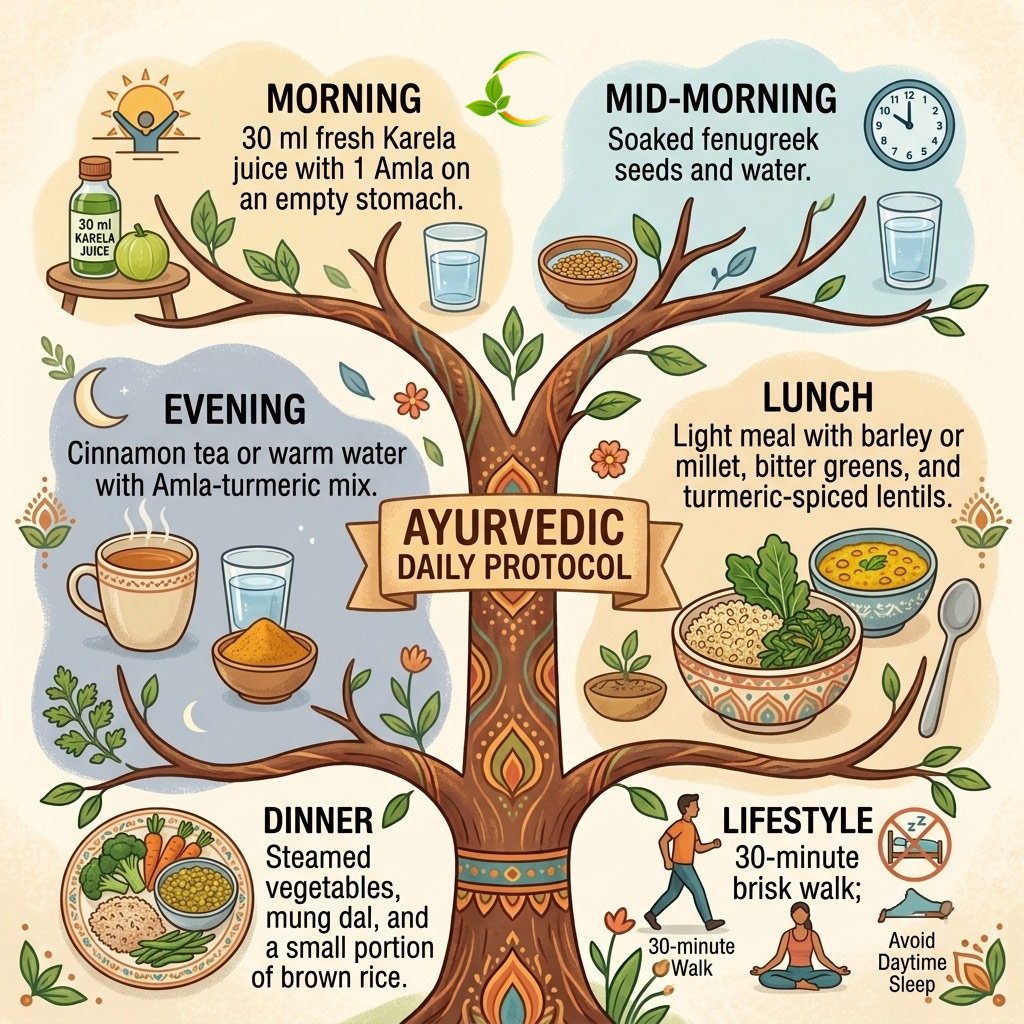
A sample Ayurvedic-inspired daily protocol might include:
- Morning: 30 ml fresh Karela juice with 1 Amla on an empty stomach.
- Mid-morning: Soaked fenugreek seeds and water.
- Lunch: Light meal with barley or millet, bitter greens, and turmeric-spiced lentils.
- Evening: Cinnamon tea or warm water with Amla-turmeric mix.
- Dinner: Steamed vegetables, mung dal, and a small portion of brown rice.
- Lifestyle: 30-minute brisk walk; avoid daytime sleep; practice yoga.
Frequently Asked Questions on Ayurveda for Controlling High Blood Sugar Naturally
Ayurveda may help manage migraine symptoms by focusing on diet, daily routines, stress reduction, sleep, digestion, and individualized therapies. Some people use Ayurvedic practices such as yoga, meditation, oil massage, and herbal preparations as complementary support. However, Ayurveda should not replace a medical diagnosis or prescribed migraine treatment.
Several herbs have traditionally been used in Ayurveda for metabolic health, including Gudmar (Gymnema sylvestre), Karela (bitter melon), Methi (fenugreek), Haridra (turmeric), Neem and Vijaysar (Pterocarpus marsupium). Some have preliminary human research suggesting possible glucose-lowering effects, but the strength of evidence varies. They should therefore be used under appropriate professional guidance / consult Ayurvedic practitioner rather than considered guaranteed treatments.
Gudmar, or Gymnema sylvestre, is traditionally associated with blood sugar management and contains compounds called gymnemic acids. Research has investigated its potential effects on glucose metabolism, but current evidence is not strong enough to establish Gudmar as a replacement for prescribed diabetes medication. People taking glucose-lowering drugs should consult a healthcare professional / Ayurvedic practitioner before using it.
Bitter melon has a long history of use in traditional medicine and contains compounds that have been studied for their potential effects on glucose metabolism. Eating bitter melon as part of a balanced diet is different from taking concentrated extracts, which may have stronger effects and potential risks.
An Ayurvedic-oriented diet generally emphasizes vegetables, legumes, whole or minimally processed foods, fibre-rich foods and appropriate portions, while reducing excessive sweets, sugary drinks, refined carbohydrates and heavily processed foods. Ayurveda may also consider meal timing, digestion and an individual’s constitution. The dietary approach should ultimately be adapted to the person’s diabetes type, medications, nutritional needs and overall health.
No. People should not stop insulin, metformin or other prescribed diabetes medicines because they begin using Ayurvedic herbs or formulations. Some herbs can themselves lower blood glucose and may increase the risk of hypoglycaemia when combined with medication. Type-1 diabetes in particular requires insulin. Any medication changes should be made with the treating healthcare professional / consult senior Ayurvedic practitioner.
No. Natural does not automatically mean risk-free. Herbal products can interact with medicines, vary in potency and, in some cases, be contaminated or incorrectly labelled. Extra caution is appropriate for people taking diabetes medication, those with kidney or liver problems, pregnant or breastfeeding woman, and people preparing for surgery. A qualified Ayurvedic practitioner and the person’s regular healthcare professional should ideally be informed about all herbs and supplements being used.
Final Thoughts
Ayurveda offers a time-tested, holistic framework for managing high blood sugar naturally through personalized diet, lifestyle, herbal support, and detoxification. While modern evidence supports the adjunctive use of specific herbs like Gudmar, Karela, and Methi, integration with conventional care under professional supervision remains essential for safety and efficacy.
Share this post: