The Complete Natural and Ayurvedic Guide to Treating Thyroid Naturally
Understanding, Balancing, and Retreating Thyroid Imbalance Through Ancient Wisdom
If you’ve been diagnosed with hypothyroidism, hyperthyroidism, Hashimoto’s, or an enlarged thyroid (goiter), you’ve probably heard the same “This is lifelong. Take this pill forever.” Ayurveda takes a fundamentally different view – not as a replacement for medical care, but as a complementary system that asks a deeper question: why did the thyroid go out of balance in the first place, and what would it take to restore that balance?
Quick Answer
- The Core Problem: Modern medicine manages thyroid hormones synthetically; Ayurveda re-ignites your metabolic fire (Agni) to restore the body’s innate hormone production.
- Hypothyroidism (Kapha-Vata): Caused by slow metabolism, fluid retention, and tissue heaviness. Treated with warming herbs (Guggulu, Kanchanar, Trikatu) and invigorating routines.
- Hyperthyroidism (Pitta-Vata): Caused by excessive internal heat and metabolic hyper-burn. Treated with cooling, nourishing therapies (Shatavari, Brahmi, Shirodhara).
- Long-Term Advantage: Focuses on cellular rejuvenation (Rasayana), metabolic correction, and sustained energy-minimizing side effects and prescription escalation.
This blog sums up things you need to know: global and Indian data, the root causes, what classical Ayurvedic texts say about the thyroid, time-tested treatment approaches, the long-term benefits of this path, and the myths that keep people confused.
Global Thyroid Disorder Statistics
- Total Affected Population: Approximately 200 million to 300 million people worldwide live with some form of thyroid disorders.
- High Undiagnosed Rate: Around 50% of people with thyroid disorders remain undiagnosed due to vague symptoms like fatigue, weight changes, and mood shifts.
- Gender Ratio: Women are 4 to 8 times more likely than men to develop a thyroid disorder.
- Condition Breakdown:
- Hypothyroidism (underactive) accounts for over 50% of all cases, primarily driven by Hashimoto’s thyroiditis in iodine-sufficient countries.
- Hyperthyroidism (overactive) affects roughly 0.2%-1.3% of the global population.
- Thyroid Cancer is one of the fastest-rising cancers globally in terms of diagnostic rates, largely due to high-resolution ultrasound screening.
Thyroid Statistics in India
India faces a disproportionately high burden of endocrine and metabolic disorders, with thyroid conditions being among the most common.
- An estimated 42 million people in India suffer from thyroid diseases.
- Approximately 10% of the adult population in India is affected by thyroid dysfunction.
- Hypothyroidism Dominance:
- Hypothyroidism is the most common form in India, with subclinical hypothyroidism affecting about 8% to 11% of urban adults.
- The prevalence is higher in women, particularly those of reproductive age and during pregnancy (where subclinical hypothyroidism can reach 13%-14%).
Key Risk Factors in India:
- Transition in Iodine Intake: While Universal Salt Iodization (USI) reduced goiter rates, post-iodization shifts have seen a rise in autoimmune thyroiditis (Hashimoto’s).
- Urbanization and Lifestyle: High stress, poor dietary quality, micronutrient deficiencies (such as Vitamin D and Selenium), and environmental endocrine disruptors are driving urban spikes.
What Causes Thyroid Disorders? (Modern Science + Ayurvedic View)
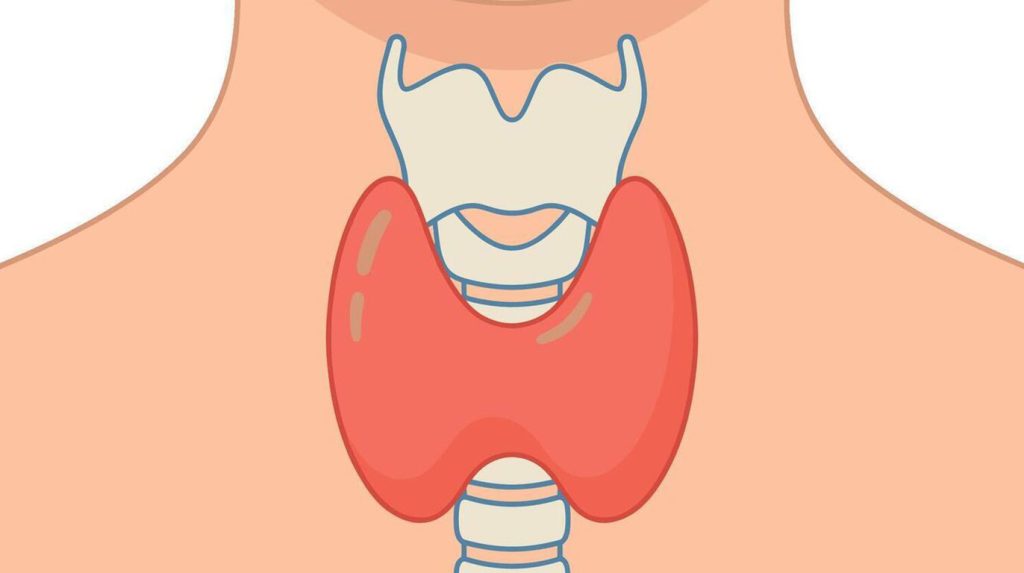
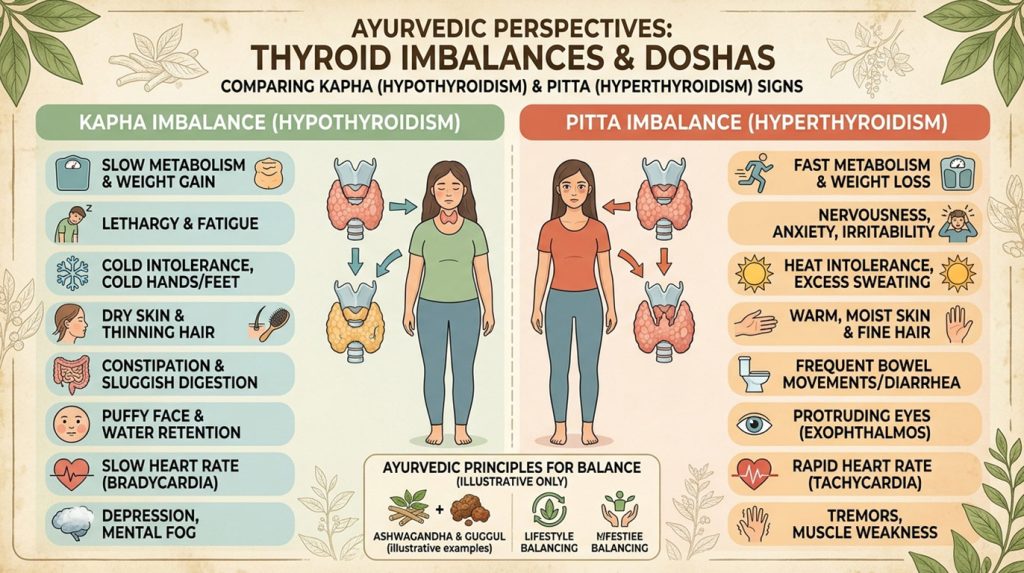
The thyroid is a small, butterfly-shaped gland at the base of your neck that regulates metabolism, energy production, body temperature, and hormonal balance through T3 and T4 hormones. Disorders generally fall into two categories:- Hypothyroidism – underactive thyroid (fatigue, weight gain, cold intolerance, hair thinning, depression, constipation)
- Hyperthyroidism – overactive thyroid (weight loss, anxiety, rapid heartbeat, heat intolerance, tremors)
- Autoimmune conditions (Hashimoto’s thyroiditis, Graves’ disease)
- Iodine deficiency or excess
- Chronic stress and elevated cortisol
- Poor gut health and nutrient deficiencies (selenium, zinc, iron)
- Genetic predisposition
- Environmental toxins and endocrine disruptors
Modern Triggers vs. Ayurvedic Pathology
| Clinical Factor | Hypothyroidism (Underactive) | Hyperthyroidism (Overactive) |
| Primary Ayurvedic Dosha | Kapha-Vata dominance | Pitta-Vata dominance |
| State of Agni (Metabolism) | Manda Agni (Dull/Slow) | Tikshna Agni (Sharp/ Hyperactive) |
| Tissue Impact (Dhatus) | Rasa (Plasma) and Meda (Fat) tissue congestion | Rasa, Rakta (Blood), and Mamsa (Muscle) depletion |
| Common Modern Causes | Hashimoto’s thyroiditis, iodine deficiency, chronic stress | Graves’ disease, thyroid nodules, thyroiditis |
| Hallmark Physical Symptoms | Unexplained weight gain, severe fatigue, dry skin, constipation, cold intolerance | Rapid weight loss, heart palpitations, insomnia, heat intolerance, tremor |
The Ayurvedic View: An Agni and Dosha Imbalance
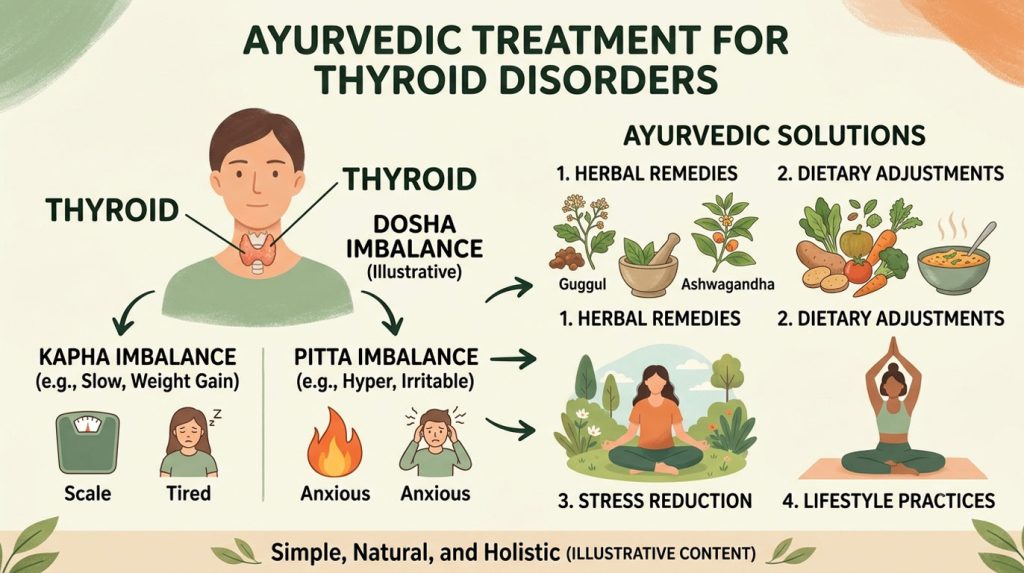
Ayurveda doesn’t diagnose “hypothyroidism” by that name – it wasn’t a term the ancients used – but it describes the pattern of imbalance with remarkable precision. Thyroid dysfunction is understood as a disturbance of Agni (the body’s digestive and metabolic fire) combined with an imbalance of the doshas, primarily:
- Kapha dosha imbalance – linked to hypothyroidism: sluggishness, weight gain, cold body, mental heaviness, water retention – all classic signs of aggravated Kapha
- Pitta dosha imbalance – linked to hyperthyroidism: excess heat, irritability, rapid metabolism, inflammation – classic Pitta aggravation
- Vata involvement – often seen in autoimmune thyroid conditions, where erratic, irregular patterns and nervous system dysregulation point to Vata disturbance layered on top
According to Ayurveda, the root cause is rarely just “the thyroid gland.” It’s the result of:
- Mandagni (weak digestive fire) – poor digestion leads to the formation of Ama (toxic, undigested metabolic residue) that clogs the body’s channels (srotas), including those that nourish the endocrine glands
- Improper diet (Ahara) – excess cold, heavy, processed, or incompatible foods that dull Agni
- Disturbed daily routine (Vihara) – irregular sleep, stress, and lack of movement
- Suppressed emotions and chronic stress – Ayurveda has long linked the throat region (Vishuddha energy center) to unexpressed communication, grief, and suppressed self-expression
- Accumulated toxins (Ama) in the Rasa and Meda dhatus (plasma and fat tissues) – which the thyroid sits close to and is nourished by
The Thyroid in Ancient Ayurveda
While classical texts like Charaka Samhita and Sushruta Samhita predate the discovery of the thyroid gland as an anatomical structure, they describe a closely related condition called Galaganda – literally “neck swelling” – which modern Ayurvedic physicians widely correlate with goiter and thyroid enlargement.
Key classical references:
- Galaganda is described as a Kapha-Vata predominant disorder involving swelling in the neck region, caused by consumption of contaminated water, unwholesome food, and vitiated doshas settling in the throat area.
- Ayurveda also references Gandamala, a related condition involving glandular swelling in the neck, often linked to lymphatic and glandular imbalance.
- The throat (Kantha Pradesh) is considered an important junction of Prana Vata (the subtle energy governing breath, swallowing, and the nervous system) and is closely tied to Udana Vayu, the upward-moving energy responsible for speech, growth, and vitality – remarkably aligned with how modern endocrinology views the thyroid’s role in growth and metabolism.
- Ayurveda has always treated the endocrine and metabolic system holistically through the lens of Agni, Dhatus (tissues), and Srotas (channels) rather than isolating a single gland – a systems-based view.
This historical continuity is part of why Ayurvedic thyroid protocols aren’t a “new trend” – they’re a refinement of a 3,000+ year old framework for glandular and metabolic disorders.
The Concept of Dhatu Agni Mandya (Cellular Flame Failure)
Ayurveda operates on 13 distinct types of Agni:
- 1 Jatharagni: The primary central digestive fire in the stomach.
- 5 Bhutagnis: Elemental fires governing the liver and basic elements.
- 7 Dhatu Agnis: Cellular-level fires governing the seven vital tissues.
Thyroid health relies directly on Rasa Dhatu Agni (the metabolic fire of the nutrient fluid) and Meda Dhatu Agni (the metabolic fire governing adipose tissue). When these micro-fires burn too low, cells cannot convert nutrient plasma into functional energy. The thyroid gland overworks to compensate for this cellular sluggishness, leading to the exhaustion, weight gain, and brain fog typical of hypothyroidism.
Conversely, if Pitta flares out of control within the tissue channels, the cellular fire burns too hot (Tikshna Agni), rapidly consuming the body’s reserves and causing hyperthyroidism.
Ayurvedic Treatment for Thyroid Disorders: The Core Approach
Ayurvedic management of thyroid conditions works on five pillars simultaneously. This is important – Ayurveda rarely treats a single symptom with a single herb. It treats the terrain.- Correcting Agni (Digestive Fire)
- For Hypothyroidism: Warm, cooked meals spiced with ginger, cumin, black pepper, and mustard seeds; light grains like quinoa and barley; steamed green vegetables.
- For Hyperthyroidism: Cooling, unctuous foods like ghee, sweet fruits (figs, dates, melons), coconut water, and whole milk.
- Processed sugars, icy beverages, heavy dairy, and deep-fried items that extinguish Agni.
- Excessive raw goitrogenic vegetables (cabbage, kale, broccoli, cauliflower) if eaten raw in large quantities during severe hypothyroidism. Cooking these vegetables neutralizes their goitrogenic compounds.
- Dosha-Specific Herbal Support
- Punarnava (Boerhavia diffusa) – supports fluid balance and detoxification
- Kanchanar (Bauhinia variegata): The primary herb for glandular health. It breaks down lymphatic blockages, reduces neck swellings, and clears Ama from Srotas.
- Guggulu (Commiphora mukul): A potent resin that stimulates sluggish thyroid function, boosts fat metabolism, and purifies the bloodstream.
- Ashwagandha (Withania somnifera): An adaptogen proven to modulate the Hypothalamic-Pituitary-Adrenal (HPA) axis. Research indicates Ashwagandha helps normalize TSH, T3, and T4 levels by reducing stress-induced cortisol production.
- Shatavari & Brahmi: Cooling, nutritive tonics used in Pitta-type hyperthyroidism to calm an overactive nervous system, regulate heart rate, and prevent muscle wasting.
- Trikatu (Ginger, Black Pepper, Long Pepper): A heating herbal compound that rekindles Jatharagni and accelerates slow metabolism.
- Panchakarma and Detoxification
- Udvartana (herbal powder massage) to stimulate metabolism and lymphatic flow
- Abhyanga (warm oil massage) to calm Vata and support circulation
- Nasya (nasal therapy) – since the nasal passage is considered a direct gateway to the head and neck region
- Vamana (Therapeutic Emesis): Indicated primarily for heavy Kapha hypothyroidism to clear upper-respiratory and lymphatic congestion.
- Virechana (Therapeutic Purgation): Indicated for Pitta-dominant hyperthyroidism to clear excess heat from the liver and metabolic pathways.
- Basti (Medicated Enemas): Calms Vata dosha, which regulates all nerve signaling between the brain and the thyroid gland.
- Shirodhara (Nervine Oil Flow): Warm, medicated oil poured continuously over the third eye resets the central nervous system, calms thyroid-storm anxiety, and supports pituitary function.
- Yoga and Pranayama for the Thyroid
- Sarvangasana (Shoulder Stand)
- Halasana (Plow Pose)
- Matsyasana (Fish Pose)
- Ujjayi Pranayama (ocean breath) – engages the throat and is believed to support the Vishuddha energy center
- Bhramari Pranayama (humming bee breath) – calming for the nervous system and thyroid-adjacent tissues

- Lifestyle (Dinacharya) and Stress Management
Because chronic stress is a well-documented trigger for autoimmune thyroid conditions in both systems of medicine, Ayurveda places heavy emphasis on:
- Consistent sleep-wake cycles aligned with natural light
- Daily oil massage (self-Abhyanga)
- Meditation and emotional processing – particularly relevant given the throat’s symbolic and physiological link to self-expression
Moderate, regular exercise (avoiding both sedentary habits and overexertion)
Long-Term Benefits of the Ayurvedic Approach
People often start Ayurvedic thyroid protocols expecting a quick fix and discover something more valuable: a sustainable shift in their overall health. Reported long-term benefits include:
- Addressing root causes, not just symptoms – because the approach targets digestion, stress, and systemic inflammation, benefits tend to extend well beyond thyroid markers alone
- Improved digestion and metabolism that supports easier weight management over time
- Better stress resilience, which matters enormously for autoimmune thyroid conditions where cortisol dysregulation is a known aggravator
- Reduced dependency on escalating interventions for some individuals, when used consistently alongside medical monitoring
- Zero Hormone Suppression: Avoids forcing external synthetic hormones into the bloodstream, allowing your feedback loops to rebuild strength naturally.
- Sustainable Weight & Energy Balance: By addressing cellular fire (Dhatu Agni), weight loss and energy restoration occur naturally without harsh stimulants.
- Stress & HPA-Axis Reset: Adaptogenic herbs restore adrenal health, preventing the stress spikes that trigger autoimmune thyroid flares (like Hashimoto’s or Graves’).
- Holistic Rejuvenation (Rasayana): Enhances skin health, digestive clarity, menstrual regularity, and mental agility alongside thyroid repair.
- Whole-body benefits – better sleep, hair, digestion, and emotional clarity, since the protocols aren’t isolated to the thyroid
- A sustainable, non-invasive framework that can be maintained for life, unlike short-term detox trends
A critical caution: Ayurveda works best as a complement to conventional endocrinology, not a replacement – especially for diagnosed hypothyroidism, hyperthyroidism, or autoimmune thyroid disease. Never stop or adjust thyroid medication without your doctor’s guidance. The strongest outcomes are typically seen in people who combine regular thyroid monitoring (TSH, T3, T4, antibodies) with Ayurvedic lifestyle and herbal support under a qualified practitioner.
Myth:
“Ayurveda can completely cure thyroid disorders and you can stop medication.”
Fact:
Ayurveda can support and, in some cases, help manage thyroid function, but any medication changes must be doctor-supervised. Autoimmune and structural thyroid conditions especially require ongoing medical monitoring.
Myth:
“Ayurvedic herbs have no side effects because they’re natural.”
Fact:
Natural doesn’t mean risk-free. Herbs like Guggulu and Ashwagandha can interact with thyroid medication and other drugs. Professional guidance and dosing matter.
Myth:
“Thyroid problems are only caused by iodine deficiency.”
Fact:
Iodine is one factor, but autoimmunity, stress, gut health, and genetics play equally significant roles – a view Ayurveda has held for centuries through its concept of Agni and Ama.
Myth:
“You need years of treatment to see any results.”
Fact:
Many people notice improvements in digestion, energy, and sleep within weeks, though normalizing thyroid markers and glandular balance is typically a longer-term process (months, not days).
Myth:
“Ayurveda is unscientific and has no research backing.”
Fact:
Herbs like Guggulu and Ashwagandha have been studied in peer-reviewed research for metabolic and endocrine support, and classical Ayurvedic concepts of gut-driven systemic inflammation align with current functional medicine research.
Myth:
“Diet doesn’t really matter – it’s all about herbs.”
Fact:
Diet is considered the foundation, not an add-on. Herbs are supportive; without correcting Agni and eating patterns, results are typically limited.
Myth:
“Ayurveda acts too slowly to handle serious thyroid issues.”
Fact:
While synthetic hormones flood the blood immediately, Ayurveda rebuilds cellular capacity. Patients usually experience noticeable improvements in digestion, body temperature, and energy within 4 to 6 weeks, with stable hormone modulation occurring within 3 to 6 months.
Myth:
“Natural remedies are always safe, so I can self-medicate with thyroid herbs.”
Fact:
Potent formulations like Kanchanar Guggulu contain active botanical ingredients that must be tailored to your specific Dosha balance. Taking heating herbs during a Pitta spike or hyperthyroid state can worsen symptoms.
Frequently Asked Questions on Thyroid disorder
Ayurveda focuses on restoring balance and addressing root causes like poor digestion, stress, and Ama accumulation. Some people see significant improvement in symptoms and markers, but “cure” varies by individual, cause, and severity – especially for autoimmune conditions. Work with both an endocrinologist and an Ayurvedic practitioner.
Often yes, when properly supervised, but never combine them without informing both your doctor and Ayurvedic practitioner, since some herbs can affect hormone absorption or metabolism.
Digestive and energy improvements are often noticed within 4-6 weeks. Meaningful shifts in thyroid markers typically take 3-6 months of consistent lifestyle, dietary, and herbal support
Generally: excess raw/cold foods, processed and fried foods, and (for hypothyroidism specifically) minimizing large amounts of raw cruciferous vegetables is sometimes advised – though this is debated and depends on your individual case and iodine status.
It’s one of the most classically referenced formulations for glandular swellings (Galaganda) and is widely used by Ayurvedic practitioners for thyroid support, but dosage should be personalized.
Yes – this is well-supported in both Ayurveda and modern endocrinology. Chronic stress elevates cortisol, which can disrupt thyroid hormone conversion and is a recognized trigger for autoimmune thyroid flares.
Not always. Panchakarma is recommended selectively based on your constitution, current health status, and the severity of Ama accumulation – it’s not a one-size-fits-all requirement.
No, goitrogenic foods like broccoli, spinach, and cabbage do not need to be completely eliminated. Cooking or steaming these vegetables neutralizes goitrogenic compounds, making them safe to digest when prepared with warming spices like cumin and ginger.
Ujjayi Pranayama (Ocean Breath) is considered the most effective breathing practice for thyroid health. It directly stimulates the throat chakra (Vishuddha Chakra), enhances local circulation, and balances the autonomic nervous system.
Your Next Step
Thyroid imbalance rarely happens overnight, and reversing the underlying pattern takes a consistent, personalized approach – not a single herb or a generic diet chart. If you’re ready to move forward:- Get your labs done (TSH, Free T3, Free T4, and thyroid antibodies if autoimmunity is suspected) so you have a clear baseline.
- Consult a qualified, registered Ayurvedic practitioner (BAMS or equivalent) who can assess your Prakriti (constitution) and current imbalance – not a generic supplement protocol.
- Start with the foundations – digestion, sleep, and stress – before adding herbal formulations.
- Keep your endocrinologist in the loop throughout, especially if you’re on thyroid medication.
Conclusion
Thyroid disorders sit at a fascinating intersection of ancient wisdom and modern science. Where conventional medicine excels at diagnosis, hormone replacement, and managing acute conditions, Ayurveda offers something equally valuable: a framework for understanding why the imbalance happened and a sustainable path to restoring the body’s underlying terrain – digestion, stress resilience, and dosha balance.
The most effective approach isn’t “Ayurveda versus modern medicine” – it’s both, working together, guided by qualified professionals in each field. Used this way, Ayurvedic thyroid care isn’t a fringe alternative; it’s a time-tested complement to a lifelong journey toward genuine metabolic and hormonal health.
Share this post: