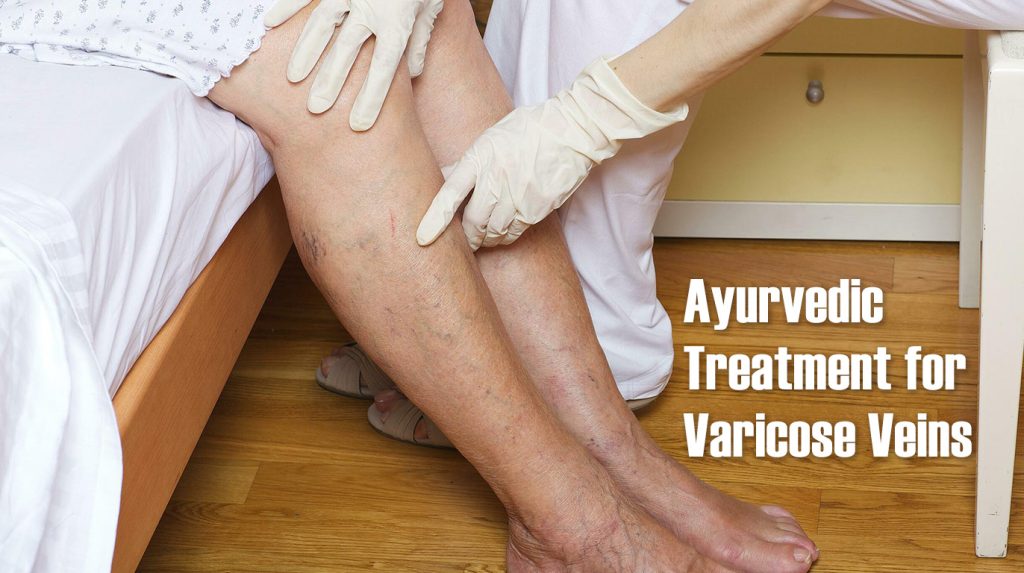
Heavy legs by evening. Ankles that swell by afternoon. A bluish cord of vein that was not there last year. Readers who reach this page often know the basics of Ayurveda already. What they want to know is what actually helps, Senior Ayurvedic physicians who treat vascular conditions tend to give the same answer.
How Ayurveda Understands Varicose Veins
Classical texts, especially the Sushruta Samhita, describe a condition called Sira Granthi, meaning knotted or swollen veins. Ayurvedic clinicians map the features of varicose veins to it: tortuosity (Sira Vakrata), raised vessels (Sira Utsedha) and hardening. Current Ayurvedic case literature links varicosities to Sira Granthi, with aggravated Vata dosha invading the venous channels and vitiated blood accumulating.
In simple terms:
- Vata governs movement. When it is disturbed, whether by long standing, constipation or a dry diet, blood flow in the legs becomes irregular.
- Rakta (blood) and Pitta become vitiated, producing inflammation, heat, darkening of the skin and, later, eczema or ulcers.
- Kapha accumulates as fluid, which shows up as swelling (Shotha).
The vein valves fail, blood pools, pressure rises, and symptoms follow: heaviness, cramps, oedema, pigmentation and, at the severe end, venous ulcers. Ayurveda sees a non-healing ulcer as Dushta Vrana, a wound that needs both local and systemic care.
[read my blog and discover your unique Ayurvedic body type.]
Causes (Nidana) According to Ayurveda
Classical and modern views overlap more than people expect. Ayurvedic causes include prolonged standing or sitting, heavy lifting, chronic constipation, suppressing natural urges, daytime sleep, and a diet heavy in dry, salty, sour or fermented foods. Modern medicine adds genetics, age, pregnancy and obesity. A good Vaidya screens for all of these, not only the doshic picture.
5 Key Ayurvedic Herbs for Varicose Veins
Herbs are the most popular entry point, so they deserve a careful look.- Mandukaparni (Centella asiatica, gotu kola). This herb has the best modern evidence of any plant used in Ayurveda for venous disease. One common confusion needs correcting, Mandukaparni is not Brahmi (Bacopa monnieri), though markets often swap the names.
- Guggulu (Commiphora wightii). This is the backbone of Vata-Rakta formulations, valued for its anti-inflammatory and scraping (lekhana) action.
- Punarnava (Boerhavia diffusa) and Gokshura (Tribulus terrestris). Both are used for leg oedema in the Ayurvedic tradition. They are plausible mild diuretics.
- Manjistha (Rubia cordifolia), Guduchi and Haridra. These are classic raktaprasadana (blood-clarifying) and anti-inflammatory herbs, often used when skin discoloration or eczema accompanies CVI.
- Triphala and Haritaki. Their value is indirect but real. Regular, easy bowel movements reduce straining, a recognized contributor to venous pressure.
| Formulation | Key Botanical Ingredients | Administration Standard | Clinical Role in CVI |
| Kaishore Guggulu | Commiphora mukul, Tinospora cordifolia, Triphala | 2 tablets (500mg) twice daily after meals | Reduces vascular inflammation, clears Ama, eases leg soreness |
| Mandukaparni Extract | Centella asiatica triterpenes | 300–600 mg daily of standardized extract | Restores vessel collagen, lowers capillary filtration & edema |
| Manjisthadi Kwath | Rubia cordifolia, Musta, Guduchi | 15–20 ml with equal warm water twice daily | Purifies blood, resolves stasis dermatitis & dark pigmentation |
| Sahacharadi Tailam | Strobilanthes ciliatus, Cedrus deodara, Sesame Oil | Topical application (Gentle upward strokes) | Strengthens vein walls, eliminates nocturnal calf cramps & fatigue |
| Punarnavadi Kashayam | Boerhavia diffusa, Nimb, Guduchi | 15 ml with warm water before meals | Mobilizes dependent ankle edema, balances interstitial fluid |
Comparative Pathophysiology: Modern Venous Mechanics vs. Ayurvedic Samprapti
To bridge classical concepts with contemporary vascular science, the pathological milestones of Chronic Venous Insufficiency can be directly mapped to Ayurvedic pathological equivalents (Samprapti Ghataka) and their corresponding clinical signs.| Modern Pathophysiological Stage | Ayurvedic Pathological Equivalent (Samprapti Ghataka) | Clinical Manifestation (Lakshana) |
| Venous valve failure & retrograde reflux | Vyana Vayu Vaishamya & Sira Shithilata | Loss of unidirectional blood flow, early calf muscle fatigue |
| Elevated ambulatory venous hypertension | Sira Sampeedana & Rakta Stambha | Venous engorgement, aching leg pain (Toda), heaviness (Gaurava) |
| Endothelial stretching & wall fibrosis | Vishoshana & Sira Vakreekarana | Tortuous, visible blue or purple cord-like veins (Grathitha Sira) |
| Capillary leakage & erythrocyte extravasation | Rakta-Pitta Dushti & Twak-Mamsa Kleda | Hyperpigmentation (Krishnarakta Sira), stasis dermatitis, eczema |
| Microvascular ischemia & tissue necrosis | Dhatu Kshaya & Dushta Vrana formation | Non-healing venous stasis ulcers, severe localized induration |
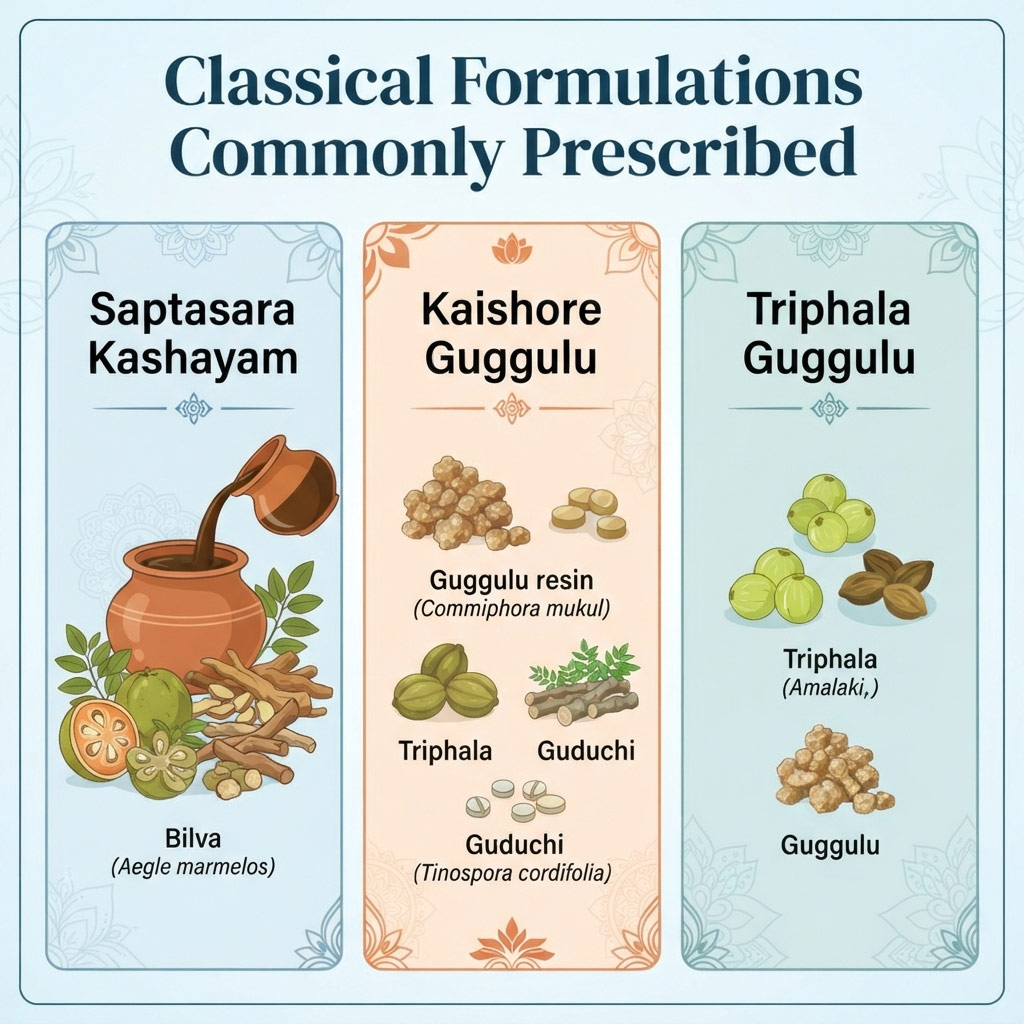
Classical Formulations Commonly Prescribed
A Senior Vaidya chooses these by constitution, stage and digestion, so the list below is a description, not a prescription:
- Saptasara Kashayam (decoction), used in a recent Ayurvedic varicose-vein case report together with Prasarini Taila for local massage.
- Kaishore Guggulu and Gokshuradi Guggulu, for Vata-Rakta involvement and swelling.
- Triphala Guggulu, for inflammation with sluggish digestion.
- Punarnavadi Kashayam, for oedema.
- Mahamanjisthadi Kashayam, when skin changes dominate.
- Mahanarayana Taila and Prasarini Taila, for external use.
- Jatyadi Taila or Ghrita, applied to ulcers under supervision.
Quality matters. Choose products from licensed manufacturers with testing for heavy metals and contaminants, and avoid mineral-based (Rasa) preparations unless a qualified physician supervises them.
Panchakarma and Para-Surgical Procedures
Virechana and Basti. Therapeutic purgation addresses Pitta-Rakta, and medicated enemas address Vata. Both are used in chronic, symptomatic cases under supervision, and neither is suitable for everyone. Raktamokshana (bloodletting). Sushruta recommended it for blood-related disorders. Two forms are relevant:- Jalaukavacharana (leech therapy). This is the best-known procedure. A small trial comparing intermittent leech therapy plus lifestyle changes with lifestyle changes alone reported statistically significant clinical improvement in the leech group. Several case reports describe symptomatic relief as well. That is encouraging, but the evidence is small, not blinded and not long-term. Leeches may ease pain and heaviness. There is no good proof that they remove or reverse varicose veins.
- Siravedha (venepuncture). It has classical roots but very little modern evidence, and in practice it is rarely performed.
Long-Term Recurrence Prevention
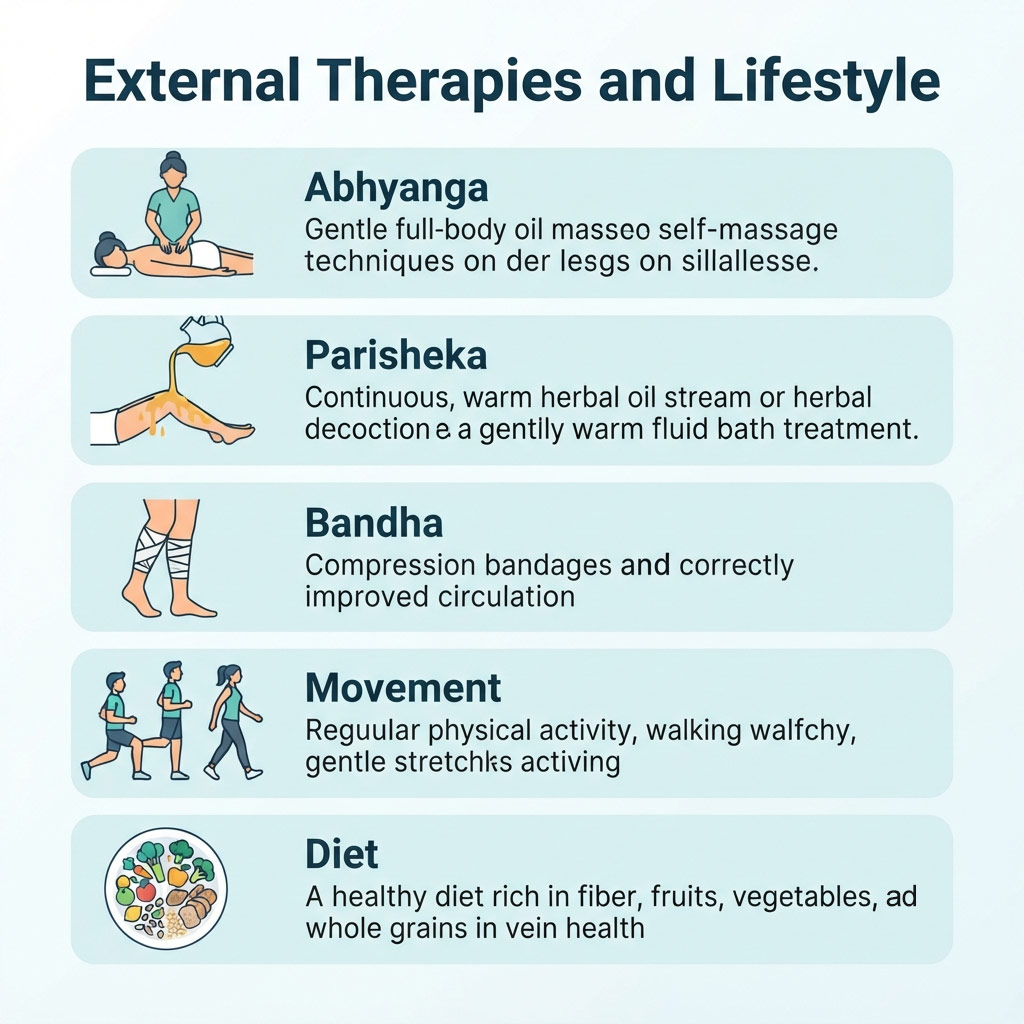
Because venous valve damage cannot be fully reversed, preventing disease recurrence is essential. Following primary symptom clearance, patients should undergo periodic seasonal purification (Ritucharya Shodhana), particularly mild purgation (Virechana) during autumn (Sharad Ritu) to keep Pitta and Rakta vitiation in check. Maintaining an active routine, controlling weight, avoiding long periods of standing or sitting, and wearing compression stockings during prolonged travel help preserve long-term vascular stability.External Therapies and Lifestyle
Ayurveda’s daily-routine advice maps well onto modern vein care:
- Abhyanga (oil massage). Use gentle strokes from foot toward heart with warm Mahanarayana or Prasarini oil. Never massage over a painful, hard, red or suspected clot area.
- Cool herbal washes or leg soaks (Parisheka) with decoctions such as triphala are soothing. Use cool or lukewarm water, not hot.
- Bandaging (Bandha). Sushruta describes wound and limb bandaging. This fits comfortably with modern graded compression stockings, which are the best-supported conservative treatment in venous disease.
- Movement. Walk daily, do ankle pumps and calf raises, and take breaks from prolonged standing or sitting. Legs-up-the-wall pose (Viparita Karani) for 10 to 15 minutes helps many people.
- Diet. Favor warm, fiber-rich, lightly spiced food. Cut back on excess salt, fermented items, and fried or dry snacks. Maintain a healthy weight and drink enough water.
Dietetics, Lifestyle Adjustments, and Yogic Hydrodynamics
Sustainable recovery from Chronic Venous Insufficiency requires integrating dietary modifications (Ahara), daily routine changes (Vihara), and therapeutic movement (Yogasana) to support lower-limb blood flow.Dietary Regimen (Ahara)
- Wholesome Foods (Pathya): Incorporate fiber-rich foods, old rice, barley, mung bean soup, garlic, ginger, and flavonoid-rich fresh fruits (such as berries and pomegranate) that stimulate digestive fire (Agni) and enhance blood vessel strength. Adequate warm water intake prevents blood hyperviscosity and stagnation.
- Unwholesome Foods (Apathya): Eliminate heavy (Guru), excessively salty, sour, or refined foods. Avoid deep-fried items, curds, heavy non-vegetarian meals, and processed snacks that exacerbate Kapha-Kleda and cause vascular obstruction (Srotorodha).
Lifestyle Regimen (Vihara)
- Avoid Prolonged Immobility: Individuals working in standing or desk-bound professions must interrupt long periods of static posture every 45 minutes with short walks or calf-raise exercises.
- Avoid Thermal Shocks: Refrain from exposing fatigued, swollen legs directly to hot water baths or sudden freezing temperatures.
- Compression Support: Utilize graduated medical compression stockings during waking hours to support calf muscle pump action alongside Ayurvedic therapies
[read my blog on How to create an Ayurvedic routine for your lifestyle]
What the Evidence Really Says
Two facts are worth holding together. First, in modern vascular medicine compression therapy has the strongest empirical support, with consistent benefit for oedema, symptoms and ulcer healing, while venoactive drugs offer mainly symptom relief. Second, Ayurvedic evidence for vein disease consists of traditional logic, case reports, small trials and a few plant extracts studied in the lab and clinic. Reduced heaviness, better skin and improved comfort are real outcomes patients value. But nothing here shows that an herb or procedure restores a failed valve. Honest Ayurvedic practice therefore sets the goal as symptom control, slowing progression and supporting skin and circulation, not “curing” established varicosities.Safety and Red Flags
- Seek urgent care for sudden one-sided leg swelling, calf pain, warmth or redness (possible deep vein thrombosis), chest pain or breathlessness, a bleeding varicose vein, or a rapidly worsening ulcer.
- Blood thinners and bleeding disorders. Leech therapy is unsuitable with anticoagulants or bleeding tendencies. Guggulu and some other herbs may theoretically interact with blood thinners, so tell all your clinicians.
- Other medicines. Guggulu has reported interactions with some heart and thyroid medicines. Centella is generally well tolerated, though rare liver reactions and contact skin allergy have been reported.
- Leech risks include infection, prolonged bleeding and allergic reaction. Only medical-grade leeches used once per patient, under sterile conditions, are acceptable.
- Pregnancy. Many purgative and bloodletting therapies are inappropriate.
Frequently Asked Questions for Ayurvedic treatment on Varicose Veins
There is no reliable evidence that it removes established varicose veins. It can help with heaviness, swelling, skin health and lifestyle contributors.
Ayurvedic treatment can resolve symptoms such as pain, swelling, heaviness, itching, and skin hyperpigmentation, while halting disease progression. However, in advanced cases where venous valves are completely destroyed or vessel walls severely stretched, treatment focuses on functional management rather than restoring original vascular anatomy. Early-stage spider veins and mild varicosities respond exceptionally well to therapy.
Centella (Mandukaparni) has the most clinical research, mainly with standardized extracts. Others, such as guggulu and punarnava, rest more on tradition.
Yes. Modern graduated compression stockings work synergistically with Ayurvedic therapies. While external compression provides continuous mechanical support to calf muscle pumps during daily activities, internal Ayurvedic remedies (Kaishore Guggulu, Mandukaparni) work to reduce vascular inflammation, lower blood hyperviscosity, and strengthen the vessel wall matrix from within.
Do not stop without medical advice. Compression is the best-supported conservative treatment, and Ayurvedic care is best used alongside it.
Noticeable symptomatic relief from pain and leg heaviness often occurs within 14 to 21 days of starting combined therapies (oral formulations, gentle upward oil application, and bio-purification sittings). However, structural vein remodeling, resolution of hyperpigmentation, and long-term stabilization generally require 3 to 6 months of continuous care and lifestyle compliance.
Many people report symptom changes within weeks to a few months when diet, movement and treatment are consistent. Results vary, and visible veins may not change.
When performed by a qualified Ayurvedic physician using single-use, medically bred leeches under sterile conditions, Jalaukavacharana is safe and well-tolerated. The leeches are purified prior to the procedure using turmeric water, and strict post-procedure wound dressing protocols are followed to eliminate secondary bacterial infection risks.
Deep tissue massage applies strong mechanical force to fragile, thinned vessel walls. This can rupture superficial veins or dislodge a blood clot (thrombus) present in the deep venous system. Dislodged clots can travel to the lungs and cause a pulmonary embolism. Massage for CVI must always consist of light, upward strokes that avoid direct pressure on bulging veins.
Immediate emergency evaluation is necessary if a patient experiences sudden, severe, unilateral leg swelling accompanied by intense heat and redness (indicative of acute DVT or deep cellulitis), sudden chest pain and shortness of breath (suspected pulmonary embolism), or rapid bleeding from a ruptured varicose vein.
A Sensible Integrative Plan
- Get a duplex ultrasound and diagnosis first to rule out clots and see which veins are failing.
- Start with compression and movement, which have the strongest support.
- Add Ayurvedic care for symptoms: diet, bowel regularity, selected herbs, oil therapy and, where appropriate, leech therapy.
- Consider procedures (such as sclerotherapy or endovenous ablation) when symptoms are significant or skin changes are progressing. Ayurvedic care can run alongside them.
- Review every few months with both a vascular doctor and an Ayurvedic physician who know about each other.