Ayurvedic Parent’s Guide to Healthier Children
Frequent minor infections are common during childhood, particularly when children start preschool or spend more time around other children. Their immune systems are still learning to recognize and respond to unfamiliar germs. For many parents, Ayurveda offers an appealing way to approach this concern. Its emphasis on digestion, nourishing foods, balanced routines, adequate rest and natural ingredients has much in common with modern preventive healthcare.
Ayurveda offers useful lifestyle ideas, provided they’re approached thoughtfully and combined with evidence-based pediatric care.
Let’s look at what actually helps and how parents can build a safe, practical routine at home.
Understanding Children’s Immunity: An Ayurvedic and Modern Perspective
Before introducing immunity-focused foods or herbal preparations, it helps to understand what’s happening inside a growing child’s body.How the immune system worksThe immune system is a sophisticated network of white blood cells, antibodies, lymphatic tissues, bone marrow and protective barriers.Think of it as a security system with several layers:- Physical barriers: Skin and mucous membranes help prevent germs from entering.
- Inborn immunity: The body’s immediate defense against unfamiliar threats.
- Adaptive immunity: A specialized response that learns to recognize particular pathogens.
- Immune memory: Helps the body respond more effectively when it encounters certain infections again.
What Ayurveda says about childhood immunity
Ayurveda approaches health through the relationship between digestion, metabolism, nutrition, daily habits and overall physiological balance.Three traditional concepts are particularly relevant:Agni (digestive capacity): Ayurveda uses Agni to describe the body’s digestive and metabolic processes. A balanced digestive system is traditionally associated with good nourishment and vitality.Ojas (vitality): Ojas is a traditional Ayurvedic concept associated with resilience, strength and overall well-being. It is sometimes compared with immune health, although it is not scientifically equivalent to antibodies, white blood cells or a measurable immune marker.Doshas (Vata, Pitta and Kapha): These describe functional patterns within the Ayurvedic framework. Ayurveda uses them to understand individual constitutions and perceived imbalances.These concepts can provide a framework for discussing food, rest and routine.Where conventional medicine and Ayurveda meet
There is meaningful common ground between the two approaches.| Ayurvedic principle | Modern health perspective |
| Supporting Agni | Adequate digestion and nutrient absorption |
| Nourishing Ojas | Overall nutritional and physiological health |
| Dinacharya (daily routine) | Consistent sleep, meals and activity |
| Seasonal eating | Dietary variety and locally available foods |
| Restoring balance | Managing stress and supporting recovery |
Natural Ayurveda Ways to Support Children’s Immunity
Children do not need complicated immunity programmes. Most benefit more from consistent nutrition, sleep, physical activity and preventive healthcare than from a cupboard full of supplements.
Here are practical approaches parents can introduce.
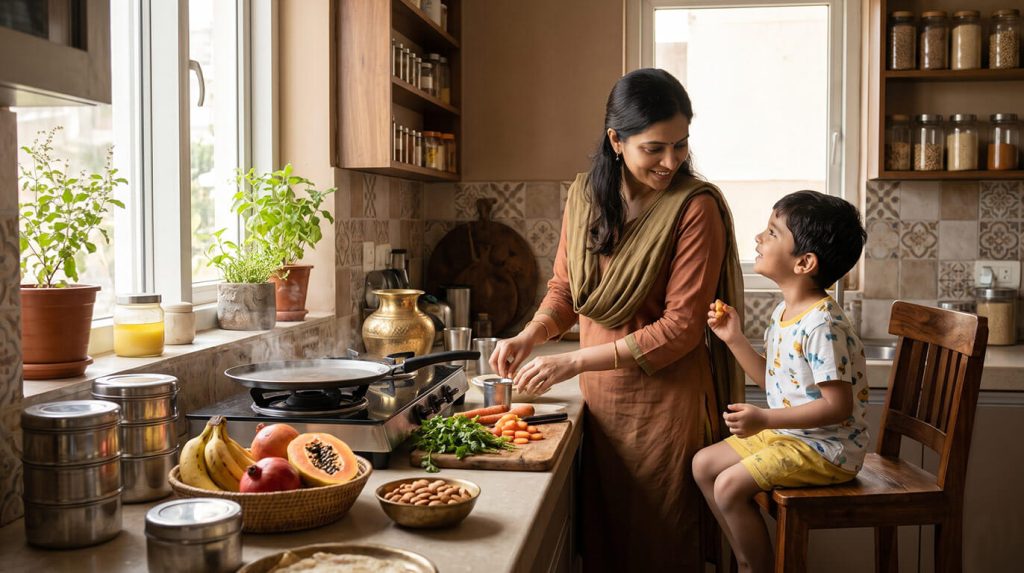
Nourish the digestive system with balanced meals
Ayurveda traditionally places considerable emphasis on digestion. Modern nutrition research also recognizes that the gut contains a large community of microorganisms that interact with the immune system. For children, the goal should be simple: provide varied, age-appropriate foods which include:
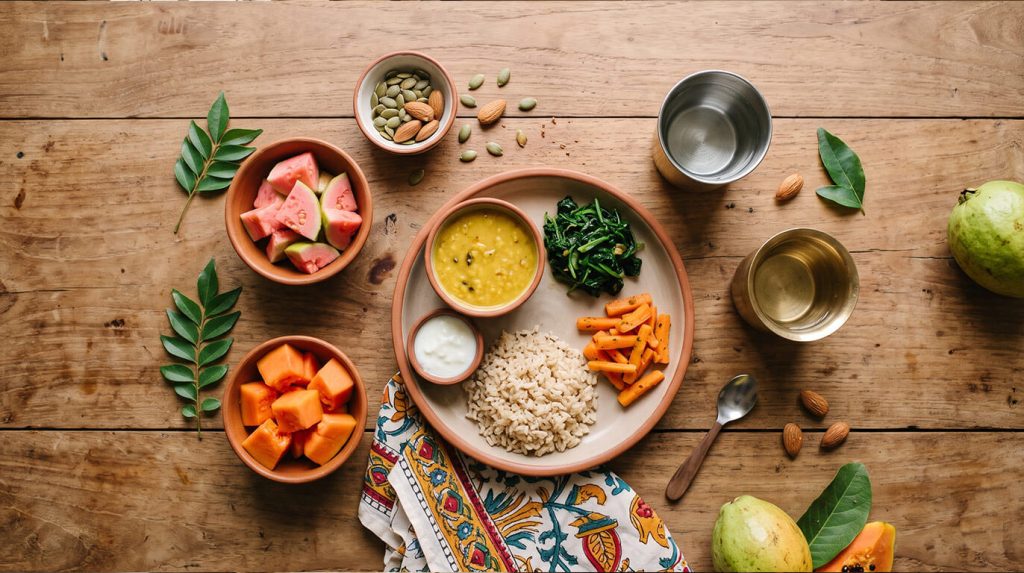
- Seasonal fruits such as guava, papaya, oranges and bananas.
- Vegetables such as carrots, spinach, pumpkin and beans.
- Protein sources including dal, beans, paneer, eggs, fish or chicken.
- Whole grains such as rice, oats, millet and whole-wheat roti.
- Suitable dairy products or market available alternatives.
- Healthy fats from nuts, seeds and appropriate cooking oils.
Use turmeric as a food ingredient
Turmeric (Haridra) is widely used in Ayurveda and traditional Indian cooking. Its active compound, curcumin, has shown anti-inflammatory and antioxidant activity. Parents can safely incorporate culinary quantities of turmeric into suitable foods, such as dal, vegetable preparations and soups.
Include ginger in everyday cooking
Ginger (Adrak) is traditionally used to support digestion and soothe certain digestive complaints. It can be incorporated into age-appropriate meals and mild preparations. For older children, a small amount of ginger in warm food or soup may be comforting during a cold. However, ginger does not eliminate respiratory viruses or prevent future infections.
Encourage adequate vitamin and mineral intake
Certain nutrients are essential for normal immune function.
| Nutrient | Why it matters | Food sources |
| Vitamin-C | Supports normal immune cell function and antioxidant protection | Guava, amla, citrus fruits such as orange, lemon, lime, grapefruit and tomatoes |
| Vitamin-D | Helps regulate immune responses and supports bone health | Everyday foods, eggs, fatty fish |
| Zinc | Supports immune cell development and function | Beans, lentils, dairy, nuts, seeds |
| Iron | Essential for oxygen transport and normal immune function | Lentils, meat, leafy vegetables, everyday cereals |
| Vitamin-A | Supports healthy skin and mucosal barriers | Carrots, pumpkin, sweet potato, leafy vegetables |
Nutritional deficiencies can affect health, growth and immune function. Correcting a genuine deficiency is beneficial. However, giving extra vitamins to an otherwise healthy child does not automatically make that child less likely to catch infections.
Protect sleep and establish a calming bedtime routine
Sleep is one of the most overlooked foundations of children’s health. During sleep, the body regulates immune signaling, repairs tissues and supports normal growth and development. General sleep recommendations include:| Age | Recommended sleep in 24 hours |
| 1-2 years | 11-14 hours, including naps |
| 3-5 years | 10-13 hours, including naps |
| 6-12 years | 9-12 hours |
| 13-17 years | 8-10 hours |
- Maintain a reasonably consistent bedtime.
- Reduce stimulating screen exposure before sleep.
- Keep the bedroom comfortable and quiet.
- Avoid heavy meals immediately before bedtime.
- Create a predictable rest and relax routine with reading, gentle conversation or a warm bath.
Make outdoor play part of everyday life
Children need opportunities to move, explore and play. Encourage them for:- Outdoor games.
- Cycling and swimming.
- Walking with family.
- Dancing and age-appropriate sports.
- Free play rather than relying entirely on structured exercise.
5 Safe, Everyday Ayurvedic Herbs for Growing Children
Pediatric wellness demands caution. Children are not miniature adults; their organs are delicate, and their metabolic pathways are still developing. Skip strong herbal extracts and lean on gentle culinary herbs and proven whole-plant adaptogens.
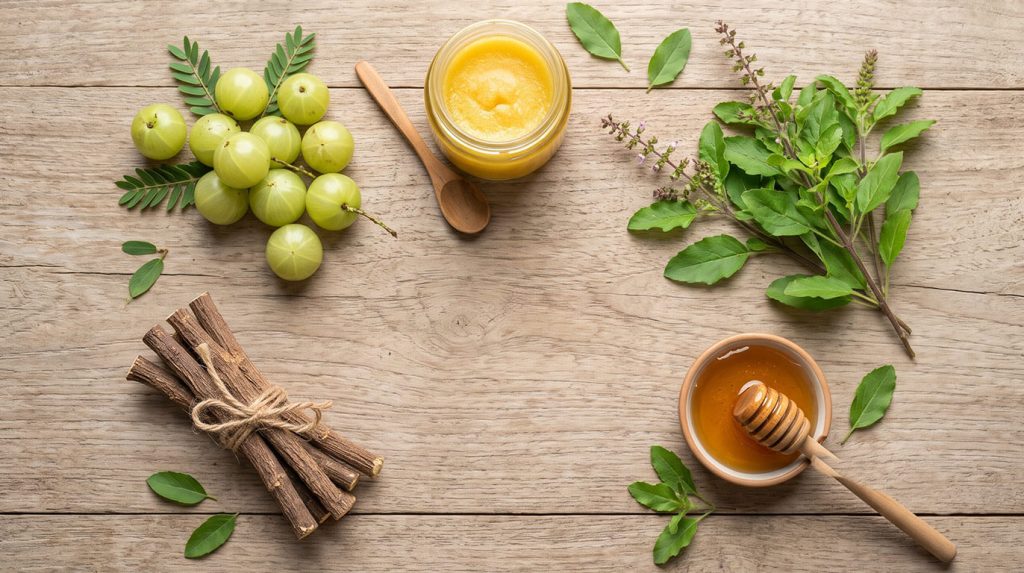
- Amla (Indian Gooseberry / Emblica officinalis): A potent source of heat-stable vitamin C and rich polyphenols. Whole Amla supports gentle tissue renewal without aggravating stomach acidity.
- Tulsi (Holy Basil / Ocimum sanctum): Mildly warming and aromatic, Tulsi helps clear stagnant respiratory secretions and soothes mild seasonal throat scratchiness. A single bruised leaf steeped in warm water works wonders.
- Turmeric (Haridra / Curcuma longa): A pinch of turmeric lightly warmed in whole cow’s milk or oat milk acts as a time-tested anti-inflammatory, calming irritated mucosa and supporting cellular health.
- Licorice (Yashtimadhu / Glycyrrhiza glabra): Naturally sweet and deeply soothing, Yashtimadhu coats inflamed throat linings and supports healthy bronchial tracts.
- Ghee (Clarified Butter): Often overlooked as a medicine, pure grass-fed ghee lubricates mucosal barriers, acts as a prebiotic carrier for micronutrients, and calms an overstimulated nervous system.
Pediatric Nutritional & Herbal Reference Standards
Note: The table below outlines traditional preparation methods for general reference. Always personalize the usage to your child’s age, appetite, and constitution with a pediatric Vaidya.
| Formulation / Herb | Key Ingredients | Age-Appropriate Context | Practical Benefit |
| Turmeric Milk (Golden Milk) | Turmeric, crushed black pepper, warm whole milk, tiny drop of ghee | Ages 2+; serve before bed | Calms nocturnal coughing, eases inflammatory throat scratchiness |
| Chyawanprash | Amla base, wild honey, gentle warming botanicals | Ages 4+; 1/2 teaspoon in the morning | Sustains baseline respiratory health, tonifies deep tissue layers (Dhatus) |
| Yashtimadhu (Licorice) Tea | Steeped root powder with warm water and raw honey | Ages 3+; small sips through the day | Soothes irritated bronchial passages, naturally sweet for picky palates |
| Sitopaladi Churna | Bamboo manna, long pepper, cardamom, cinnamon, rock candy | Ages 3+; pinch mixed into pure raw honey | Clears sticky chest and nasal congestion during changing weather |
| Digestive Cumin-Fennel Water | Lightly roasted cumin and fennel seeds steeped in hot water | All ages; sipped warm with meals | Clears bloating, stimulates sluggish Agni, settles post-meal gas |
[read my blog on Impact of Plant based Milk on Child’s growth]
A Practical Ayurvedic Daily Routine Guide for Improving Children’s Immunity
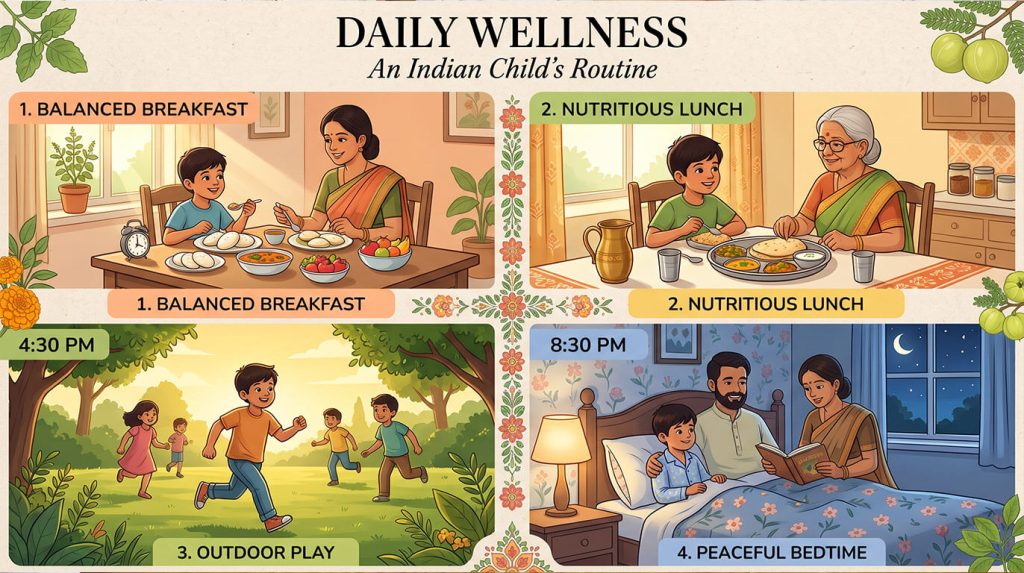
Ayurveda traditionally calls a structured daily routine Dinacharya. For children, this can mean regular meals, adequate sleep, active play and good hygiene.
Here is a practical example.
| Time | Healthy habit |
| 7-8 AM | Wake up, brush teeth, drink water according to thirst and eat breakfast |
| 9-11 AM | Outdoor play, movement and a suitable fruit snack |
| 12-2 PM | Balanced lunch with grains, protein and vegetables |
| 4-6 PM | Cycling, walking, games and a nutritious snack |
| 7-8 PM | Balanced dinner |
| 8-9 PM | Quiet activities and bedtime according to age |
Simple meal ideas for Indian children
Breakfast: Vegetable poha, idli with sambar, vegetable upma or eggs with whole-grain toast.
Lunch: Rice or roti with dal, vegetables and curd.
Evening snack: Seasonal fruit, homemade chilla or unsweetened yoghurt.
Dinner: Vegetable khichdi, dal with roti or another balanced family meal.
Allow age-appropriate portions and respect your child’s hunger and fullness cues.
Red Flags: When Should Parents Seek Medical Attention?
A child catching occasional colds does not automatically mean their immunity is weak.
However, certain symptoms should never be dismissed as a simple immune weakness.
Seek urgent medical care if your child develops:
- Difficulty breathing, rapid breathing with distress or visible chest retractions.
- Blue or grey lips, face or skin.
- Unusual drowsiness, difficulty waking or unfeelingness.
- A seizure, particularly a first seizure.
- Signs of severe dehydration, such as very little urine, extreme lethargy or inability to keep fluids down.
- A rapidly spreading rash, particularly when accompanied by fever or an ill appearance.
- A fever of 38°C or higher in an infant younger than three months.
Do not delay emergency assessment while trying home remedies, herbal preparations or steam treatments.
Deeper investigation for repeated infections
Discuss your concerns with a pediatrician if your child experiences:
- Repeated pneumonia or unusually severe respiratory infections.
- Infections that are unusually persistent or difficult to treat.
- Recurrent deep-seated infections or unusual organisms.
- Persistent oral thrush beyond the expected age-related period.
- Poor weight gain or growth concerns.
- A family history of diagnosed immune deficiency.
The number of infections alone is not enough to diagnose an immune disorder. A child’s age, exposure to other children, infection severity, recovery pattern and growth history all matter.
Frequently Asked Questions for Ayurvedic treatment on Varicose Veins
There is no single Ayurvedic preparation proven to reliably prevent infections in children.
A nutritious diet, regular sleep, physical activity, adequate hydration and recommended vaccinations have a stronger evidence base than commercial herbal immunity boosters.
Amla and turmeric can be included as ordinary foods when age-appropriate, but concentrated herbal supplements should not be given without professional guidance.
It is not advisable to establish this as a routine without consulting a pediatrician.
Although both plants have traditional medicinal uses, evidence supporting their ability to prevent childhood infections is limited.
Start with everyday habits rather than supplements.
- Provide varied meals with sufficient protein and micronutrients.
- Encourage regular physical activity.
- Maintain age-appropriate sleep schedules.
- Follow recommended vaccination schedules.
- Practice regular handwashing.
- Avoid tobacco smoke and other harmful environmental exposures.
- Address diagnosed nutritional deficiencies with professional guidance.
For most otherwise healthy children, these habits are a sensible foundation.
Healthy eating supports normal immune function, but it does not make children resistant to every virus. Children encounter numerous respiratory viruses, particularly in schools and daycare settings. Their immune systems are also developing experience with different pathogens.
If infections are generally mild, resolve normally and your child is growing well, frequent minor colds may be part of ordinary childhood. However, unusually severe, persistent or recurrent infections warrant medical evaluation.
Safety depends on the child's age, health, product composition, manufacturing quality and other medications or supplements being used. Some formulations contain substantial sugar, and products can vary in ingredients and concentration.
An Integrative Action Plan: What Parents Should Actually Do
Building natural resilience does not require overturning your entire household overnight. Start here:
- Fix the Foundation: Eliminate icy drinks and industrial boxed snacks. Replace them with warm, freshly cooked meals, adequate hydration, and consistent bedtimes.
- Clear the Gut: Add a pinch of toasted cumin or fennel to their daily meals to kindle Agni and prevent the metabolic congestion that creates recurring mucous.
- Partner Up: Build a relationship with an integrative or Ayurvedic practitioner who works alongside your family pediatrician, ensuring your child gets the best of gentle tradition and modern safety.
- Establish predictable sleep and activity habits: Choose realistic sleeping and waking times. Family walks, cycling, playground visits and dancing are all useful options
- Review vaccination and preventive healthcare: Check your child’s immunization record against the current Indian Academy of Pediatrics recommendations and the advice of your pediatrician.
- Be selective about Ayurvedic products: Before introducing any herbal product, ask, Is there credible clinical evidence for this use in children? Is the formulation suitable for my child’s age? Has the product undergone appropriate quality testing? Could it interact with an existing medicine or medical condition? If these questions cannot be answered satisfactorily, it is better not to use the product.
- Add Daily Defense: Introduce a nightly cup of warm turmeric milk or a morning spoonful of clean, authentic Chyawanprash suited to their age.
- Monitor growth, recovery and overall well-being: Instead of counting every episode of sneezing or coughing, pay attention to the bigger picture. Is your child growing appropriately? Eating reasonably well? Playing normally? Recovering from common illnesses? These observations are more useful than claims that a particular supplement will dramatically increase immunity.
The goal is not to boost immunity beyond natural levels. It is to help children develop, grow and recover with the support of good nutrition, healthy habits and appropriate medical care.