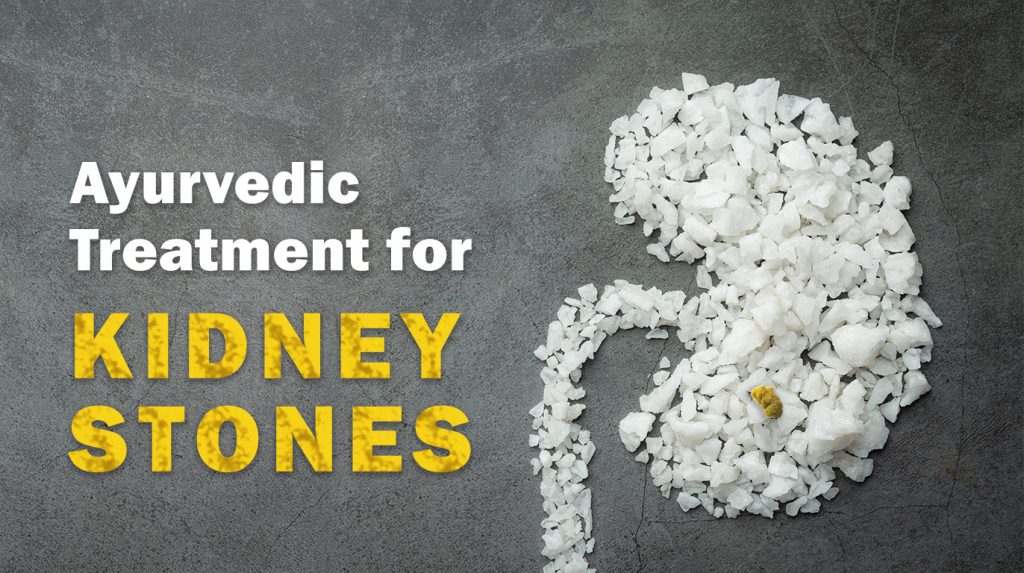
Urolithiasis (also known as urinary stone disease), categorized in classical Ayurvedic literature as Mutrashmari, represents one of the most prevalent and painful clinical disorders affecting the human urinary tract. Contemporary global epidemiological data indicates that urinary stone disease affects approximately 5% to 10% of the adult population and up to 3% of children, with high recurrence rates within five to ten years following initial clearance. In specific geographical zones, such as the designated “stone belt” of northern India-comprising Rajasthan, Gujarat, Punjab, and Haryana.
What Ayurveda Calls Kidney Stones
In classical texts, stones are called Ashmari, literally “stone”, and urinary stones are Mutrashmari. The Sushruta Samhita describes them in detail. It also advises that stones not responding to medicine may need surgical removal, so even the classical authors did not treat herbs as a cure for everything. Four types for kidney stones are described:- Vataja: severe, cutting pain with dry, rough stones
- Pittaja: burning sensation with reddish or yellowish stones
- Kaphaja: heaviness, cold sensation, and smooth, pale stones
- Shukraja: linked to reproductive fluid, seen mainly in men
Why Kidney Stones Happen
The Ayurvedic view. Stone formation begins with weak digestion (Mandagni) and the buildup of Ama, or metabolic waste. Kapha provides the sticky base, Pitta adds heat that concentrates the urine, and Vata dries and hardens the mass. Classical causes include:- Suppressing the urge to urinate (Mutra Vegadharana)
- Drinking too little water
- Eating excess dry, salty, sour or very heavy foods
- Sleeping in the daytime and leading a sedentary life
- Working in intense heat
The modern view of kidney stone
Stones form when urine becomes supersaturated with minerals such as calcium, oxalate, uric acid or cystine. The main risk factors are:- Low urine volume
- High salt and high animal protein intake
- Low urinary citrate
- Obesity and metabolic syndrome
- Gout, hyperparathyroidism and recurrent infections
- Family history
Early Signs and Symptoms
Many stones stay silent until they move. Early or subtle signs include:- A dull, intermittent ache in the flank or lower back
- Cloudy, strong-smelling or dark urine
- Burning or frequent urination
- Pink or red-tinged urine, sometimes visible only under a microscope
- Recurrent urinary infections
How an Ayurvedic Physician Assesses a Patient
A responsible practitioner does not rely on pulse reading alone. A good ayurvedic consultant will:
- Take a detailed history of diet, water intake, digestion and past stones occurrences.
- Assess Prakriti (constitution) and the active Dosha imbalance.
- Ask for or review ultrasound, urine tests and blood tests for creatinine, calcium and uric acid.
Key Ayurvedic Herbs for Kidney Stones
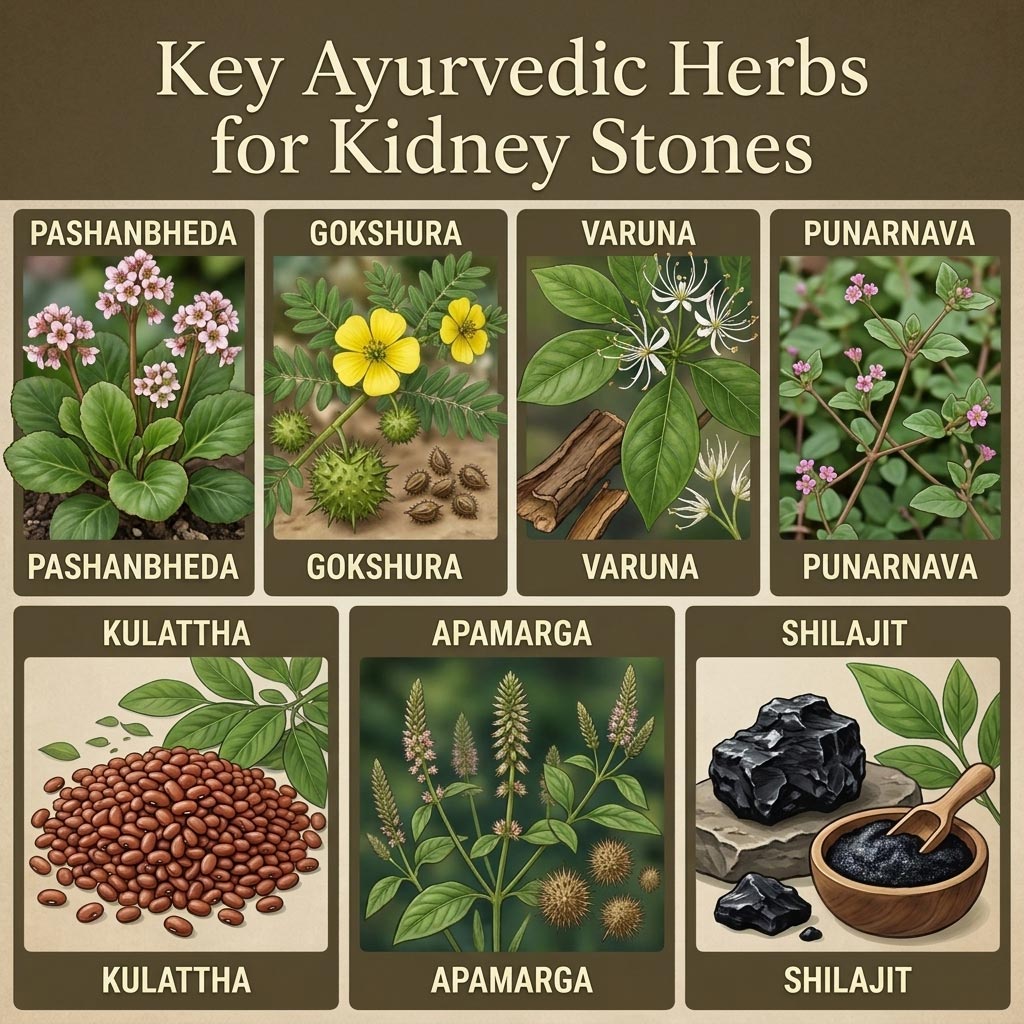
Many herbs are classed as Mutral (diuretic) or Ashmarighna (stone-breaking). The main ones are listed below:- Pashanbheda (Bergenia ligulata or ciliata). The name means “stone breaker” and it is the best-known stone-breaking herb in Ayurveda. The Sushruta Samhita mentions its use in managing kidney and bladder stones. Laboratory and animal studies show that it can inhibit calcium oxalate crystal formation, though clinical evidence in humans remains limited.
- Gokshura (Tribulus terrestris). This is a classical urinary tonic and diuretic. Animal studies suggest it may reduce crystal deposition, but human data are uneven.
- Varuna (Crataeva nurvala). Its bark is used for urinary obstruction. Rat studies suggest it may reduce oxalate deposition in the kidney.
- Punarnava (Boerhavia diffusa). A mild diuretic used for swelling and urinary problems. It is not directly stone-dissolving.
- Kulattha (horse gram, Macrotyloma uniflorum). Traditionally given as a soup or decoction. Experimental studies are supportive, but human evidence is thin. People prone to oxalate stones should ask a practitioner before using it often.
- Apamarga (Achyranthes aspera) and Yavakshara. Alkaline preparations are classically used for stones. Their high mineral and alkali content makes them unsuitable for people with kidney impairment or on potassium-restricted diets.
- It is used as a rejuvenative. Only properly purified, tested shilajit is acceptable, because raw material can carry heavy metals.
Standardized Polyherbal Formulations
- Gokshuradi Guggulu combines Tribulus terrestris, Commiphora mukul, Triphala, and Trikatu. This classical tablet exerts strong Mutrala and Ashmari Bhedana effects while reducing pelvic pain and local inflammation.
- Varunadi Kwatha is a classical decoction containing Crataeva nurvala, Strobilanthes ciliatus, and Plumbago zeylanica. It disintegrates renal calculi, alters urinary biochemistry, and promotes rapid clearance.
- Palasha Kshara is processed alkaline ash derived from Butea monosperma, rich in soluble potassium carbonate and bio-active minerals. Its high alkalinity neutralizes urinary acidity, dissolves uric acid and calcium oxalate matrices, and provides rapid relief from burning micturition. Clinical studies confirm that Palasha Kshara administered alongside Ashmarihara Kwatha achieves complete symptom remission and stone clearance in a significant proportion of treated patients.
- Shweta Parpati is an alkaline mineral formulation composed of Suryakshara (potassium nitrate), Sphatika, and Navasadara. It acts as a rapid urinary alkalizer, relieving dysuria, solubilizing urate and phosphate stones, and enhancing renal fluid dynamics.
Panchakarma and Supportive Therapies
For selected patients, a physician may recommend gentle therapies after the acute pain has settled:
- Snehana and Swedana (oil massage and mild sweating) to relieve Vata spasm
- Basti (medicated enema) in carefully chosen cases
- Virechana (therapeutic purgation) when Pitta dominates
These are not suitable for people with acute colic, infection, dehydration or reduced kidney function.
[read my blog on Importance of regular massage for simple and scientific secret of healthy Longevity]
Clinical Decision-Making: Stone Size, Location, and Limitations
A structured clinical assessment determines whether conservative Ayurvedic management is indicated or if immediate surgical referral (Shastrakarma) is required.| Stone Size & Location | Primary Diagnosis | Recommended Therapeutic Protocol | Diagnostic Criteria & Monitoring |
| Micro-Calculi (<4 mm) in renal parenchyma or bladder | Excellent prognosis; 90%–100% spontaneous expulsion expected. | Mutrala decoctions (Gokshuradi Kwatha), Shweta Parpati, high fluid intake (3Liter per day). | Urine routine analysis, basic USG monitoring. |
| Moderate Calculi (4 mm to 8 mm) in renal pelvis or upper ureter | Good prognosis; high response to lithotriptic dissolution. | Combined Ashmari Bhedana (Varunadi Kwatha, Palasha Kshara, Gokshuradi Guggulu) + Viddha Karma. | Bi-weekly USG monitoring, urine culture. |
| Large Calculi (8 mm to 10 mm) in mid-to-lower ureter | Moderate to guarded prognosis; requires close monitoring. | Intensive supervised Shamana protocol for 60-90 days; monitor for hydronephrosis. | Serial USG every 3 weeks, serum creatinine, GFR. |
| Obstructive Calculi (>10 mm) or Staghorn Calculi | Poor prognosis for conservative dissolution; surgical referral indicated (Shastrakarma). | Immediate urological evaluation for ESWL or surgical removal; post-surgical Ayurveda for prevention. | CT KUB, renal function tests, emergency USG |
Diet and Lifestyle: Where the Evidence Is Strongest
This is the part of Ayurvedic management of kidney stones that most overlaps with modern guidelines:- Drink enough fluid. The goal is about 2.5 litres of urine daily, which usually means roughly 2.5 to 3 litres of fluid, more in hot climates. Plain water, coconut water and barley water (Yava jala) are classical choices.
- Add citrate. Fresh lemon water is helpful because citrate inhibits stone formation.
- Reduce salt. High sodium increases urinary calcium.
- Moderate animal protein, which raises uric acid and calcium excretion and lowers citrate.
- Do not cut calcium. Dietary calcium binds oxalate in the gut, and restricting it can increase stone risk.
- Watch high-oxalate foods such as spinach, rhubarb, beetroot, nuts and strong tea if you form oxalate stones.
- Never hold urine. Ayurveda and urology agree on this one.
- Stay active. Avoid daytime sleep and keep weight in a healthy range.
- Support digestion with warm, freshly cooked food and moderate spices.

| Category | Wholesome Foods & Practices (Pathya) | Unwholesome Foods & Practices (Apathya) |
| Cereals & Pulses | Old Shali rice (Purana Shali), Barley (Yava), Horse gram (Kulattha), Green gram (Moonga). | Freshly harvested rice, heavy legumes, Black gram (Masha), excess red meat. |
| Vegetables & Fruits | Pumpkin (Kushmanda), radish, cucumber, pomegranate, lemon, watermelon. | High-oxalate items: spinach, beetroots, tomatoes, dark chocolate, raw nuts. |
| Fluids & Beverages | Warm water, lemon water, barley water, fresh coconut water, thin buttermilk. | Carbonated beverages, alcohol, excessively sweetened drinks, cold water. |
| Lifestyle & Habits | Moderate daily walking, warm lower-back compresses, timely urination, regular sleep. | Suppressing urinary urges (Mutravarodha), excessive physical exertion, daytime sleep |
An Honest Look at the Evidence
Here is where skepticism is healthy. Most evidence for Ayurvedic stone herbs comes from test-tube and animal experiments. Reviews of Pashanbheda note that well-designed clinical trials are scarce and toxicological profiling is incomplete. Few human trials exist, many are small, and brands and extracts are not standardized.
So, the careful conclusion is this: Ayurvedic herbs may help prevent recurrence and support urinary health, but there is no strong proof that they dissolve established stones. Diet, hydration and lifestyle have better evidence behind them.
Safety Concerns Patients Should Know
- Contamination and misidentification. Some herbal products have been found to contain heavy metals or the wrong plant. Buy only from licensed, batch-tested manufacturers.
- Bhasma and mineral preparations must be properly processed and prescribed, never self-prescribed.
- Kidney impairment. Alkaline preparations and diuretic herbs can be risky if kidney function is reduced.
- Drug interactions. Diuretics, blood pressure drugs, diabetes medicines and lithium can interact with herbs.
- Pregnancy, children and elderly patients need individual supervision.
- Delay is dangerous. Treating a blocked, infected kidney with herbs alone can lead to permanent damage.
Integrative Care: The Sensible Middle Path
For many patients, the best plan combines both systems. Modern imaging and urology deal with obstruction and infection. Ayurvedic diet, hydration, herbs and lifestyle work on prevention. Tell every practitioner about every treatment you take.Frequently Asked Questions on Ayurveda Treatment for Kidney Stones
Ayurvedic treatment effectively dissolves and expels non-obstructive renal and ureteric calculi up to 8 mm in diameter. Formulations such as Varunadi Kwatha and Gokshuradi Guggulu break down the stone matrix and promote natural expulsion. Calculi larger than 10 mm or those causing severe urinary obstruction require urological surgical consultation.
Pashanbheda has the strongest tradition, followed by Gokshura and Varuna. “Best” depends on stone type, constitution and kidney health, so the choice should be as per patients.
Small gravel (under 4 mm) typically passes within 2 to 4 weeks with adequate hydration and diuretic therapy. Moderate calculi (5 mm to 8 mm) generally require 6 to 12 weeks of structured phytotherapy and dietary compliance to achieve complete dissolution.
Classical Ayurvedic texts identify Kulattha as a potent Ashmarihara (stone-destroying) pulse. Scientific research confirms that horse gram is rich in phytates and organic acids that inhibit calcium oxalate crystallization, reduce urinary oxalate levels, and promote stone disintegration.
For most healthy people in moderation, yes. If you form oxalate stones or have kidney disease, ask your doctor first.
Ayurveda addresses the root metabolic cause (Agni Mandya and Ama) rather than merely removing the stone. By balancing Tridosha, regulating urinary pH through alkaline therapies (Kshara and Shweta Parpati), and enforcing tailored dietetic guidelines (Pathya), Ayurveda prevents solute supersaturation and stops recurring crystallization.
While herbal remedies are safe when properly prescribed, strong alkaline formulations (Kshara) should be taken under professional guidance to prevent over-alkalization of urine. Patients should monitor stone movement with periodic ultrasonography to avoid unmonitored obstruction.
Only after telling both your doctor and your Ayurvedic practitioner, because interactions are possible.
Conclusion
Ayurvedic urology offers an evidence-based, non-invasive approach to managing kidney stones (Mutrashmari). By combining lithotriptic (Ashmari Bhedana), diuretic (Mutrala), and antispasmodic herbs-such as Bergenia ligulata, Crataeva nurvala, and Tribulus terrestris-with specialized procedures like Viddha Karma and structured dietetics, Ayurveda effectively dissolves non-obstructive calculi and restores metabolic balance to prevent recurrence.
Medical Disclaimer:
“This article is for general education, for informational purposes only and is not medical advice, diagnosis or treatment. Kidney stones can cause serious complications. Do not start, stop or replace any prescribed treatment without consulting a qualified doctor. Herbal products are not regulated equally everywhere, so check legal status and quality in your city and country. Individual results vary. For medical advice or diagnosis, consult a professional Ayurvedic Management of Kidney Stones”
Share this post: