
A Sustainable Path to Natural Weight Balance
Losing weight often feels like an endless cycle of extreme calorie restriction, temporary success, and eventual rebound gain. If you are feeling frustrated by diet trends that leave you fatigued, hungry, and back to hungry, you are not alone.
However, Ayurveda for weight loss management takes a fundamentally different approach. Instead of fighting your body with drastic restrictions, Ayurveda works with your physiological unique constitution (Dosha) to restore metabolic balance, eliminate built-up toxins, and deliver sustainable, natural weight management for the long term.
Here is a comprehensive guide to understanding how weight gain happens, why conventional quick fixes fail, and how natural weight management through Ayurveda can help you build lifelong health without fear or frustration.
The Root-Cause Guide to Sustainable Weight Loss Management Naturally with Ayurveda
If you have spent years cycling through restrictive calorie tracking, intense cardio routines, and temporary crash diets-only to watch the weight return as soon as you stop-you are not alone. The constant struggle to manage weight often creates anxiety about your long-term health, joint mobility, and energy levels.
The core issue with modern weight loss strategies is that they treat excess body weight as a simple mathematical equation: calories in versus calories out. Ayurveda views weight management naturally through a completely different lens. Instead of counting calories, Ayurveda examines your internal ecosystem-focusing on metabolic health, digestive capability, metabolic waste clearance, and individual mind-body constitution (Prakriti).
How and Reasons Weight Gain Happens: An Ayurvedic Perspective
To manage weight naturally, it helps to understand why the body accumulates and holds onto excess weight in the first place. While modern medicine points to hormonal imbalances, caloric surplus, and sedentary lifestyles, Ayurveda looks deeper into metabolic digestion (Agni) and toxic accumulation (Ama).
In classical Ayurvedic texts, chronic weight gain and obesity are referred to as Sthoulya (or Medoroga). To understand how body weight accumulates, it helps to look past superficial calories and explore the interplay between your digestive fire, metabolic waste, and body tissue development.
Sluggish Agni (Digestive Fire)
↓
Incomplete Digestion
↓
Accumulation of Ama (Toxins)
↓
Blockage of Srotas (Micro-circulatory Channels)
↓
Vata Distortion & Over-Nourishment of Meda Dhatu (Fat Tissue)
↓
Sthoulya (Chronic Weight Gain)
- The Breakdown of Agni (Digestive & Metabolic Fire)
In Ayurveda, Agni is the central engine of your metabolism. When your Agni is strong, your digestive system efficiently transforms food into energy and healthy tissue. However, factors like chronic stress, erratic eating schedules, processed foods, and cold drinks weaken this metabolic fire, creating a state known as Manda Agni (sluggish digestion). When digestion slows down, food is not metabolized cleanly, leaving behind undigested metabolic waste.
- Accumulation of Ama (Metabolic Toxins)
When food remains partially digested due to weak Agni, it ferments in the gastrointestinal tract and creates a sticky, toxic byproduct called Ama. Ama enters the circulatory systems, clogging the body’s subtle channels (Srotas). This blockage prevents nutrients from reaching deeper tissues while trapping fat cells in a state of chronic accumulation.
- Disruption of Meda Dhatu (Fat Tissue Metabolism)
Ayurveda identifies seven distinct tissue layers (Dhatus) in the human body. Fat tissue is known as Meda Dhatu. When Ama blocks the subtle channels surrounding the adipose tissue:
- The body feeds nutrition exclusively to fat cells (Meda), causing them to swell.
- Deeper, critical tissues-such as muscle (Mamsa), bone (Asthi), and nerve tissues-become starved of vital nutrients.
- This imbalance explains why many people gaining weight feel chronically tired, weak, or physically fatigued.
- The Dominance of Kapha Dosha
While anyone can experience weight gain, individuals with a dominant Kapha constitution naturally possess physical traits associated with earth and water elements: stability, heavy structure, and slow fluid movement. When Kapha becomes imbalanced through cold, heavy, or sweet foods, it accelerates fat storage and fluid retention.
- Emotional Stress and Disruptive Routines
Irregular sleep patterns, eating on the go, chronic stress, and late-night snacking destabilize all three Doshas. Stress elevates cortisol, which directly impairs Agni and prompts the body to hold onto fat reserves as a protective mechanism.
[read this blog to Discover your unique Ayurvedic body type.]
Why Crash Diets Don’t Work in the Long Term
Many people turn to severe caloric restrictions, extreme juice cleanses, or rapid weight-loss supplements out of fear or urgency. While these methods may show immediate results on the weight scale, they are inherently unsustainable and often cause long-term metabolic damage.
| Aspect | Crash Diets / Extreme Restrictions | Ayurvedic Natural Weight Management |
| Primary Focus | Rapid weight reduction via caloric deficit | Deep tissue balance and metabolic health |
| Impact on Agni | Weakens digestive fire; slows metabolism | Rekindles and stabilizes Agni |
| Energy Levels | Causes fatigue, mood swings, and anxiety | Enhances overall vitality and digestive ease |
| Approach | One-size-fits-all plan | Customized to your individual Dosha |
| Metabolic Effect | Suppresses thyroid function & reduces metabolism | Re-establishes healthy, efficient metabolism |
| Tissue Impact | Causes muscle breakdown & tissue depletion | Preserves muscle, target excess fat tissue (Meda) |
| Long-Term Result | High rebound rate (yo-yo dieting) | Sustained weight balance & heightened energy |
| Mind-Body Impact | Induces stress, hunger cravings & anxiety | Restores digestive ease, calmness & mental clarity |
The Rebound Cycle (The “Yo-Yo” Effect)
Severe caloric restriction tricks your body into thinking it is experiencing a shortage. In response, your metabolism slows dramatically to conserve energy. Once the crash diet ends, your slowed metabolism cannot handle standard food intake. The body rapidly stores every extra calorie as fat to protect against future “starvations”-leading directly to the cycle of yo-yo weight gain. When you eventually return to a normal eating routine, your weakened digestive fire cannot process the intake, leading to rapid regain-often adding more weight than was originally lost.
Starvation Impairs Your Internal Systems
Depriving your body of essential nutrients creates an imbalance in Vata Dosha (causing anxiety, poor sleep, and cravings) while simultaneously worsening Mandagni. True health and natural weight loss require nourishment, not starvation.
The “Starvation Response” and Metabolic Slowdown
When you drop calorie intake below your baseline daily energy needs, your body interprets the severe shortage as an environmental famine. To survive, it activates defense mechanisms:
- Cortisol Spike: Stress hormone levels rise, signaling the body to hold onto visceral fat around abdomen.
- Muscle Tissue Breakdown: Lacking adequate fueling, the body burns lean muscle mass for immediate fuel.
- Severe Metabolic Suppression: As muscle tissue decreases, your basal metabolic rate drops drastically.
Long-Term Benefits of Ayurveda for Weight Loss Management
Ayurveda does not offer “overnight transformations.” Instead, it provides a gentle, structured path toward permanent vitality. Choosing an Ayurvedic approach to weight management yields profound benefits that extend far beyond physical appearance.
- Root-Cause Healing Without Rebound
By identifying your unique Dosha imbalance and cleansing accumulated toxins (Ama), Ayurveda addresses the root causes of weight gain. Once your metabolic fire is steady and channels are clear, your body naturally maintains its healthy weight equilibrium without continuous effort.
- Enhanced Digestion and Overall Vitality
Ayurvedic weight management prioritizes digestive strength. As your Agni improves, common digestive complaints such as bloating, hyperacidity, gas, and chronic sluggishness resolve naturally.
- Customized to Your Unique Body Type (Prakriti)
No two human bodies are identical. An Ayurvedic practitioner designs a routine specifically tailored to your physical constitution, current health status, and lifestyle, ensuring that your path to weight balance feels intuitive and supportive rather than restrictive.
- Resolution Without Deprivation
Ayurveda does not starve the body. Instead, it improves cellular assimilation so your body gets maximum nourishment from natural foods. By strengthening Agni, your natural hunger cues normalize, eliminating persistent sugar cravings and emotional eating.
- Personalized Care Based on Your Unique Constitution (Prakriti)
No single dietary plan works for everyone. An Ayurvedic approach customizes lifestyle shifts, spice blends, and food choices based on your dominant Dosha balance:
- Kapha-type Weight Gain: Requires light, dry, warm, and spicy foods to clear sluggishness.
- Pitta-type Weight Gain: Requires cooling, bitter herbs to balance appetite and hyper-acidity.
- Vata-type Weight Gain: Requires warm, grounding, easily digestible foods to ease anxiety-driven eating.
- Preserves Lean Mass While Clearing Waste
Because Ayurvedic strategies focus on restoring flow through Srotas (channels) and enhancing metabolic efficiency, weight loss comes from burning accumulated fat (Meda Dhatu) and removing excess fluid, rather than wasting away vital muscle mass.
- Safe and Gentle for Long-Term Wellness
Because Ayurvedic protocols rely on natural herbs, wholesome dietary habits, gentle movement, and mindful routines, there are no harsh synthetic stimulants or unproven chemical interventions. This makes it a safe, worry-free option for long-term health management.
- Zero Harsh Chemical Side Effects
Ayurvedic strategies use natural spices, therapeutic oils, gentle herbal formulations, and rhythmic lifestyle routines (Dinacharya). This protects liver, kidney, and cardiovascular function while promoting long-term cellular vitality.
Key Pillars of Sustainable Ayurvedic Weight Management
To manage weight loss management naturally, Ayurveda focuses on four core pillars: therapeutic herbs, metabolic daily routines, dietary adjustments and mindful eating.
Pillar 1: Ayurvedic Weight Loss Herbs (Aushadhi)
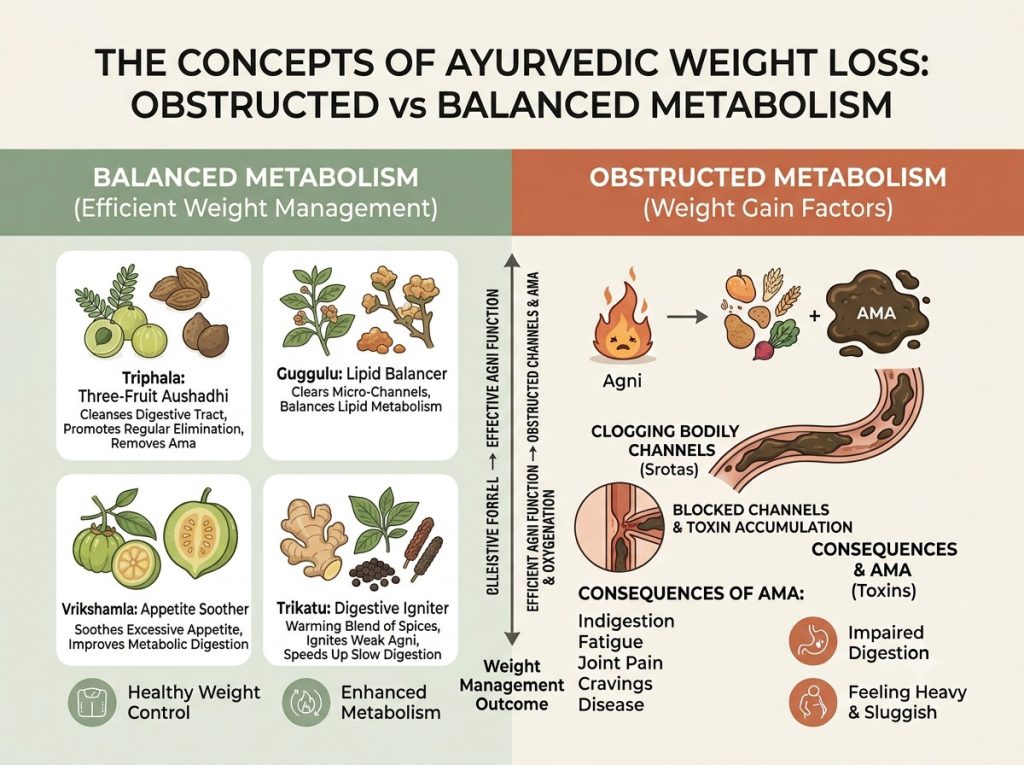
- Triphala: A traditional combination of three fruits (Amla, Haritaki, and Bibhitaki). It cleanses the digestive tract, supports regular elimination, and removes Ama.
- Guggulu (Commiphora mukul): Known for its ability to clear clogged micro-channels and balance lipid metabolism.
- Vrikshamla (Garcinia cambogia): Helps soothe excessive appetite and improves metabolic digestion.
- Trikatu: A warming blend of Ginger, Black Pepper, and Long Pepper (Pippali) that ignites weak Agni and speeds up slow digestion.
Pillar 2: Daily Metabolic Routines (Dinacharya)
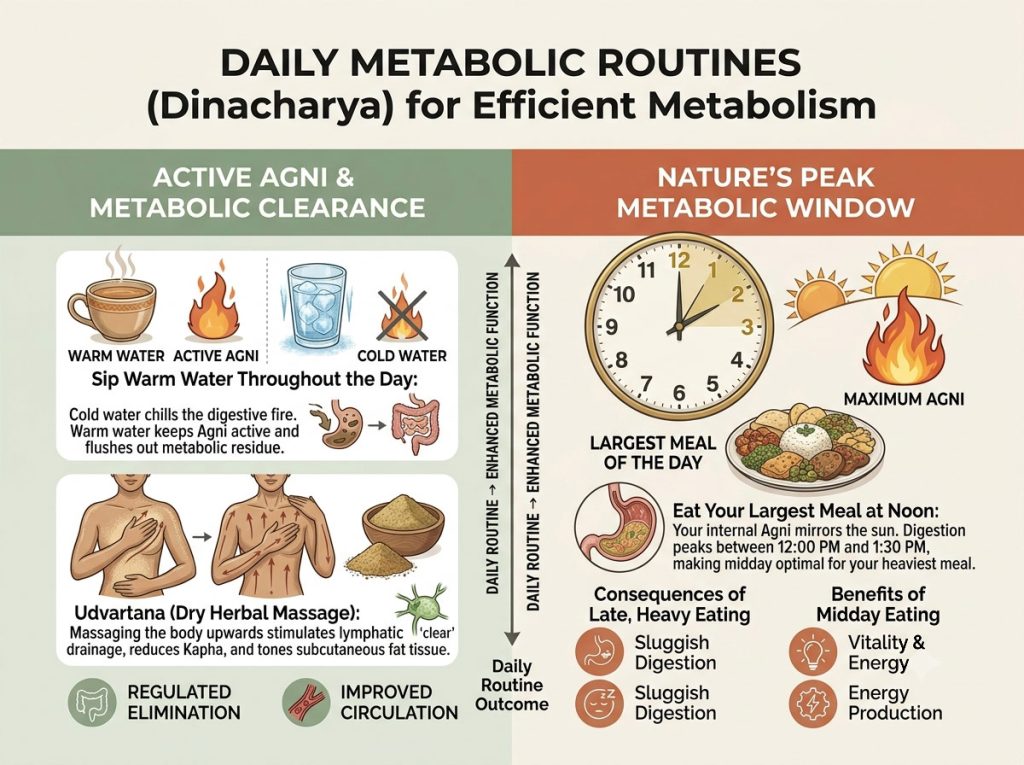
- Sip Warm Water Throughout the Day: Cold water chills the digestive fire. Drinking warm water or herbal teas keeps Agni active and flushes out metabolic residue.
- Udvartana (Dry Herbal Massage): Massaging the body upwards toward the heart with herbal powders stimulates lymphatic drainage, reduces Kapha, and tones subcutaneous fat tissue.
- Eat Your Largest Meal at Noon: Your internal Agni mirrors the sun. Digestion peaks between 12:00 PM and 1:30 PM, making midday the optimal time to digest your heaviest meal of the day.
Pillar 3: Dietary Shifts (Ahara)
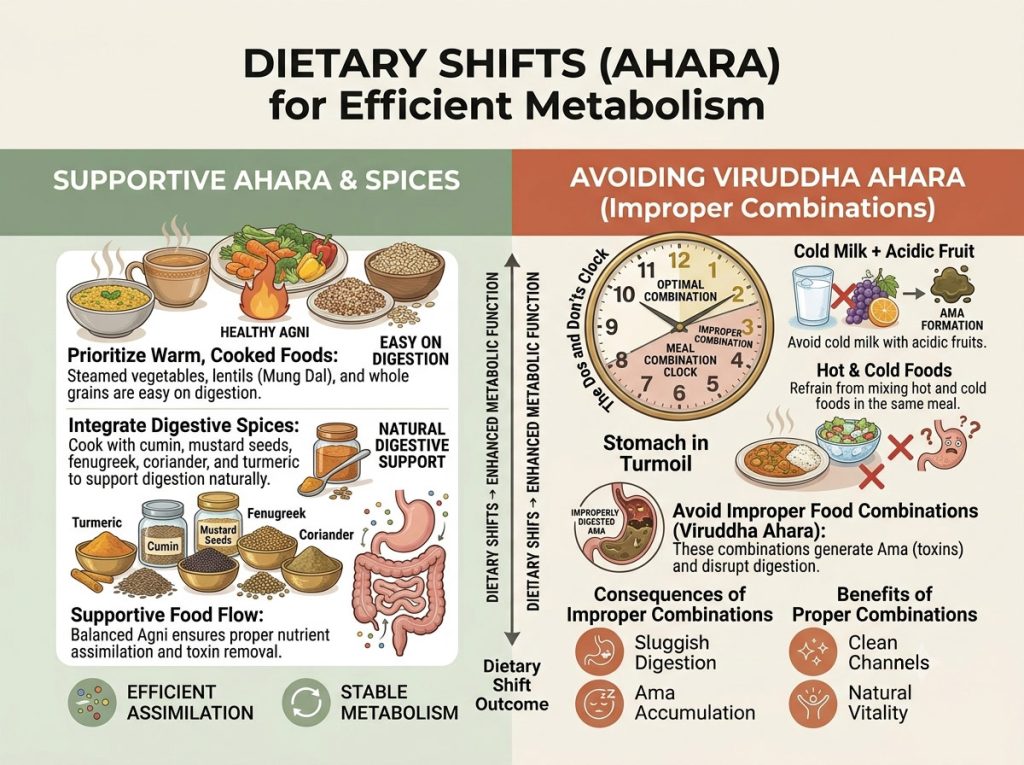
- Prioritize Warm, Cooked Foods: Steamed vegetables, lentils (Mung Dal), and whole grains like quinoa or barley are easy on digestion.
- Integrate Digestive Spices: Cook with cumin, mustard seeds, fenugreek, coriander, and turmeric to support digestion naturally.
- Avoid Improper Food Combinations (Viruddha Ahara): Refrain from mixing cold milk with acidic fruits, or hot and cold foods in the same meal, as these combinations generate Ama.
Pillar 4: Practice Mindful and Timed Eating
- Avoid Snacking Between Meals: Allow 4 to 5 hours between meals so your digestive system can completely process the previous meal.
- Stop Eating Before Fullness: Stop eating when you feel about 75% full. Overeating smothers the digestive fire just like piling too many wooden logs onto a small flame.
- Finish Dinner Early: Eat dinner at least 3 hours before going to sleep (ideally by 7:00 PM) to prevent nocturnal Ama accumulation.
Ayurvedic Weight Loss: Myths vs. Facts
Navigating natural health information online can be confusing. Let’s clarify common misconceptions surrounding Ayurvedic weight management:
Myth 1: Ayurvedic weight loss treatments are slow and ineffective.
Fact: While Ayurveda does not promote unsafe drop-in-weight trends (like losing 10 kg in a week), its results are deep, steady, and lasting. By resetting your metabolic baseline, Ayurvedic weight management prevents the typical cycle of weight regain.
Myth 2: You have to follow a strict vegetarian or raw food diet.
Fact: Ayurveda emphasizes warm, cooked, digestible foods customized to your Dosha. Raw foods can actually weaken a delicate Agni (Mandagni) and aggravate Vata. Diets are tailored individually; the focus is on ease of digestion rather than rigid food exclusion.
Myth 3: Ayurvedic herbs alone will make you lose weight.
Fact: Herbs are supportive tools, not magic solutions. Ayurveda emphasizes a holistic framework combining Ahara (diet), Vihara (lifestyle and movement), and Aushadhi (herbal support). Herbs work best when paired with mindful eating and routine.
Myth 4: Natural remedies are completely safe to self-prescribe in high doses.
Fact: Natural does not mean one-size-fits-all. Pungent spices that aid a heavy, sluggish Kapha body type might trigger excess heat, acidity, or inflammation in a high-Pitta individual. Consulting a qualified Ayurvedic doctor ensures remedies are tailored to your unique Prakriti.
Myth 5: You must completely cut all fats to lose body weight.
Fact: Completely stripping healthy fats from your diet degrades nervous tissue and increases Vata Dosha, causing anxiety and constipation. Small amounts of digestive fats like warm A2 Cow’s Ghee carried with herbs actually help ignite Agni and carry nutrients deep into target tissues.
Frequently Asked Questions on Ayurveda Treatment for Weight Loss
Because Ayurveda focuses on clearing root-cause imbalances rather than stripping water weight, initial changes in energy, light digestion, and improved sleep usually appear within 2 to 3 weeks. Sustained, healthy weight loss typically progresses at a safe, steady pace of 2 to 4 pounds per month.
Yes. Ayurvedic principles can complement standard medical care for conditions like hypothyroidism, PCOD or PCOS, or insulin resistance. However, always consult your physician and a certified Ayurvedic doctor to avoid herb-drug interactions and ensure a balanced care plan.
No. Ayurveda is a universal medical framework based on food qualities (Gunas) and thermodynamics, not specific cultural recipes. You can apply Ayurvedic principles-such as eating warm, freshly cooked meals, using digestive spices, and avoiding cold drinks-to any local cuisine worldwide.
If you maintain the foundational eating habits, digestive practices (Agni maintenance), and daily routines (Dinacharya) learned during your care, your body will maintain its natural weight balance long after you finish specific herbal protocols.
Yes. Unlike aggressive chemical appetite suppressants, classic Ayurvedic protocols focus on balancing your system through natural foods, herbs, and healthy routines. Because it aligns with your body’s natural rhythms, it is safe for long-term wellness.
Yes. Central abdominal fat is often linked to sluggish digestion (Mandagni) and accumulated Ama. By strengthening digestive fire, clearing metabolic channels, and balancing Kapha Dosha through targeted herbs (like Guggulu preparations) and dietary tweaks, Ayurveda helps reduce abdominal fat over time.
While Panchakarma (Ayurvedic detox therapy) can accelerate results by removing deep-seated toxins, it is not mandatory for everyone. Simple daily routines (Dinacharya), dietary adjustments, and classic herbal formulations are very effective for gradual, natural weight management.
Take the First Step Toward Sustainable Health
Achieving a healthy body weight does not require chronic starving, punishing routines, or constant worry about long-term health risks. Weight management does not have to be a source of stress or chronic restriction. By shifting your focus toward strengthening your metabolic fire (Agni), clearing internal waste (Ama), and honoring your unique body constitution, you can achieve weight loss management naturally.
If you are ready to begin your journey, start small: warm your drinking water, incorporate mild digestive spices into your meals, and aim for an earlier dinner tonight. Your body will thank you for the care.
Consult a qualified Ayurvedic doctor to identify your unique Prakriti and begin your journey toward lasting vitality today.
Conclusion: Sustainable Healing Over Quick Fixes
Managing your weight does not have to be an endless cycle of extreme calorie restriction, intense physical stress, or persistent worry about long-term health consequences. As classical Ayurvedic wisdom reminds us, true health is not simply the absence of excess fat, but a state of dynamic equilibrium where your metabolic fire (Agni) is bright, your digestion is effortless, your channels (Srotas) are clear of toxins (Ama), and your mind is at peace.
By moving away from temporary crash diets and adopting Ayurveda for weight loss management, you choose a path rooted in understanding your unique body constitution (Prakriti). When you nourish your body with warm, spiced, nutrient-rich foods, honor your natural circadian rhythms (Dinacharya), and utilize proven botanical remedies, weight loss becomes a natural byproduct of restored internal balance.
Health is a lifelong journey, not a short-term race. By taking gentle, consistent, root-cause-driven steps today, you build a foundation for permanent vitality, stable energy, and lasting wellness naturally.
Medical Disclaimer:
“The content provided in this article-including text, graphics, images, dietary suggestions, and herbal descriptions-is intended solely for informational and educational purposes only. It is designed to empower readers with knowledge regarding traditional Ayurvedic principles and general wellness strategies. This post does not constitute medical advice, diagnosis, or treatment. It should never be used as a replacement for individual clinical evaluation by a qualified physician, registered dietitian, or certified Ayurvedic practitioner (BAMS).”
Share this post: