Trigeminal Neuralgia (TN) is often described as one of the most painful neurological conditions known to medicine. Characterized by sudden, severe, electric shock-like pain on one side of the face, it can significantly affect daily life, making routine activities such as eating, brushing teeth, talking, or even smiling extremely difficult.
Modern medicine offers effective treatments that may reduce pain, including medications and, in selected cases, surgical interventions. However, many individuals continue to experience recurrent symptoms, medication-related side effects, or seek complementary approaches to improve their overall quality of life. This is where Ayurveda, India’s traditional system of medicine, offers a holistic perspective.
Rather than focusing solely on pain suppression, Ayurveda aims to identify and address the underlying imbalance contributing to nerve hypersensitivity. By combining herbal medicines, Panchakarma therapies, dietary modifications, stress reduction, and individualized care, Ayurveda seeks to support long-term nerve health and overall well-being.
It is important to note that Ayurveda should complement-not replace-appropriate neurological evaluation and evidence-based medical care, especially in newly diagnosed patients or those with severe symptoms.
Understanding Trigeminal Neuralgia
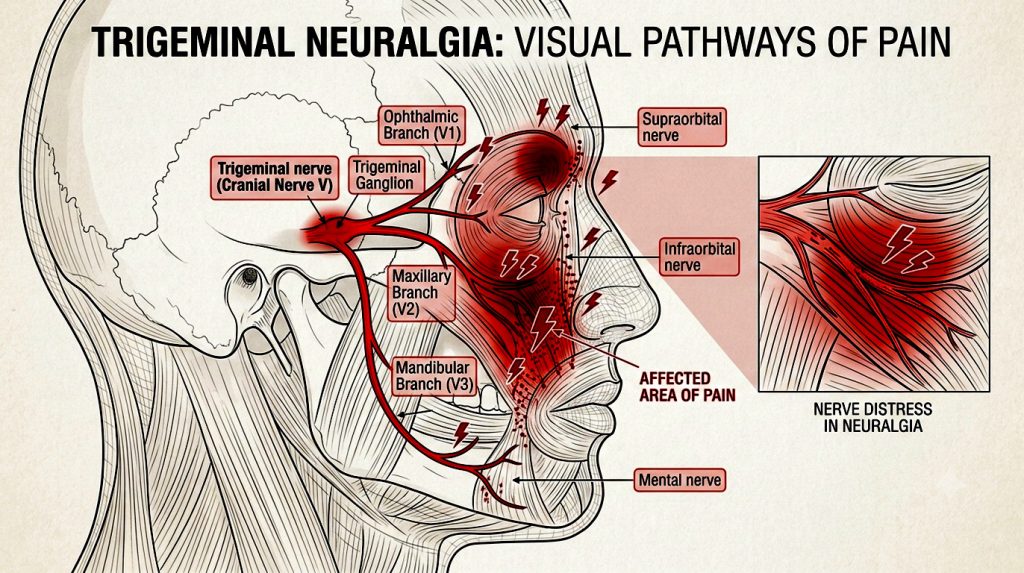
The trigeminal nerve is the fifth cranial nerve, responsible for sensation across the face. When it becomes irritated – most often due to a blood vessel pressing against it, but sometimes due to multiple sclerosis, trauma, or a structural lesion – it can fire pain signals that feel wildly out of proportion to any actual touch. Doctors broadly separate this into primary trigeminal neuralgia (usually vascular compression) and secondary trigeminal neuralgia (caused by an underlying disease).
Typical symptoms include sudden stabbing or shock-like pain on one side of the face, episodes lasting seconds to a couple of minutes, and pain-free windows in between that can shrink as the condition progresses. Because these symptoms can occasionally overlap with more serious neurological problems, I insist that new or worsening facial pain be evaluated by a neurologist, usually with MRI imaging, before any Ayurvedic plan begins.
Common Symptoms
- Sudden stabbing or electric shock-like facial pain
- Pain affecting one side of the face
- Episodes lasting from seconds to a few minutes
- Triggered by chewing, speaking, brushing teeth, washing the face, or cold wind
- Pain-free intervals between attacks, although frequency may increase over time
Diagnosis should always be made by a qualified neurologist or healthcare professional. Magnetic Resonance Imaging (MRI) is often recommended to exclude secondary causes.
Modern Medical Management
Evidence-based medicine remains the first-line approach for trigeminal neuralgia.
Common treatment options include:
- Anticonvulsant medications such as carbamazepine or oxcarbazepine, which are considered first-line therapies.
- Alternative medications including gabapentin, pregabalin, baclofen, or lamotrigine in selected patients.
- Interventional procedures such as radiofrequency ablation, glycerol rhizotomy, gamma knife radiosurgery, or microvascular decompression for individuals may not respond adequately to medication.
While these therapies can be highly effective, they may also be associated with side effects such as dizziness, drowsiness, imbalance, or recurrence of symptoms after treatment. This has led many patients to explore integrative approaches that include Ayurveda.
The Ayurvedic View: Vata and Anantavata
In Ayurveda, this condition closely resembles what our classical texts describe as Anantavata, a Shiro-roga (head disorder) driven by aggravated Vata dosha affecting the nadis (nerve channels) of the face and cranium. Vata governs movement, sensory perception, and pain transmission in the body. When it becomes reduced – through stress, poor sleep, irregular eating, aging, or trauma – it tends to lodge in the head and face, producing dryness, hypersensitivity, and the kind of erratic, shooting pain that mirrors what modern neurology attributes to nerve compression or demyelination.
Ayurveda treatment approach generally rests on four pillars:
- Vata pacification through oleation (snehana), fomentation (swedana), and a warm, nourishing diet.
- Brimhana, or tissue nourishment – rebuilding the strength of nerve tissue using medicated ghees and rejuvenating formulations.
- Shamana and shodhana – a combination of symptom-relief therapies and, where the patient’s strength allows, selective detoxification through Panchakarma.
- Manas chikitsa – calming the mind, since fear, anxiety, and disturbed sleep so often accompany chronic facial pain and can amplify it further.
Ayurvedic Herbs Commonly Used
Several Ayurvedic herbs have traditionally been used to support nerve health. While some have emerging scientific evidence for neuroprotective or anti-inflammatory properties, robust clinical trials specifically for trigeminal neuralgia remain limited. These herbs should be used under the guidance of a qualified Ayurvedic physician.
Ashwagandha (Withania somnifera): Ashwagandha is one of Ayurveda’s best-known adaptogenic herbs. It is traditionally used to strengthen the nervous system, reduce stress, and improve resilience. Experimental studies suggest antioxidant, neuroprotective, and anti-inflammatory effects.
Brahmi (Bacopa monnieri): Traditionally regarded as a brain tonic, Brahmi supports cognitive function and nervous system balance. It may help reduce stress-related aggravation of symptoms and promote mental relaxation.
Guduchi (Tinospora cordifolia): Guduchi is valued for its immunomodulatory and anti-inflammatory properties in Ayurveda. It is often included in formulations aimed at supporting tissue health and reducing chronic inflammation.
Bala (Sida cordifolia): Bala has traditionally been used for neuromuscular disorders and Vata imbalance. It is commonly incorporated into medicated oils used for external therapies.
Yashtimadhu (Glycyrrhiza glabra): Licorice has demulcent and anti-inflammatory properties. In Ayurvedic practice, it may be used carefully as part of individualized formulations, although prolonged use requires medical supervision because it may affect blood pressure and electrolyte balance.
Shankhapushpi: Traditionally used to support the nervous system and promote relaxation, Shankhapushpi is frequently combined with other rejuvenative herbs.
Panchakarma and Local Therapies
Several Panchakarma procedures are central to Ayurvedic management of trigeminal neuralgia, always personalized by a qualified physician to the individual’s constitution and strength:
- Shiro Abhyanga and Mukhabhyanga – gentle head and face massage with medicated oils such as Ksheerabala taila or Karpasathyadi taila to calm Vata and nourish the nerves.
- Shirodhara – a continuous, warm stream of medicated oil poured over the forehead. While the clinical evidence base is still developing, patients consistently report deep relaxation, better sleep, and reduced stress reactivity, which itself can lower pain sensitivity.
- Nasya – medicated oils instilled through the nostrils, a route classical Ayurveda considers particularly effective for reaching structures above the collarbone, including the head and face.
- Swedana – local steam or warm herbal compresses (often using Dashamoola decoction) to ease stiffness along the jaw and neck.
- Basti and Virechana – medicated enemas or mild purgation, used selectively to clear aggravated doshas when indicated.
A structured case report published in 2025 on post-traumatic trigeminal pain documented meaningful reductions in pain scores after a supervised Panchakarma protocol – encouraging, though it’s a single case series rather than a large trial.
Herbs and Classical Formulations
Every formulation should be selected by a qualified Ayurvedic physician based on your constitution, digestive strength, and current medications.
Single herbs traditionally used for nerve health include Ashwagandha (Withania somnifera) for its adaptogenic and neuroprotective properties, Brahmi (Bacopa monnieri) as a classical brain tonic, Guduchi (Tinospora cordifolia) for its anti-inflammatory action, Bala (Sida cordifolia) to strengthen neuromuscular tissue, Nirgundi (Vitex negundo) for its Vata-pacifying and anti-inflammatory effects, and turmeric (Curcuma longa), whose active compound curcumin has shown antioxidant and anti-inflammatory activity in laboratory studies.
Classical compound formulations commonly considered include Mahayogaraja Guggulu and Rasnadi Guggulu for Vata-related pain and stiffness, Dhanvantara Ghritam and Ashwagandhadi Ghritam to nourish nervous tissue, and rasayana preparations like Brahma Rasayana or Ashwagandhadi Lehyam to build long-term resilience. Some practitioners also use herbo-mineral (rasa) preparations for severe Vata disorders, but these require strict quality control and should only ever be prescribed and monitored by an experienced physician.
Under herbal management Cannabis indica (commonly known as bhang) Hemp seed oil (भांग के बीज का तेल) may be applied topically when there is no known allergy. In acute exacerbations avoid local massage and swedana (fomentation), as these procedures can aggravate symptoms. Additionally, nasya using a few drops of properly prepared cow’s ghee, administered by a trained practitioner following correct technique, can help reduce trigeminal neuralgia pain and local inflammation.
Cannabis and opium: opium (अफीम) is prohibited and must not be recommended. Only medically licensed cannabis formulations may be used, and these potent medicines should be prescribed and supervised exclusively by experienced physicians; they must never be used without professional medical advice.
Diet According to Ayurveda
Nutrition plays an important role in maintaining Vata balance.
Recommended foods include:
- Warm, freshly cooked meals
- Whole grains
- Ghee in moderation
- Milk if well tolerated
- Almonds and walnuts
- Mung beans
- Seasonal vegetables
- Healthy oils
- Herbal teas
Foods that may aggravate Vata include:
- Excessively cold foods
- Dry snacks
- Processed foods
- Carbonated beverages
- Excess caffeine
- Skipping meals
- Excess fasting
Hydration and regular meal timing are equally important.
Lifestyle Measures
Lifestyle modifications are central to Ayurvedic care.

Stress does not directly cause trigeminal neuralgia but may amplify pain perception and increase symptom severity in susceptible individuals.
Why Integrative Medicine Offers the Best Long-Term Strategy
Worldwide, healthcare is increasingly adopting an integrative approach that combines conventional medicine with evidence-informed traditional therapies. For chronic neurological disorders such as trigeminal neuralgia, this model recognizes that pain has biological, psychological, and lifestyle dimensions.
A comprehensive care plan may include:
- Accurate neurological diagnosis
- Appropriate medications when indicated
- Nutritional optimization
- Stress management
- Ayurvedic herbal support
- Panchakarma therapies for selected patients
- Physical rehabilitation
- Sleep optimization
- Mental health support
With conventional medicine, Ayurveda can complement it by helping patients cope with chronic symptoms, improve resilience, and support overall well-being.
Patients should never discontinue prescribed neurological medications without consulting their treating physician. Ayurvedic herbs may interact with certain medications, making coordinated care between healthcare providers essential.
What Does Current Research Say on Trigeminal Neuralgia Treatment?
Scientific interest in Ayurvedic medicine for chronic pain and neurological disorders has grown in recent years. Laboratory studies suggest that herbs such as Ashwagandha, Brahmi, and Guduchi possess antioxidant, anti-inflammatory, and neuroprotective properties. Preliminary clinical research indicates that some Ayurvedic interventions may reduce pain, stress, and quality of life in chronic neurological conditions. Current evidence supports Ayurveda primarily as a complementary, patient-centered approach rather than a standalone treatment.
When to Seek Immediate Medical Care
Facial pain should never be self-diagnosed. Seek prompt medical evaluation if you experience:
- Sudden onset of severe facial pain
- Facial weakness or numbness
- Vision changes
- Difficulty speaking or swallowing
- Persistent headache with neurological symptoms
- Symptoms following trauma
- New facial pain associated with fever or rash
These symptoms may indicate conditions other than trigeminal neuralgia and require urgent medical assessment.
Frequently Asked Questions
Ayurveda can treat trigeminal neuralgia with Ayurvedic therapies help support symptom management, reduce stress, improve overall well-being, and complement conventional medical treatment in appropriately selected patients.
Ashwagandha, Brahmi, Guduchi, Bala, and Shankhapushpi are among the herbs traditionally used to support nervous system health. Their use should always be individualized and supervised by a qualified Ayurvedic practitioner.
Some Ayurvedic herbs may interact with prescription medications. Always consult both your neurologist and an experienced Ayurvedic physician before combining treatments.
No. Panchakarma is highly personalized. Factors such as age, general health, disease severity, and digestive strength determine whether specific therapies are appropriate.
Final Thoughts
Trigeminal neuralgia is a complex neurological disorder that demands accurate diagnosis and individualized care. Modern medicine remains the cornerstone of treatment, particularly for controlling acute pain and preventing complications. Ayurveda contributes a broader perspective by emphasizing restoration of systemic balance, nourishment of the nervous system, stress reduction, and personalized lifestyle interventions.
When practiced responsibly under the supervision of qualified healthcare professionals, an integrative model that combines evidence-based neurology with authentic Ayurvedic principles may help improve symptom management, enhance quality of life, and support long-term well-being. While no therapy can guarantee a treatment for every individual, a comprehensive and patient-centered approach offers the best opportunity for sustained relief and improved daily functioning.
This article is intended for educational purposes only and should not be interpreted as medical advice. Trigeminal neuralgia requires evaluation by a qualified healthcare professional. Ayurvedic medicines and procedures should be undertaken only under the supervision of a registered Ayurvedic physician, and they should complement-not replace-evidence-based medical care.
Share this post: