Digestive discomfort is one of the most common health concerns people faces today, and three of the most frequent complaints are gas, bloating, and constipation. These symptoms may seem minor at first, but when they become regular, they can affect energy, mood, appetite, sleep, and overall quality of life. In Ayurveda, these problems are often linked to disturbed Vata dosha, weak digestive fire, and accumulation of toxins from improper digestion.
In more than three decades of my clinical practice, I have never had a week go by without at least few patients walking in with the same quiet complaint: “Doctor, my stomach feels heavy, gassy, and I just can’t clear my bowels properly.” It sounds like a small problem. It is rarely treated as an emergency. And yet it quietly erodes energy, mood, sleep, and self-confidence for millions of people across the world.
As an Ayurveda physician who also respects and refers to modern diagnostics, I want to walk you through this problem the way I would with a patient sitting across my desk – starting with how digestion actually works, why it breaks down, and how Ayurveda and modern medicine can work together.
Modern life has made digestive imbalance more common than ever. Irregular meals, processed foods, stress, poor chewing, low water intake, lack of movement, and excessive screen time all contribute to sluggish digestion. The good news is that in many cases, the condition can be improved naturally with a thoughtful combination of dietary discipline, lifestyle correction, and Ayurvedic support.
How Digestion Is Supposed to Work smoothly
We eat to survive – to generate energy and strength. Food travels through the alimentary canal, gets broken down, and the digested nutrient-rich fluid is absorbed and sent to the liver for detoxification before circulating through the heart to every cell in the body. Inside each cell, the mitochondria – the cellular powerhouse – further break down this fuel into fatty acids, amino acids, and nucleic acids, which become the raw material for tissue repair, immunity, and strength. The same powerhouse manufactures Adenosine Triphosphate (ATP), the energy currency your body runs on all day. Both stages of this process – digestion in the gut and digestion inside the cell – generate waste. That waste travels to the liver, kidneys, and finally the large intestine, to be expelled through defecation. When a person is unable to pass this waste properly, we call it constipation. Everything else – the gas, the bloating, the discomfort – is often a sub-consequence of this one basic failure.Understanding the Problem
Gas is the buildup of air or digestive byproducts in the stomach and intestines. Bloating is the feeling of heaviness, fullness, or abdominal distension that often comes with gas. Constipation refers to infrequent bowel movements, difficult passage of stool, hard stool, or the feeling that the bowels are not completely empty. These three problems often appear together because they share the same root: impaired digestion and slow movement in the gut. When food is not broken down properly, it ferments in the intestines, creates gas, and slows elimination. When the colon absorbs too much water from stagnant stool, constipation becomes worse, leading to a cycle of discomfort.The Different Faces of Constipation
I usually see it present in one of these patterns:- Failure to pass stool once a day (for most Indian patients), or once in three days by Westerns
- Frequent trips to the bathroom, but with a nagging feeling of incomplete evacuation
- Passing very hard stool that requires excessive straining
Why Does This Happen? The Root Causes
Most cases trace back to simple, correctable lifestyle habits:- Poor chewing (mastication), which sends under-processed food into the gut
- Missing or ill-fitting dentures that make chewing difficult
- Reduced saliva production, sometimes linked to autoimmune conditions
- Inadequate water intake and too little water during the day.
- Low fibre in the diet
- Irregular meal timings
- Frequent intake of processed, fried, or heavy foods.
- Suppressing the natural urge to pass stool.
- Eating while mentally stressed or in a hurry
- Inactive lifestyle with little to no exercise
- Smoking, cannabis use, and other substance habits
- Side effects of certain medicines.
- Underlying medical conditions such as thyroid imbalance, diabetes, intestinal disorders, or hormonal changes.
Ayurvedic View of Digestion
Ayurveda sees digestion as the foundation of health. Strong digestion supports strength, clarity, immunity, and proper tissue nourishment. Weak digestion, on the other hand, leads to Ama, the toxic sticky residue formed from incomplete digestion. When Vata becomes aggravated, the colon dries out, stool becomes hard, and movement becomes irregular. When Pitta is disturbed, acidity and burning may appear. When Kapha is heavy, digestion slows and bloating may dominate. Most people with gas and constipation show a Vata-dominant pattern, sometimes mixed with weak Agni and Ama. The goal of treatment is not only to force the bowel to move, but to restore balance, improve digestion, and support natural elimination.When Constipation Signals Something More Serious
This is the part I want every reader to take seriously. Constipation is sometimes simply a symptom of an underlying disease, and Ayurveda alone should never be the first or only response until this has been ruled out. It can be associated with:- Tumours or cancers anywhere along the alimentary canal
- Hernia
- Growths in nearby organs – prostate, pancreas, bladder, or uterus – that physically obstruct the passage of stool
- Weak intestinal motility from protein, Vitamin B12, or Vitamin D3 deficiency
- Hypothyroidism
- Certain medications, such as calcium channel blockers like nifedipine
- Genetic or structural conditions where the anal opening is narrowed
- Piles, fistula, and fissures
- Diabetes
- Intestinal infections
- Long-term unsupervised use of laxatives or purgatives, which paradoxically worsens constipation over time
My First Rule: Do Not Self-Medicate Blindly
Do not jump straight into allopathic purgatives, or even Ayurveda’s own Triphala, Haritaki, or marketed churnas and kadhas, without understanding the cause first. These remedies genuinely help in the short term, but ill-advised, long-term self-use can cause water loss, sodium and electrolyte imbalance, and a dependency where the bowel forgets how to move on its own. The correct sequence is always: identify the cause, complete the diagnosis, rule out serious underlying conditions such as cancer, tuberculosis, diverticulitis, or thyroid dysfunction – and only then begin targeted treatment.Lifestyle First: The Foundation of Any Treatment
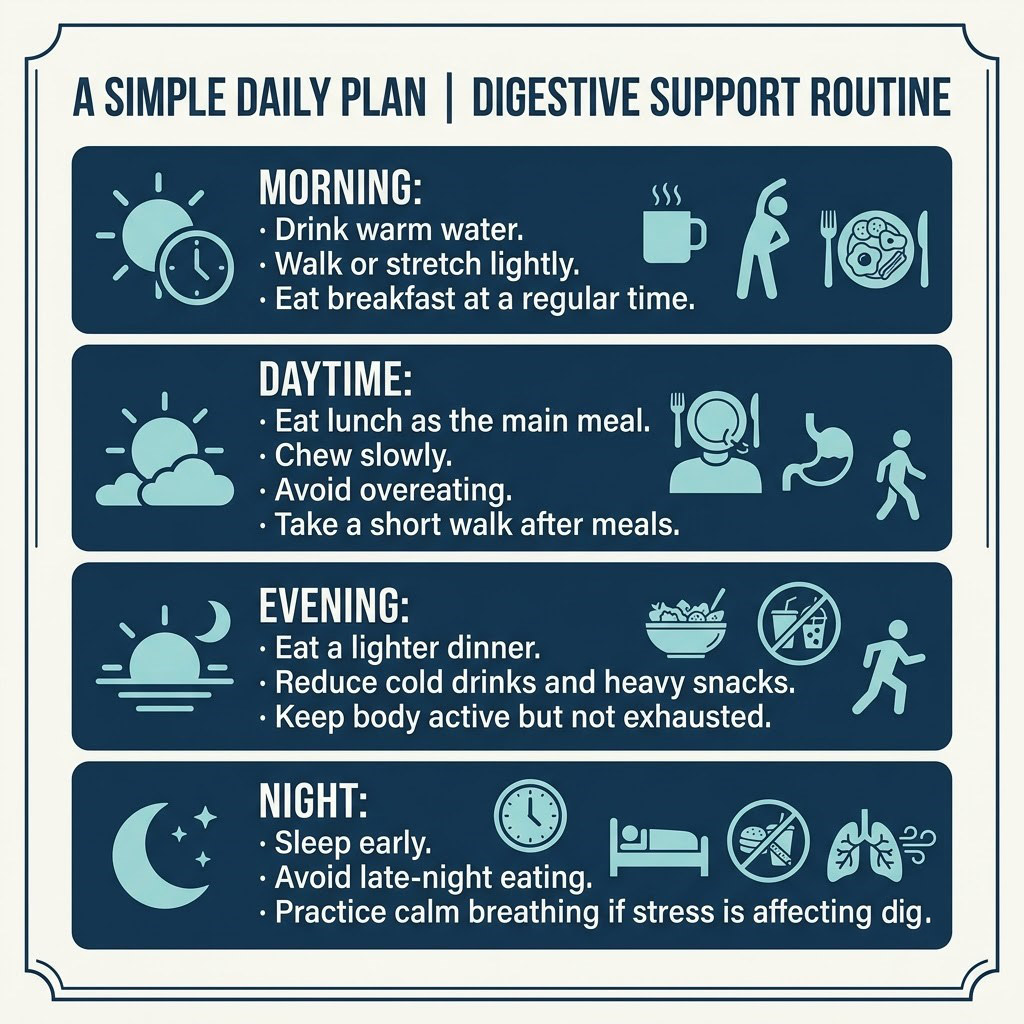
Whether you eventually need modern medication, Ayurvedic herbs, or both, none of it works well without correcting these daily habits:- Chew every mouthful until it is almost liquid, allowing saliva and amylase to properly initiate digestion
- Eat slowly and without stress – stress measurably reduces digestive enzyme secretion and is a direct contributor to gas, bloating, and foul-smelling stool
- Drink 2 to 3 litres of water through the day (patients with heart or kidney disease should restrict this to around 1200 ml daily, under a physician’s guidance)
- During meals, sip no more than 100 ml of water to help mix food properly, rather than gulping large amounts
- About 20 to 30 minutes after meals, drink a glass of water slowly while seated
- Fill your plate generously with fibre-rich vegetables and salads – these act as natural roughage and prebiotics
- Add buttermilk (chaas) to your diet as an excellent natural probiotic
- Minimize processed and packaged foods
- Walk briskly for 60 minutes daily – this is one of the most effective, underused tools for improving gut motility
- Protect 7 to 8 hours of night sleep; poor sleep quietly worsens gut function
- Get your Vitamin B12 and D3 levels checked and corrected if low
Where Ayurveda Adds Real Value
Once serious pathology has been ruled out and lifestyle correction is underway, Ayurveda offers a gentler, more sustainable path to restoring natural bowel rhythm than long-term dependence on allopathic laxatives:- Triphala churna (in a small, supervised bedtime dose) tones the intestinal wall and supports regular evacuation without the harsh gripe of stronger laxatives
- Haritaki (Terminalia chebula), taken in mild doses, is one of Ayurveda’s most respected herbs for improving colonic tone
- Hingwastak churna, containing asafoetida (hing), cumin, and black pepper, is excellent for reducing gas formation and easing bloating after meals
- Ajwain (carom seeds) with a pinch of rock salt after meals helps break down trapped gas
- Saunf (fennel seeds), chewed after meals or taken as tea, calms the gut and reduces flatulence
- Panchasakara churna, used under a senior vaidya’s supervision, is helpful for more stubborn, hard-stool type constipation
- Warm ghee, taken in a small measured quantity at bedtime with warm milk, lubricates the gut naturally in people without contraindications like high triglycerides
- Abhyanga (oil massage) and Vyayama (structured exercise) as described in classical texts, which support motility just as modern medicine recognizes physical activity does [read my blog on Importance of regular massage for simple and scientific secret of healthy Longevity]
Frequently Asked Questions
These three symptoms usually share the same root cause – impaired digestion and slow gut movement. When food isn’t broken down properly (due to poor chewing, low water intake, low fibre, stress, or irregular meals), it ferments in the intestines, produces gas, and slows down elimination. In Ayurveda, this pattern reflects disturbed Vata dosha, weak Agni (digestive fire), and accumulation of Ama (toxic residue from incomplete digestion).
If constipation is new, persistent, or accompanied by weight loss, blood in stool, or severe pain, it should be evaluated by a physician before trying any home or herbal remedy. It can sometimes be linked to underlying conditions such as thyroid imbalance, diabetes, hernia, piles/fissures, intestinal infections, or in rare cases, tumours and growths obstructing the digestive tract. Ayurveda should never replace proper diagnosis in these cases – it should complement it.
Not without understanding the root cause first. While these remedies can genuinely help in the short term, long-term unsupervised use – of both Ayurvedic formulations and allopathic laxatives – can cause water and electrolyte imbalance and create a dependency where the bowel loses its natural ability to move on its own. The correct approach is to first identify the cause, rule out serious conditions, and only then use targeted treatment under guidance.
Some of the most effective, often-overlooked habits include chewing food thoroughly until almost liquid, eating without stress, drinking 2-3 litres of water daily (with adjustments for heart/kidney patients), including fibre-rich vegetables and buttermilk in meals, walking briskly for 60 minutes a day, and protecting 7-8 hours of sleep. Checking Vitamin B12 and D3 levels is also recommended, as deficiencies can weaken intestinal motility.
Once pathology is excluded and lifestyle correction is underway, Ayurveda offers gentler, more sustainable support such as a small supervised bedtime dose of Triphala, mild Haritaki for colonic tone, Hingwastak churna for gas and bloating, ajwain or saunf after meals to ease flatulence, and Abhyanga (oil massage) alongside structured exercise to support gut motility. These are meant for periodic use and reassessment, not indefinite self-medication.
The Bottom Line
Gas, bloating, and constipation are your gut’s way of telling you something is out of balance – sometimes as simple as poor chewing and dehydration, and occasionally as serious as an underlying disease that needs urgent attention. The wisest path is not to choose between Ayurveda and modern medicine, but to use each for what it does best: modern diagnostics to rule out danger, lifestyle correction as the daily foundation, and classical Ayurvedic herbs to gently restore what years of rushed meals and stress have disturbed. If you’ve made these changes consistently and still see no improvement, please don’t wait – consult your doctor and get to the root cause. Your gut has been trying to tell you something. It’s time we listened to it properly, from both sides of the medical world.Share this post: