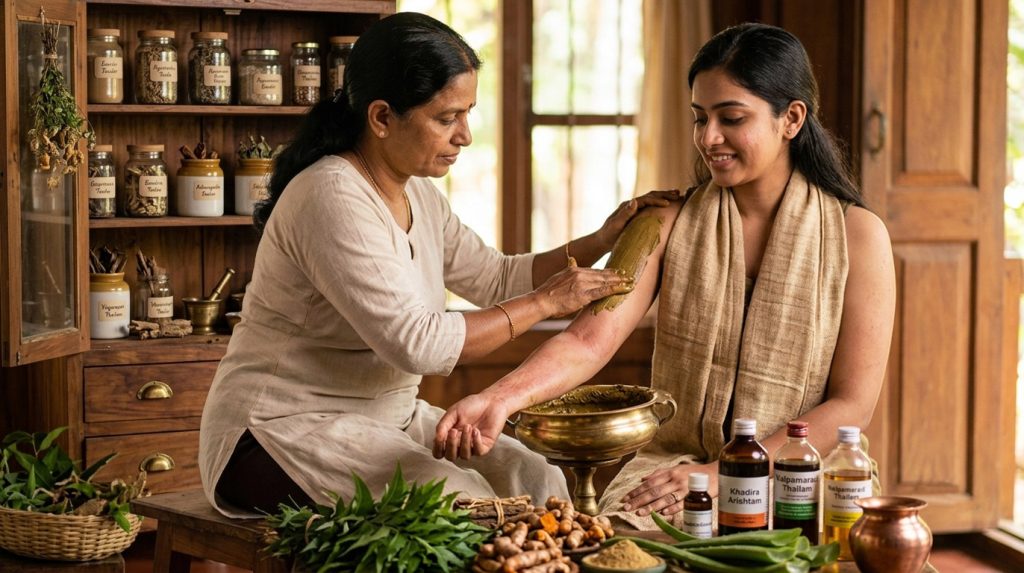
Skin problems-from acne and eczema to psoriasis and hyperpigmentation-affect millions worldwide. While modern dermatology offers effective symptomatic relief, Ayurveda provides a time-tested, holistic framework that targets root causes: digestive imbalance, blood toxicity (Rakta vitiation), and dosha aggravation (especially Pitta). This article blends evidence-based allopathic insights with classical Ayurvedic wisdom to offer a practical, integrative roadmap for healthier skin.
Ayurveda, India’s traditional system of medicine with a history spanning over 3,000 years, views skin disorders not merely as superficial problems but as manifestations of deeper imbalances involving digestion, metabolism, immunity, and lifestyle. Rather than focusing solely on symptom relief, Ayurvedic management aims to restore equilibrium throughout the body.
Healthy skin reflects much more than external beauty-it often mirrors the body’s internal balance. Around the world, millions of people experience skin conditions such as acne, eczema, psoriasis, fungal infections, pigmentation disorders, rosacea, and premature aging. While conventional dermatology offers highly effective treatments for many of these conditions, an increasing number of people are also exploring complementary systems like Ayurveda to support long-term skin health.
The most effective approach is often an integrative one-combining accurate medical diagnosis, modern dermatological care when needed, and evidence-informed Ayurvedic therapies under qualified healthcare professionals.
What Are the Types of Skin Diseases?
In Ayurvedic terminology, skin diseases fall under the broad category of Kushta Roga (कुष्ठ रोग). These conditions are classified into two main categories based on their severity and complexity:
Mahakushta (Major Skin Diseases)
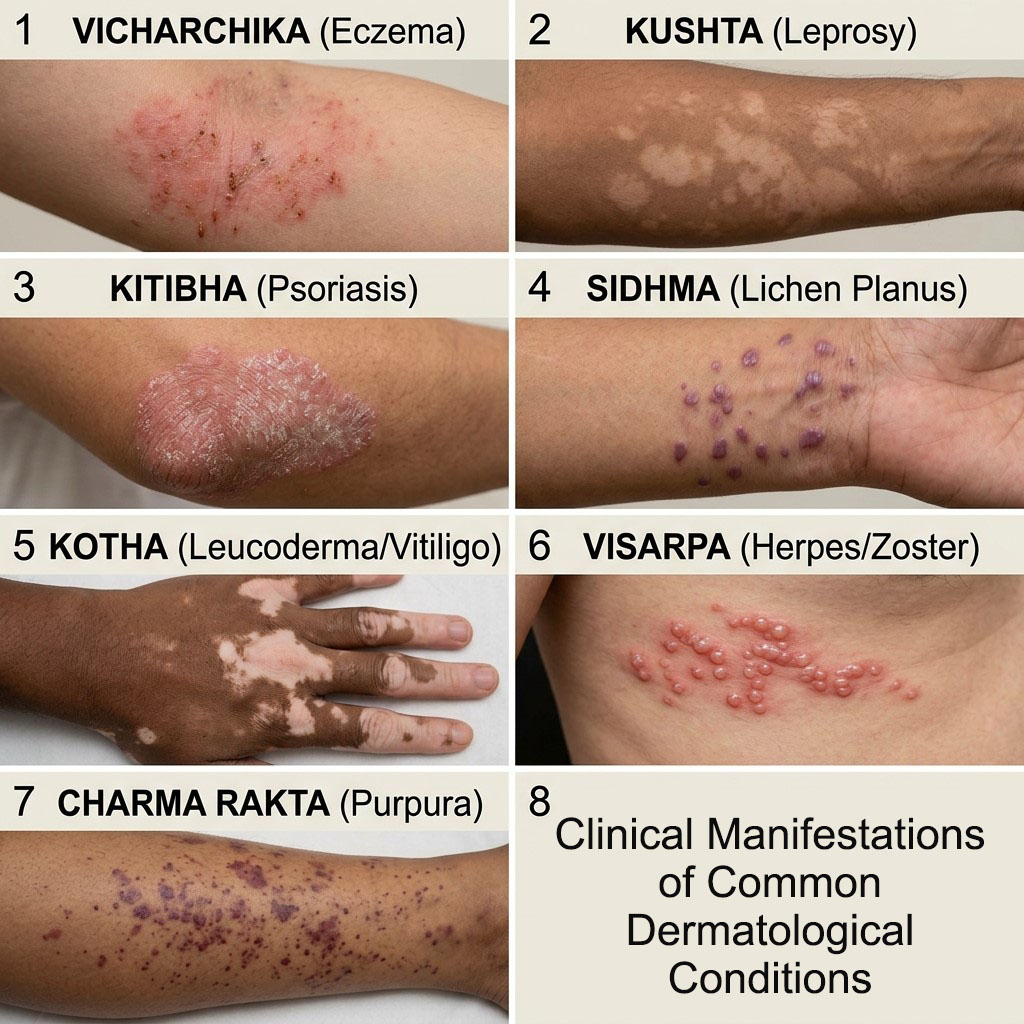
Mahakushta refers to seven major skin conditions that are more serious and often chronic in nature:
- Vicharchika (Eczema): Characterized by dry, itchy, inflamed skin with oozing or crusting
- Kushta (Leprosy): A severe infectious disease affecting skin and nerves
- Kitibha (Psoriasis): Marked by thick, silvery scales and red patches
- Sidhma (Lichen Planus): Purple, itchy bumps on skin or mucous membranes
- Kotha (Leucoderma/Vitiligo): Loss of skin pigment resulting in white patches
- Visarpa (Herpes/Zoster): Painful, blistering viral infections
- Charma Rakta (Purpura): Bleeding under the skin causing purple spots
Kshudrakushta (Minor Skin Diseases)
Kshudrakushta encompasses eleven minor skin conditions that are generally less severe:
- Darunaka (Acne): Pimples, blackheads, and cysts
- Pama (Scabies): Intensely itchy parasitic infestation
- Dadru (Ringworm): Fungal infection with circular rashes
- Indralupta (Alopecia): Hair loss conditions
- Kitibha Kushta (Psoriasis variant)
- Vipadika (Palmo-Plantar Psoriasis): Affects palms and soles
- Eka Kushta (Mycosis Fungoides): A type of cutaneous T-cell lymphoma
- Alasaka (Lichen Simplex): Thickened, leathery skin from chronic scratching
- Charmadala (Contact Dermatitis): Allergic or irritant reactions
- Visphota (Blister): Fluid-filled skin lesions
- Sphota (Erysipelas): Bacterial skin infection with red, swollen areas
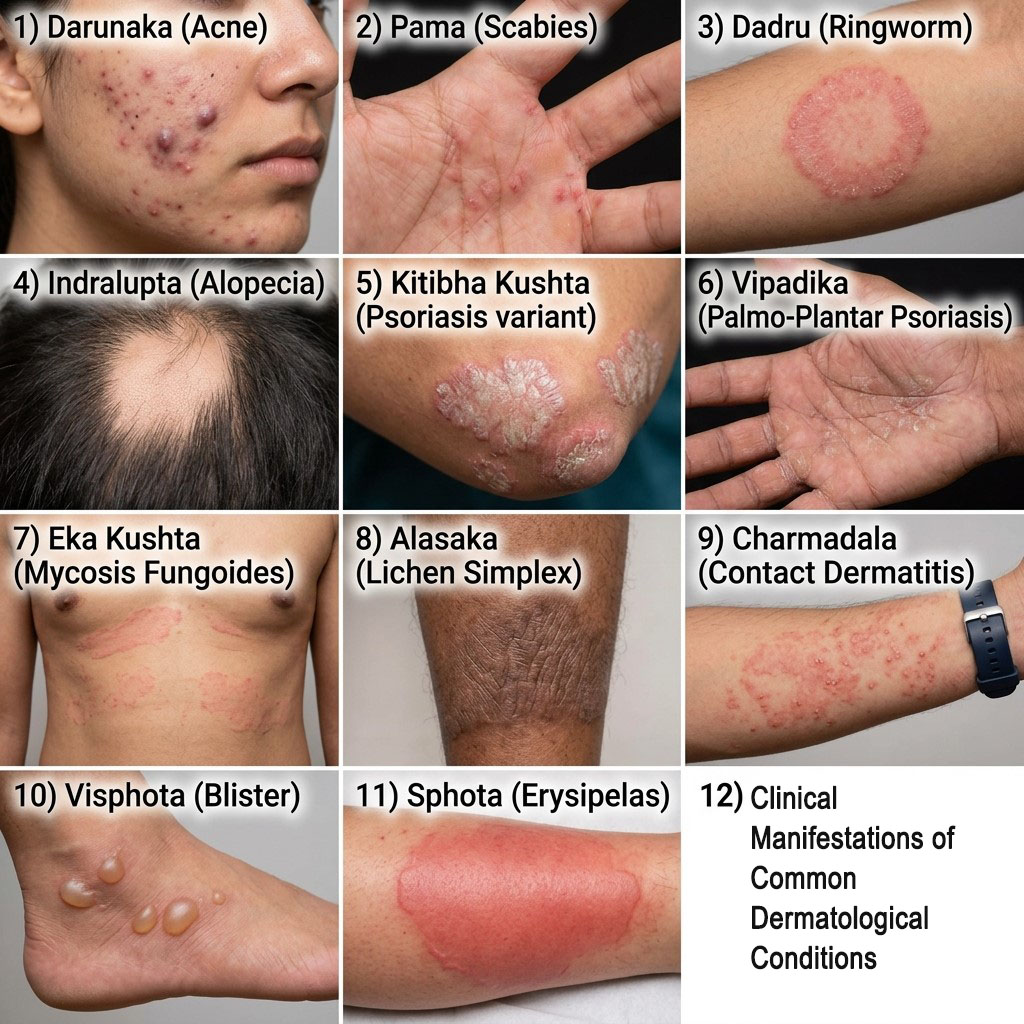
Modern dermatology recognizes additional common conditions like urticaria (hives), fungal infections, and autoimmune disorders, which Ayurveda addresses through similar dosha-balancing principles.
Skin Diseases and Ayurveda: Understanding the Root Cause
Ayurveda views skin health as a reflection of internal balance. According to classical texts like the Charaka Samhita and Sushruta Samhita, skin diseases arise from the vitiation (imbalance) of all three doshas, though Pitta dosha is typically the primary culprit. Pitta represents the fire and water elements in the body, governing metabolism, digestion, and transformation. When Pitta becomes aggravated, it creates excess heat (ushna) and toxicity (ama) that manifests on the skin as inflammation, redness, burning sensations, and eruptions.
The Pathogenesis of Skin Diseases in Ayurveda
The development of Kushta Roga follows a specific pathogenic sequence:
- Impaired Digestion (Mandagni): Weak digestive fire leads to incomplete digestion and the formation of ama (toxins)
- Dosha Vitiation: Vata, Pitta, and Kapha become imbalanced, often triggered by improper diet and lifestyle
- Dhatu Involvement: The vitiated doshas affect the seven dhatus (tissues), particularly rasa (plasma), rakta (blood), mamsa (muscle), and twak (skin)
- Toxin Accumulation: Ama combines with doshas and circulates through the bloodstream, depositing in the skin
- Manifestation: Skin lesions, discoloration, itching, and other symptoms appear
Key Contributing Factors
Ayurvedic texts identify several nidana (causative factors) for skin diseases:
- Dietary: Excessive consumption of spicy, oily, fried, acidic, and fermented foods; incompatible food combinations (viruddha ahara) like fish with milk
- Lifestyle: Exposure to extreme heat or sun, irregular eating habits, suppressed natural urges, chronic stress
- Environmental: Pollution, allergens, harsh chemicals in soaps and cosmetics
- Constitutional: Individuals with Pitta-dominant prakriti (constitution) are more susceptible
Ayurvedic Treatment Approaches for Skin Problems
Ayurvedic treatment for skin diseases emphasizes removing the root cause rather than merely suppressing symptoms. The therapeutic strategy combines Shodhana (purification therapies), Shamana (palliative treatments), dietary modifications, and herbal remedies.
- Shodhana Chikitsa (Purification Therapies)
Panchakarma, the five-fold detoxification protocol, is highly effective for chronic skin conditions:
- Virechana (Therapeutic Purgation): Eliminates excess Pitta and toxins through the lower gastrointestinal tract, particularly beneficial for psoriasis, eczema, and acnesreedhareeyam+1
- Raktamokshana (Bloodletting): Removes impure blood to reduce Pitta and clear skin, used in severe inflammatory conditions
- Vamana (Therapeutic Emesis): Expels Kapha and toxins, useful in allergic skin conditions and chronic urticaria
These procedures should only be performed under the guidance of qualified Ayurvedic practitioners after proper preparation (purvakarma) and followed by post-treatment care (paschatkarma).
- Shamana Chikitsa (Palliative Treatments)
For those unable to undergo Panchakarma or with milder conditions, internal medications and topical applications provide relief:
Internal Medicines
- Mahamanjisthadi Kwath: A decoction featuring Manjistha (Rubia cordifolia) as the primary ingredient, excellent for blood purification and reducing inflammationmymedicplus+1
- Gandhak Rasayana: Purified sulfur preparation with antimicrobial and anti-inflammatory properties, effective in eczema, psoriasis, and scabies
- Kaishore Guggulu: A classical formulation combining Guggulu (Commiphora mukul) with cooling herbs, beneficial for inflammatory skin diseases and acne
- Arogyavardhini Vati: Detoxifies liver and blood, supporting overall skin health
- Triphala Churna: A gentle laxative combination of Amalaki, Bibhitaki, and Haritaki that clears bowels and reduces ama
Topical Applications
- Neem Oil or Paste: Boiled neem leaves or neem oil applied to affected areas provides antimicrobial and cooling reliefjiva+1
- Turmeric and Sandalwood Paste: Mixing turmeric powder with sandalwood paste and applying to inflamed skin reduces redness and itching
- Coconut Oil with Camphor: 100 ml coconut oil mixed with 5 grams powdered camphor, left in sunlight for 2 hours, then applied to soothe irritated skin
- Aloe Vera Gel: Fresh aloe vera gel applied topically or taken internally (2-3 tablespoons on empty stomach) purifies blood and moisturizes skin
Ayurvedic Herbs for Skin Diseases (Kushtaghna Herbs)
Ayurveda recognizes a specific category of herbs called Kushtaghna (कुष्ठघ्न), meaning “skin disease destroyers.” These herbs work by purifying blood (rakta shodhana), reducing inflammation, clearing Pitta and ama, and promoting tissue healing.
Primary Kushtaghna Herbs
- Neem (Azadirachta indica): Perhaps the most renowned herb for skin health, neem possesses potent antimicrobial, antifungal, antiviral, and anti-inflammatory properties. It effectively treats acne, eczema, psoriasis, fungal infections, and wound healing
- Manjistha (Rubia cordifolia): A premier blood purifier that supports lymphatic drainage, reduces redness and congestion, and clears hyperpigmentation. Particularly useful in psoriasis, eczema, and allergic skin reactions
- Turmeric (Curcuma longa): Despite its heating nature, turmeric acts as a powerful kusthagna herb due to its strong anti-inflammatory, antioxidant, and antimicrobial actions. It aids in wound healing, reduces scarring, and treats various inflammatory skin conditions
- Guduchi (Tinospora cordifolia): An immunomodulatory herb that enhances the body’s resistance to infections while detoxifying blood and reducing allergic responses
- Amalaki (Emblica officinalis): Rich in vitamin C and antioxidants, amalaki (Indian gooseberry) cools Pitta, strengthens skin tissues, and promotes collagen synthesis
- Khadira (Acacia catechu): Effective in treating skin ulcers, wounds, and inflammatory conditions; often used in formulations for leprosy and chronic skin diseases
- Karanja (Pongamia pinnata): Seeds and oil possess strong antimicrobial and antifungal properties, useful in ringworm, scabies, and other parasitic infections
- Haridra (Curcuma longa): Another name for turmeric, emphasizing its role in skin brightening and reducing hyperpigmentation
Supporting Herbs
- Bhringaraj (Eclipta alba): Promotes skin rejuvenation and is particularly beneficial in hair loss conditions (Indralupta)
- Bhumiamalaki (Phyllanthus niruri): Supports liver function and blood purification
- Gotu Kola (Centella asiatica): Enhances wound healing, reduces scarring, and improves skin elasticity
- Tulsi (Ocimum sanctum): Adaptogenic herb with antimicrobial properties that supports immune function
- Coriander (Coriandrum sativum): Cooling herb that reduces Pitta and soothes inflamed skin
Dietary and Lifestyle Recommendations
Diet (ahara) and lifestyle (vihara) modifications are integral to Ayurvedic skin care. Since Pitta is the primary dosha involved, the following guidelines help pacify aggravated Pitta and prevent recurrence:
Foods to Avoid
- Spicy and Hot Foods: Chilies, excessive black pepper, ginger, garlic in large quantities
- Fried and Oily Foods: Deep-fried items, excessive ghee or butter
- Acidic Foods: Tomatoes, citrus fruits (lemons, oranges), yogurt, vinegar, fermented foods
- Stimulants: Tea, coffee, alcohol, smoking
- Incompatible Combinations: Fish with milk, sour fruits with milk, heating and cooling foods together
- Processed Foods: White sugar, refined flour, preserved or canned foods
- Non-Vegetarian: Minimize red meat and shellfish, which can aggravate Pitta
Foods to Embrace
- Cooling Vegetables: Cucumber, zucchini, leafy greens, bitter gourd, pumpkin
- Sweet Fruits: Pears, melons, grapes, pomegranates, ripe mangoes
- Whole Grains: Basmati rice, barley, wheat, oats
- Legumes: Mung beans, chickpeas, lentils (well-cooked)
- Dairy: Fresh milk, ghee, unsalted butter (in moderation, if tolerated)
- Herbal Teas: Coriander-cumin-fennel tea, tulsi tea, chamomile
- Hydration: Drink 3-4 litres of water daily to flush out toxins
Lifestyle Modifications
- Stress Management: Practice yoga, pranayama (breathing exercises), and meditation to reduce stress-induced skin flare-ups
- Adequate Sleep: Maintain regular sleep schedule, ideally sleeping by 10 PM and waking before sunrise
- Sun Exposure: Moderate early morning sunlight is beneficial, but avoid excessive heat and midday sun
- Clothing: Wear loose, breathable cotton clothing; avoid synthetic and tight garments
- Hygiene: Bathe daily with lukewarm water; avoid harsh soaps and shampoos on affected areas; use natural, herbal cleansers
- Fresh Air: Spend time outdoors in clean, fresh air to support circulation and detoxification
Simple Home Remedies for Common Skin Conditions
For mild to moderate skin issues, the following home remedies can provide relief:
- Turmeric-Amla-Neem Powder: Mix equal quantities of turmeric, amla, and neem leaf powder. Take 1 teaspoon twice daily with water. If amla and neem are unavailable, use only turmeric (½ teaspoon twice daily).
- Turmeric + honey mask: Mix a pinch of turmeric with raw honey and apply for 15 minutes. Good for mild inflammation, dullness, and minor blemishes.
- Neem Leaf Wash: Boil fresh neem leaves in water, cool, and wash the affected area daily. Avoid using soaps on the affected skin.
- Neem paste: Crush a few neem leaves with water into a paste and apply to acne or fungal patches. Its natural antibacterial action helps calm breakouts.
- Aloe vera gel: Fresh gel straight from the leaf soothes sunburn, rashes, and dry, irritated skin. It’s one of the more evidence-backed remedies for hydration and healing.
- Sandalwood + rose water paste: A classic Pitta-pacifying combo for redness, heat rashes, and acne-prone skin.
- Besan (gram flour) + milk or curd: A gentle exfoliating cleanser for oily, Kapha-type skin that helps unclog pores without harsh chemicals.
- Coconut or sesame oil massage (Abhyanga): For dry, flaky, Vata-type skin, warm oil massage before bathing restores moisture and softness.
- Sulfur Oil Application: Mix 50 grams powdered yellow sulfur with 250 ml mustard or coconut oil. Apply to affected areas in the morning, leave for 30 minutes, then wash. Sitting in sunlight after application enhances effectiveness.
- Triphala at Bedtime: Take 1 teaspoon Triphala powder with warm water or milk nightly to clear bowels and reduce ama.
- Wheatgrass Juice: Consume fresh wheatgrass juice to boost immunity and support skin healing.
- Apricot Leaf Juice: Apply fresh apricot leaf juice on affected areas for relief in eczema and scabies.
Rules: always patch-test on your forearm first, avoid these on broken or infected skin, and see a dermatologist if a condition is worsening, spreading, or unusual – home remedies work best for mild, everyday skin issues, not as a substitute for diagnosis.
FAQ on Ayurvedic Treatments for Skin Problems
The timeline varies based on the severity and chronicity of the condition. Acute conditions like mild acne or allergic rashes may improve within 2-4 weeks with proper diet and herbs. Chronic conditions like psoriasis, eczema, or vitiligo typically require 3-6 months or longer of consistent treatment, as Ayurveda works by addressing root causes rather than suppressing symptoms.
Ayurveda can significantly reduce symptoms, decrease frequency of flare-ups, and in many cases achieve long-term remission. Overall treatment depends on factors like disease duration, patient compliance with dietary and lifestyle changes, and individual constitution. Early intervention yields better outcomes.
Classical Ayurvedic formulations prepared according to traditional texts and using properly processed herbs are generally safe for long-term use under professional guidance. However, some herbs (like those containing sulfur or heavy metals in bhasma form) require monitoring. Always consult a qualified Ayurvedic practitioner for personalized treatment plans.
Yes, Ayurveda can complement conventional treatments. However, inform both your Ayurvedic doctor and dermatologist about all medications you’re taking to avoid potential interactions. Some patients successfully integrate topical steroids with internal Ayurvedic medicines and dietary modifications.
Not necessarily. Panchakarma is recommended for chronic, severe, or recurrent conditions where toxin accumulation is significant. Mild cases often respond well to dietary changes, herbal medicines, and lifestyle modifications alone. A qualified practitioner will assess your condition and recommend the appropriate level of treatment.
A Pitta-pacifying diet is essential. Emphasize cooling, fresh, whole foods while avoiding spicy, fried, acidic, and processed items. Specific recommendations vary based on individual constitution and the nature of the skin condition. Working with an Ayurvedic nutritionist can help create a personalized meal plan.
When properly administered, Ayurvedic treatments have minimal side effects. Some patients may experience mild detoxification symptoms (like temporary increase in skin eruptions) as the body eliminates toxins. Rarely, herbal allergies or digestive discomfort may occur. Discontinue any remedy causing adverse reactions and consult your practitioner.
Yes, but with modifications. Children and pregnant women require gentler formulations and lower dosages. Certain herbs (like neem in high doses, guduchi during pregnancy) should be avoided or used cautiously. Always consult an experienced Ayurvedic doctor before treating children or pregnant women.
Conclusion
Ayurveda offers a time-tested, holistic approach to treating skin diseases by addressing the root causes rather than merely managing symptoms. Through the synergistic combination of purification therapies, herbal medicines, dietary modifications, and lifestyle changes, Ayurvedic treatments can provide lasting relief and promote radiant, healthy skin. Good skin health, in the end, comes from a combination of informed choices – not from picking one system and ignoring everything else.
Disclaimer:
This article is for educational purposes only and does not constitute medical advice. Always consult a licensed healthcare provider before starting any new treatment, especially if pregnant, nursing, or managing a chronic condition.
Share this post: