In my 30 years of Ayurvedic practice, I have noticed that hair loss rarely walks into the clinic alone.
Hair loss is emotionally exhausting problem that can make people anxious very quickly. Finding more hair on the pillow, noticing hair parting while combing, or seeing the scalp through the crown often creates anxiety-and that anxiety may worsen stress-related hair fall. But hair loss is not one disease, and there is no single treatment that works for everybody.
In Ayurveda, hair is traditionally connected to Asthi dhatu (bone tissue) and is shaped by the quality of our nutrition, digestion, metabolism and the balance of Vata, Pitta and Kapha. Excessive hair fall is discussed under the term Khalitya. [read my blog on Doshas, Ayurveda and Genetics (Ayurgenomics)]
Ayurveda offers a valuable way to look at hair health through nutrition, digestion, sleep, stress, scalp care and herbal support. However, a reliable Ayurvedic approach must also recognise when hair loss is caused by thyroid disease, iron deficiency, hormonal changes, autoimmune disease, genetics or medication. Natural treatment can support the scalp and hair cycle, but it should not delay a proper diagnosis. Modern dermatology, meanwhile, looks at the follicle itself: hormones, genetics, inflammation, nutritional deficiencies and underlying medical conditions.
The most effective approach is often integrative: combine Ayurvedic lifestyle and topical care with evidence-based medical treatment when appropriate.
First: Find Out Why Your Hair Is Falling
Ayurvedic oils and herbs can be a genuinely useful part of a hair-care routine, but they should never be used to cover an underlying medical problem. I always tell my patients: diagnosis first, treatment second.
Hair loss is not one condition, and different patterns call for different solutions:
- Telogen effluvium – sudden, diffuse shedding that often follows a high fever, infection, severe stress, rapid weight loss, childbirth, surgery or nutritional deficiency. This often improves once the trigger is corrected, though regrowth can take several months.
- Androgenetic alopecia – commonly called male- or female-pattern hair loss. This develops gradually, usually as thinning at the crown or a widening part, and is driven by genetics and follicle sensitivity to dihydrotestosterone [DHT]. It is the most common form of hair loss worldwide and tends to continue without treatment.
- Alopecia areata – smooth, round patches of hair loss caused by an autoimmune reaction. This needs medical assessment, not just oils and home remedies.
- Other contributors include iron deficiency, thyroid disorders, Polycystic ovary syndrome (PCOS), scalp infection, inflammatory conditions, excessive heat or chemical treatment, and tight hairstyles.
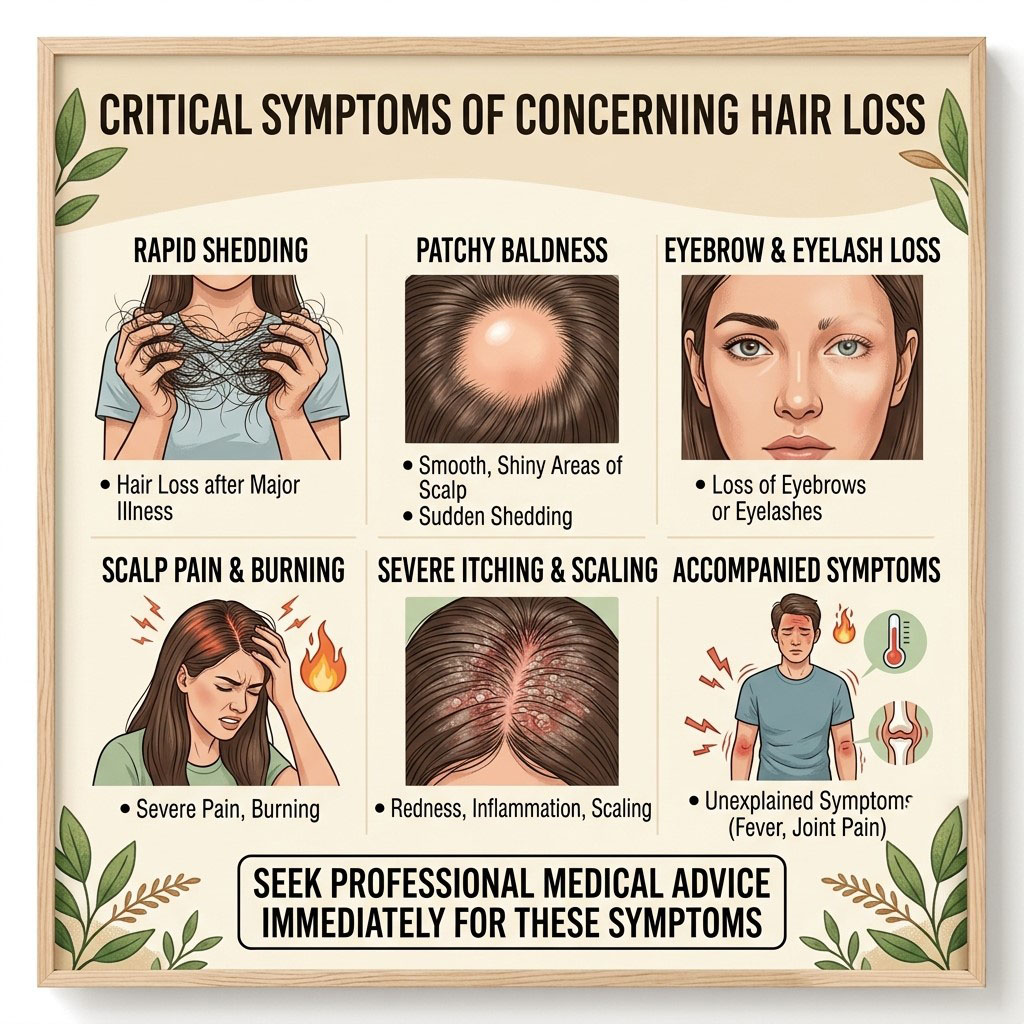
Patchy bald spots, scalp pain, burning, scaling, redness, pus or eyebrow loss deserve prompt medical evaluation – some inflammatory and scarring forms of alopecia can permanently destroy follicles if treatment is delayed.
Depending on your history, a dermatologist or ayurveda physician may consider a complete blood count, iron/ferritin studies, thyroid function tests, and selected vitamin studies (vitamin D, B12, zinc) or hormonal investigations. Testing should be individualised.
This is where Ayurveda and modern medicine can work beautifully together: diagnosis first, treatment second.
The Ayurvedic Framework: Five Areas That Matter More Than Any Single Herb
When patients ask me for “the best Ayurvedic medicine for hair fall,” I usually make them understand, because in my experience good Ayurvedic hair management rests on five pillars rather than one bottle:
- Nourishing the body with adequate protein and minerals
- Supporting digestion and regular elimination (read my blog on Constipation Solved: Ayurvedic Guide to “Shauch Sukh” the Natural Bowel Movement)
- Calming chronic stress
- Maintaining a clean, comfortable scalp
- Using appropriate oils and herbs consistently, over months rather than days
This framework matters because it shifts attention away from quick fixes. Hair grows slowly. I ask my patients to judge any routine over at least three to six months, using photographs taken under similar lighting – not memory, which is a poor measuring instrument.
Ayurvedic Herbs and Natural Remedies
Here is how the most commonly used remedies.
- Amla: The Ayurvedic Hair Rasayana
Amla (Phyllanthus emblica), or Indian gooseberry, is the fruit most associate with Ayurvedic hair care. It has long been used as a rejuvenating (rasayana) food and herb, and it contains polyphenols, tannins, flavonoids and other phytochemicals of scientific interest.
Amla is not supported by tradition alone. A randomized controlled trial in women with female androgenetic alopecia found that an oral amla preparation increased the anagen-to-telogen ratio compared with placebo over 12 weeks.
Amla is promising, not a miracle hair regrowth drug. It can be used as a food, in a hair oil, or in a properly formulated Ayurvedic preparation, but internal medicinal doses should be individualised – particularly if you take other medications or manage a chronic condition. Topical amla products should also be patch-tested, as they can irritate sensitive skin.
- Bhringraj: The Traditional “King of Hair”
Bhringraj (Eclipta prostrata / Eclipta alba) is traditionally called the king of hair in Ayurveda, and it is the herb most frequently found in classical hair oils, because it has long been regarded as a keshya – a hair-nourishing herb.
Research on Eclipta has shown effects on the anagen (growth) phase of the hair cycle and on pathways involved in follicle activity.
Bhringraj oil is a reasonable, traditional scalp-care option. Use a reputable, tested product, massage it in gently rather than rubbing vigorously – aggressive rubbing does not speed up growth, and it can worsen breakage or irritate an already inflamed scalp.
- Brahmi
“Brahmi” can refer to Bacopa monnieri, though it is sometimes confused in commercial products with Centella asiatica. Traditionally, it is valued for calming the nervous system.
Because chronic stress can contribute to telogen effluvium, stress-supportive herbs may play an indirect role in recovery. But brahmi is not proven to regrow hair directly, and it can interact with medicines. “Natural” does not mean automatically safe – oral use should be discussed with a qualified practitioner, especially during pregnancy, breastfeeding, or treatment for a chronic illness.
- Fenugreek and Hibiscus
Fenugreek seeds (methi) form a mucilaginous paste that can temporarily condition dry hair, and hibiscus is traditionally used in hair masks and oils.
These can genuinely improve manageability and scalp comfort, but conditioning the hair shaft is not the same as stimulating follicular regrowth, advise against leaving wet herbal pastes on the scalp for long periods, and to stop immediately if itching, redness or scaling develops.
- Ashwagandha and Stress-Related Hair Fall
Ayurveda has always given close attention to stress, sleep and nervous-system balance – and this is clinically relevant, because significant physical or psychological stress can be followed by increased hair fall weeks later.
Ashwagandha is commonly used for stress and general rejuvenation in Ayurvedic practice, but the evidence specifically proving that it regrows hair is considerably weaker than the evidence for correcting nutritional deficiencies or using established dermatological treatments. If stress, poor sleep or anxiety is clearly affecting overall health, it may have a supporting role, selected according to their constitution, history and current medications.
- Ayurvedic Hair Oils and Scalp Massage (Shiro Abhyanga)
Common bases used in classical formulations include bhringraj oil, amla oil, coconut oil, sesame oil, neelibhringadi taila and bringamalakadi taila.
It’s worth remembering that hair shafts are biologically dead once they emerge from the scalp. Oils primarily condition the shaft, reduce dryness and friction, and improve manageability – they do not “feed” hair that has already grown out. Coconut oil in particular can reduce protein loss from the shaft, protecting fragile hair before washing. Sesame oil is a traditional base oil, suitable for massage if it does not trigger acne.
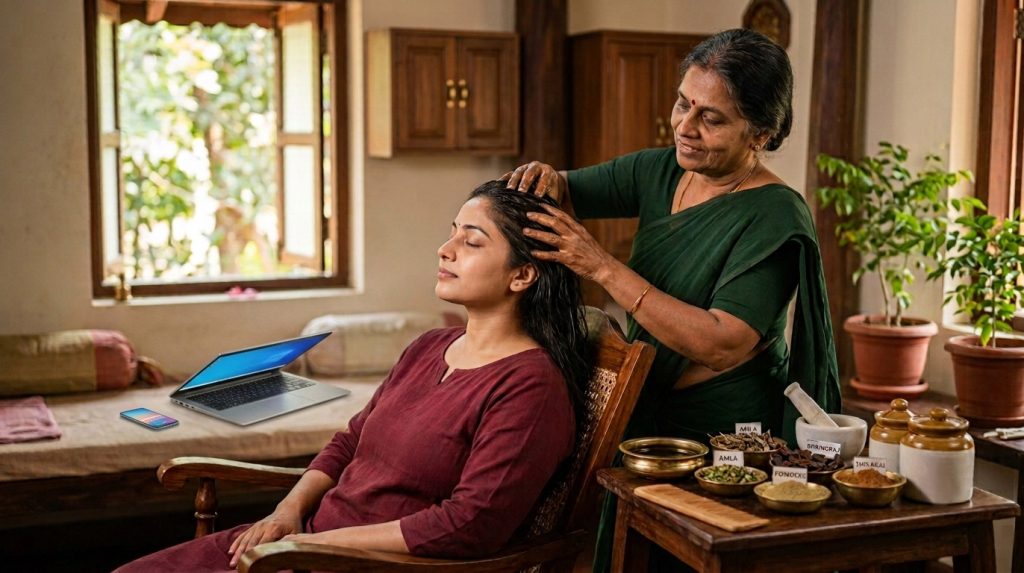
The gentle ritual of shiro abhyanga also has real value: it can be relaxing, and it reduces the mechanical stress that comes from rough brushing or scratching. Practical advice – massage a suitable oil into the scalp for 5–10 minutes, leave it for a period your scalp tolerates, and wash out with a mild shampoo.
- Rosemary Oil – A Non-Classical Herb Worth
Rosemary is not a classical Ayurvedic herb, but as a doctor who values evidence wherever it comes from, I think it deserves a place in this discussion, because it is one of the few natural options studied directly in humans.
People with androgenetic alopecia, rosemary oil was compared with 2% minoxidil over six months. People showed increased hair counts, with no statistically significant difference between. This is genuinely encouraging – but the result was small, and it does not prove rosemary oil is equivalent to minoxidil for every patient.
If you use it: dilute the essential oil properly in a carrier oil, patch-test first, avoid the eyes, and stop immediately if you notice burning, swelling or dermatitis. Applying undiluted essential oil directly to the scalp can cause irritation or allergic reactions, and people with asthma, fragrance sensitivity or eczema should be especially cautious.
Diet: Ayurveda Gets One Thing Very Right
No herb can compensate for a poor diet.
Hair follicles are metabolically active structures and require adequate protein, iron and other nutrients. Modern dermatology recognizes inadequate iron, protein, zinc and certain other nutrients as possible contributors to hair loss.
From an Ayurvedic perspective, regular nourishment and good digestion are central to maintaining healthy tissues.
A practical hair-supportive diet should include:
- Eggs, dairy or appropriate plant proteins
- Lentils, beans and legumes
- Nuts and seeds
- Green vegetables
- Seasonal fruits
- Whole grains
- Adequate healthy fats
- Iron-rich foods
- Sufficient overall calories and protein
Do not automatically start high-dose biotin or multiple “hair vitamins.” Supplements are useful when a deficiency exists; taking more is not necessarily better. In fact, excessive intake of certain nutrients can itself create problems.
Where Modern Medicine Still Has the Stronger Evidence
For androgenetic alopecia, minoxidil remains one of the better-established medical treatments. Research has demonstrated benefits from topical minoxidil formulations, although response varies and treatment generally needs to be continued to maintain results.
Other prescription treatments, including finasteride for appropriate male patients, may also be considered by a physician. Treatment must be individualized because these medicines have contraindications and potential adverse effects.
This is where an integrative approach makes sense.
A person might use: Medical treatment + Ayurvedic scalp care + appropriate nutrition + stress management + gentle hair practices rather than viewing these as competing philosophies.
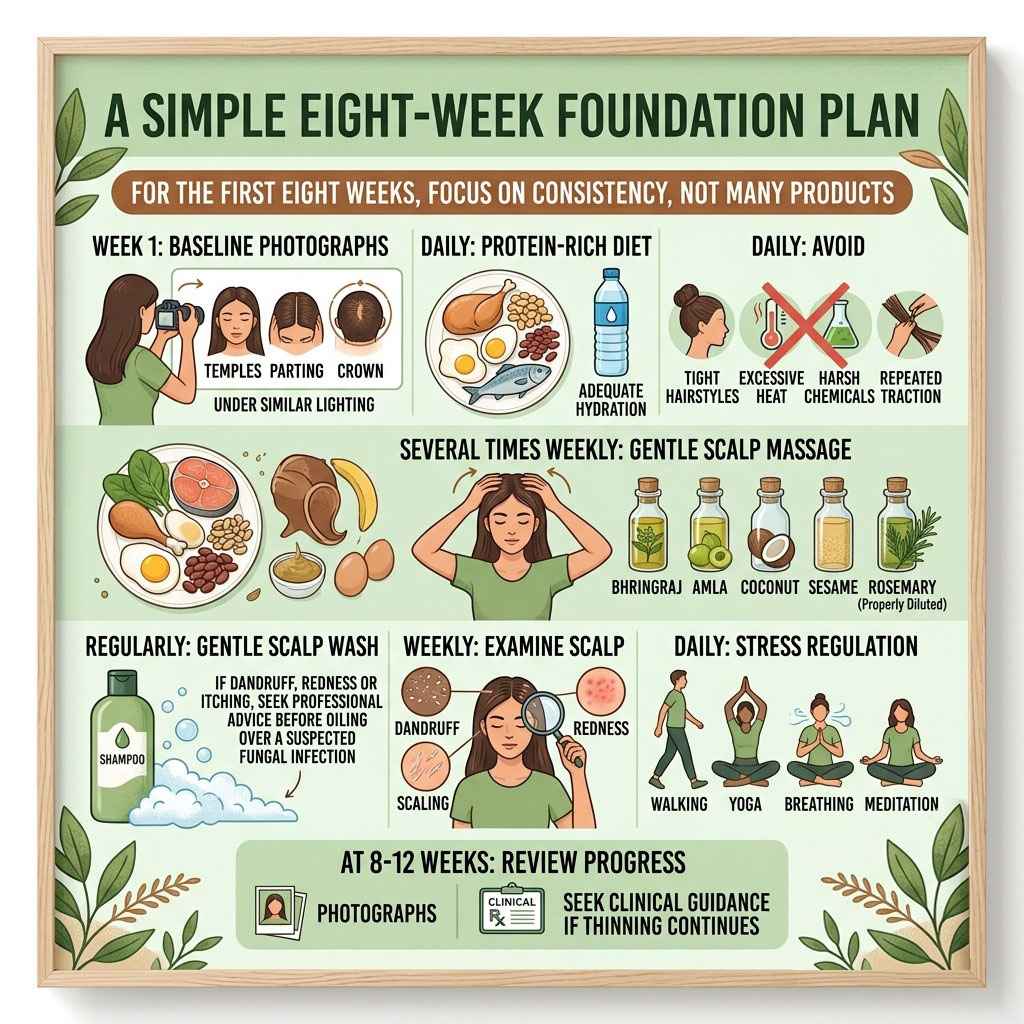
A simple eight-week foundation plan
For the first eight weeks, focus on consistency rather than collecting many products:
- Week 1: Take baseline photographs of the front, temples, parting and crown under similar lighting.
- Daily Morning: Eat a protein-rich breakfast and maintain adequate hydration. Include nutrient-dense foods rather than relying on supplements.
- Several times weekly: Massage a small amount of a suitable bhringraj, amla, coconut or sesame-based oil, or a properly diluted rosemary preparation, into the scalp – gently, not vigorously.
- Daily: Practise stress regulation through walking, yoga, breathing exercises or meditation. Avoid tight hairstyles, excessive heat, harsh chemical processing and repeated traction.
- Regularly: Wash the scalp with a gentle shampoo suited to its oiliness and dandruff tendency. If dandruff, redness or itching is present, treating that may matter more than any herbal oil – don’t apply oil over a suspected fungal infection without professional advice.
- Weekly: Look at the scalp rather than just the hair. Check for dandruff, redness, scaling, irritation or unusual changes.
- At 8–12 weeks: Take photographs under similar lighting and from similar angles. Review your progress with photographs, and seek clinical guidance if thinning continues – rather than adding another ten herbs to the routine.
Be Careful With “Natural” Ayurvedic Medicines
Natural not automatically means safe. Some Ayurvedic preparations may contain metals such as lead, mercury or arsenic, and contamination or incorrect formulation can create serious health risks. Herbal products can also interact with conventional medicines.
Therefore, avoid buying unidentified powders, tablets or proprietary mixtures from unreliable sellers.
Choose products with transparent ingredients and quality testing, and consult a qualified Ayurvedic physician when using internal medicines.
Especially avoid self-prescribing complex Ayurvedic formulations containing minerals or metals.
Traditional medicine deserves respect-but respect also means using it responsibly.
When Hair Loss Needs you to see a doctor?
Ayurvedic home care is not appropriate as the only response to every type of hair loss.
Seek professional assessment if you notice:
- Sudden or very rapid shedding
- Circular or patchy bald areas
- Loss of eyebrows or eyelashes
- Scalp pain or burning
- Severe itching or scaling
- Redness or inflammation
- Smooth shiny areas of scalp
- Hair loss after a major illness
- Hair loss accompanied by other unexplained symptoms
Some forms of scarring alopecia can permanently damage hair follicles, making early diagnosis particularly important.
This is where an experienced dermatologist and a qualified Ayurvedic physician can potentially complement each other.
What Actually Worked?
When we remove the exaggerated claims from all social media, the picture becomes much clearer. There is no single magical herb. What consistently helps is a combination:
Amla + an appropriate Ayurvedic hair oil (bhringraj, coconut or sesame-based) + gentle scalp care + adequate nutrition + stress and sleep management + diagnosis of any underlying medical cause.
Rosemary oil has the most encouraging human clinical evidence among the natural options. Amla has emerging clinical evidence. Bhringraj carries deep traditional importance and interesting preclinical research.
And when the diagnosis is androgenetic alopecia, conventional treatments such as minoxidil currently offer stronger evidence than herbs alone. That is not a limitation of Ayurveda but it is simply good medicine -using the best available evidence from every appropriate system.
Frequently Asked Questions About Ayurvedic Hair Loss Treatment
Amla and bhringraj are among the most traditionally important Ayurvedic herbs for hair. Amla also has emerging human clinical evidence.
Bhringraj has a long history of traditional use. It is better regarded as a traditional supportive hair-care herb than a proven cure for baldness.
Amla may help in some forms of hair loss, but it should not be presented as a universal cure. A randomized controlled trial in women with androgenetic alopecia found encouraging changes after 12 weeks of an oral amla preparation.
Ayurvedic oils can condition the hair shaft and support a healthy scalp-care routine. Some ingredients may have biological effects relevant to hair growth, but applying oil does not guarantee follicle regrowth.
A small randomized study found increased hair counts after six months with rosemary oil in people with androgenetic alopecia.
Hair grows slowly, so meaningful changes usually require months rather than days. Photographing the scalp at regular intervals is a better way to monitor progress than judging hair fall from one or two days.
There is no scientifically established Ayurvedic treatment that can reliably cure every type of baldness. The cause of hair loss must first be identified.
Some people use Ayurvedic scalp-care practices alongside conventional treatment, but the combination should be discussed with a healthcare professional or Ayurvedic physician if you are using prescription medicines or have a scalp condition.
Final Thoughts
Ayurveda’s greatest contribution to hair loss may not be a single miracle medicine. It is the broader idea that hair health should be understood in the context of nutrition, digestion, lifestyle, stress, sleep and individual constitution – while modern medicine gives us powerful, well-studied tools for diagnosing and treating specific follicular disorders.
If your hair is gradually thinning, start early. If hair fall is sudden or severe, investigate the cause. If you notice bald patches, scalp inflammation, or signs of scarring, do not delay medical evaluation.
The goal is to help the hair follicle survive, grow and remain healthy – using treatments that are both traditional and evidence-informed.
Disclaimer:
This article is for educational purposes only and is not a substitute for an individualized consultation with a qualified Ayurvedic physician, dermatologist, or other licensed healthcare professional. Hair loss has many possible causes, and treatment should be based on an appropriate diagnosis. Ayurvedic and herbal products can have side effects, interactions and quality-control issues.
Share this post: