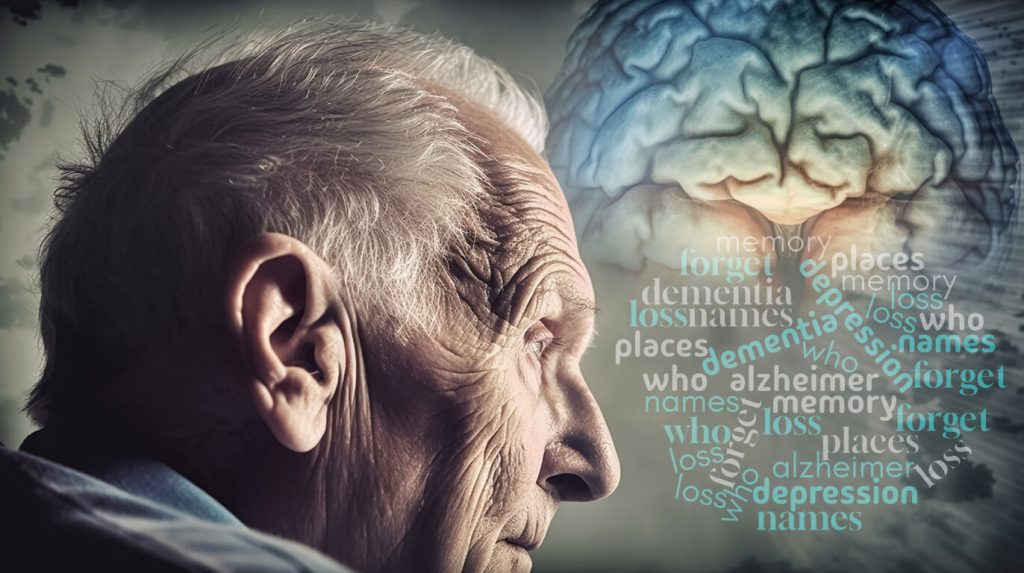
Your mother puts the gas on, then stands in the kitchen ten minutes later asking who turned it on. Your father calls you by your sister’s name, then looks frightened when you try to correct him. You buy the memory tonic your neighbor swears by and wonder whether it will work.
Families in this position often ask me the same question: can Ayurveda help my parents?
Yes, in specific, modest and ayurvedic ways. Ayurveda can support sleep, digestion, mood, stress and daily structure, and a few of its herbs have early human benefits. It cannot cure or reverse Alzheimer’s disease. It cannot regrow lost neurons. Anyone who promises a cure is not telling the truth.
This guide separates what has clinical backing from what is tradition and hope. It also gives you a practical routine you can start this week.
What Is Actually Happening in the Brain: Conventional vs Ayurvedic Views
As per modern society
Alzheimer’s disease slowly damages the brain over the years. Sticky protein called clumps (amyloid plaques) build up in-between the nerve cells with twisted tau protein tangles form inside them. Inflammation follows, blood flow drops, and the connections that carry memory and judgement slowly fail. Vascular dementia works differently. Small strokes or chronically poor blood supply starve brain tissue.
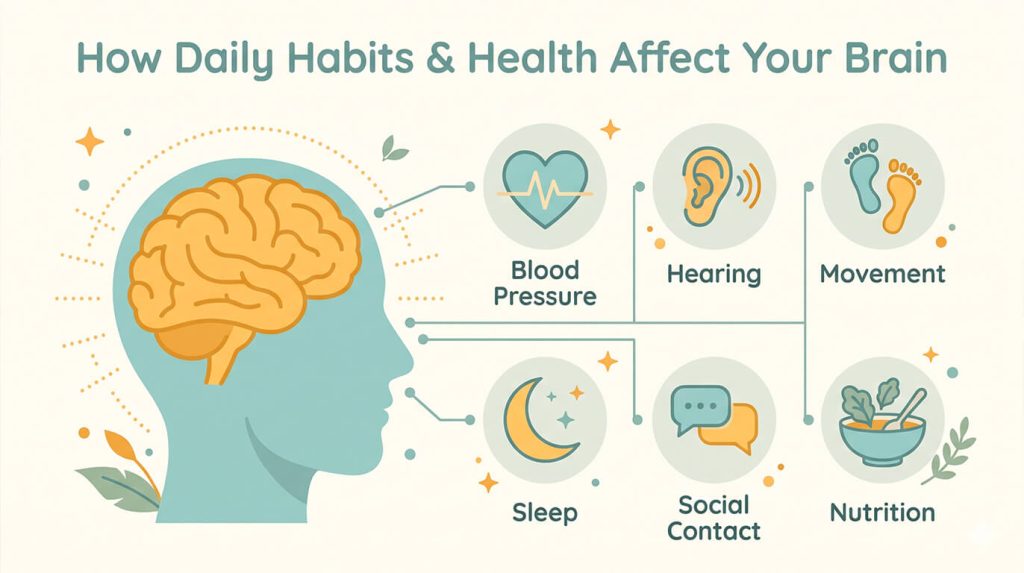
Here is the encouraging part. The 2024 Lancet Commission identified 14 modifiable risk factors. Tackling them from childhood onward could prevent or delay about 45% of dementia cases. The list includes hearing loss, high LDL cholesterol, hypertension, diabetes, depression, inactivity, smoking, heavy drinking, social isolation, air pollution and vision loss. That 45% figure is a theoretical estimate that assumes these risk factors cause dementia and can be fully removed. Treat it just as a direction, not an assurance.
The ancient Ayurvedic describe
Ayurveda identifies the problem differently. Ancient texts describe cognitive decline under terms such as Smriti-bhramsha (loss of memory) and place it within Vata imbalance in ageing. Vata governs movement and nerve signaling. In this view, dryness, depletion of Ojas (vital reserve), poor digestion (Agni) and disturbed sleep weaken Majja dhatu, the nervous tissue.
You can bridge the two views without forcing them. When Ayurveda talks about depleted Ojas and weak Agni, it overlaps loosely with what physicians call chronic inflammation, poor metabolic health and sleep loss. Think of it as two maps of the same terrain. The labels differ, but both point at the same hills: the blood sugar, the vessels, the stress and the sleep.
| Concept | Conventional medicine | In Ayurveda |
| Cause | Amyloid, tau, vascular damage, inflammation | Vata aggravation, low Ojas, impaired Agni |
| Goal | Slow decline, manage symptoms | Rebuild tissue strength (Rasayana), calm Vata |
| Tools | Cholinesterase inhibitors, memantine, risk-factor control | Herbs, diet, oil therapies, routine, yoga, meditation |
| Honest limit | Medicines modestly delay symptoms | No herb shown to halt or reverse the disease |
What the Evidence Supports (and What It Doesn’t)
Clinical research separates three outcomes, and you should too:
- Symptom relief (better sleep, calmer mood, sharper attention)
- Functional management (staying independent longer, easier caregiving)
- Disease modification (slowing or reversing brain pathology), which no Ayurvedic therapy has demonstrated in humans
Evidence reference table
| Intervention | What studies show | Evidence strength | Caution |
| Brahmi (Bacopa monnieri) | A systematic review covered trials found doses of 300-450 mg of extract per day, with memory the most studied outcome. A later meta-analysis suggested potential cognitive benefit, especially speed of attention. | Low to moderate | Participants in that review had no dementia. A newer review of working-age adults found no benefit for several cognitive domains. Results conflict. |
| Ashwagandha (Withania somnifera) | A systematic review found early evidence from trials, with improved task performance, attention and reaction time, and few side effects. One trial of some adults with mild cognitive impairment reported gains in memory, attention and processing speed over eight weeks. | Low (small trials) | Trials are small and short. None proves benefit in established Alzheimer’s. |
| Exercise, BP, sugar, hearing and sleep control | The Lancet Commission links 14 modifiable factors to a 45% theoretical reduction. | Strongest of everything here | Prevents and delays. Does not cure. |
| Whole-system Ayurvedic protocols (Panchakarma, Shirodhara) | Mostly traditional use, small studies | Very low | None proves in any trial for dementia |
| Abhyanga (oil massage), calming routines | Traditional; comfort and sleep benefits plausible | Subjective | Helps caregiving even without disease effect The cognitive-enhancing effects of Bacopa monnieri: a systematic review of randomized, controlled human clinical trials. |
Ayurvedic Herbs for Memory and Brain Health: Usage and Dosage
A hard truth first. Doses below come from trials or from the ranges practitioners commonly use. They are reference points for a conversation with your doctor, not prescriptions. Herbal products vary widely, so standardized extracts from a reputable manufacturer matter more than the herb’s name.
| Herb (Sanskrit / common) | Traditional role | Reference dose in studies or common practice | Key cautions |
| Brahmi (Bacopa monnieri) | Medhya (brain tonic) | 300-450 mg uniform extract daily for about 12 weeks in trials. Benefits appear slowly. | Can cause nausea, loose stools or cramps, so take it with food. May add to the effect of cholinesterase inhibitors such as donepezil. |
| Ashwagandha (Withania somnifera) | Rasayana, stress and vitality | One trial used a 300 mg sustained-release extract over about 90 days. Other extracts and doses vary. | May raise thyroid hormone levels, so people on thyroid medicine need monitoring. Rare liver injury reports exist. Can add to sedatives. Avoid in pregnancy. |
| Mandukaparni (Centella asiatica, gotu kola) | Brain and skin tonic | Commonly 500-1,000 mg uniform extract daily in practice. | Long, high-dose use has raised liver concerns. |
| Shankhapushpi (Convolvulus pluricaulis) | Calming Medhya herb | Commonly 3-6 g powder daily in practice. | Human dementia trials are minimal. May cause drowsiness. |
| Haridra (turmeric / curcumin) | Anti-inflammatory | Curcumin supplement doses vary widely. | Interacts with blood thinners. Can irritate the stomach. Gallstone patients need caution. |
| Brahmi Ghrita (medicated ghee) | Classical Rasayana for memory | Practitioner-set, often a small spoonful daily. | Adds saturated fat. Avoid or adjust with high LDL, which is a known dementia risk factor. |
How to use herbs sensibly
- Start one at a time. If you add three products at once and a rash or tummy upset appears, you cannot tell which one caused it.
- Bring every bottle to the doctor. Include herbs, tonics and “churnas” on the medication list. Cholinesterase inhibitors, memantine, blood pressure pills, blood thinners, diabetes drugs and sedatives can all interact.
- Avoid bhasma and rasa preparations unless the product is lab-tested for heavy metals. Contamination with lead, mercury or arsenic has occurred in some Ayurvedic products.
- Judge after 8-12 weeks. If a caregiver sees no change by then, stop.
A Daily Routine That Supports the Ageing Brain
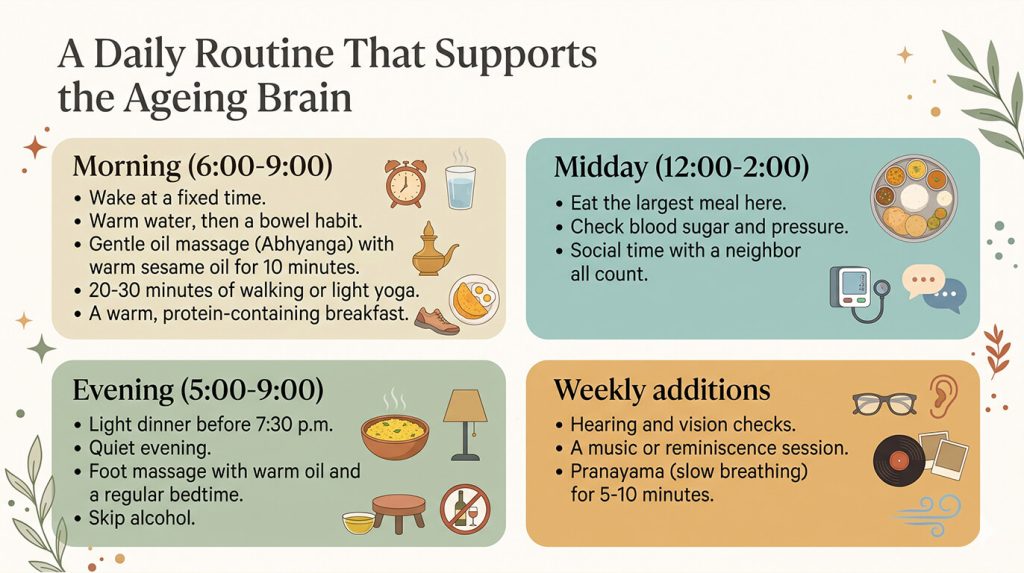
A routine matters more than any single herb. Ayurveda calls this Dinacharya, and modern risk-factor science agrees with most of it.
Morning (6:00-9:00)
- Wake at a fixed time. Body clocks and cognitive health track each other.
- Warm water, then a bowel habit. Constipation worsens confusion and agitation in older adults.
- Gentle oil massage (Abhyanga) with warm sesame oil for 10 minutes, if skin allows. It calms Vata, and it gives a caregiver a natural moment of touch.
- 20-30 minutes of walking or light yoga. This is the single most evidence-backed step for your brain. Go outside if you can, for daylight and company.
- A warm, protein-containing breakfast. Examples are moong dal cheela, oats with nuts, or eggs if the person eats them.
Midday (12:00-2:00)
- Eat the largest meal here. Choose whole grains, lentils, seasonal vegetables, a little ghee or cold-pressed oil, and turmeric in cooking.
- Check blood sugar and pressure if the person has diabetes or hypertension. Both appear on the Lancet list.
- Social time. A visit, a phone call or cards with a neighbor all count. Isolation is a recognized risk factor.
Evening (5:00-9:00)
- Light dinner before 7:30 p.m. Khichdi, soup or a vegetable-rich meal works well.
- Quiet evening. Dim lights, lower the television volume, and avoid arguments about the date or who visited.
- Foot massage with warm oil and a regular bedtime. Sleep disturbance and “evening confusion” often respond to structure, light exposure by day and fewer evening stimulants.
- Skip alcohol. The Lancet Commission names excess alcohol as a greater risk factor.
Weekly additions
- Hearing and vision checks. These are among the biggest modifiable risks: hearing loss ranks first among, with high LDL cholesterol second.
- A music or reminiscence session. Familiar songs and old photographs often draw out speech in people who rarely talk.
- Pranayama (slow breathing) for 5-10 minutes. It supports calm and may help sleep. Brain protection is possible but unproven.
Red Flags: When to Seek Urgent Clinical Care
⚠️ Seek urgent medical help immediately if you see any of these:
- Sudden confusion, slurred speech, facial droop or one-sided weakness. This may be a stroke.
- A rapid change over hours to days. Delirium from infection, dehydration, medicines or a urinary tract infection is common and treatable.
- A fall or head injury, especially on blood thinners.
- Severe agitation, hallucinations or paranoia that frightens the person or others.
- Refusing food or fluids for more than a day.
- Thoughts of self-harm in the person or the caregiver. Contact a doctor or caregiver service immediately.
- Yellow eyes or skin, dark urine, or severe stomach pain after starting any herb. Stop it and get liver tests.
Never stop prescribed dementia medicines to start an Ayurvedic product without your doctor’s agreement.
FAQ on of Alzheimer’s, Dementia & Brain Health in Ageing
No. No clinical evidence shows that any Ayurvedic treatment cures or reverses Alzheimer’s disease. Some therapies may ease symptoms or support daily function.
Nobody has established this with confidence. Donepezil raises acetylcholine, and Bacopa may also act on that system, so doctors worry about stacking effects such as slow heart rate, nausea or diarrhea. Ask the prescribing neurologist before combining them.
The evidence base is early, from small randomized trials. The mild cognitive impairment study is encouraging, but mild impairment is not established Alzheimer’s.
The Bacopa trials ran for about 12 weeks, so give any herb 8-12 weeks at a steady dose. Track sleep, mood and daily tasks in a simple notebook, because you notice small changes better on paper than in memory.
No. Oils and ghee can support comfort and routine, but they do not replace controlling blood pressure, sugar, cholesterol, hearing and activity. Those factors have far stronger evidence.
Look for someone with formal training and certification (like a BAMS degree in Ayurveda) and ideally experience working with neurological conditions. Check credentials and patient reviews.
An Integrative, Sensible Action Plan
- Get a proper diagnosis. Ask for a cognitive assessment, blood work (thyroid, B12, glucose, lipids), and imaging if the doctor advises. Reversible causes exist.
- Fix the big modifiable risks first. Control blood pressure, sugar and LDL. Check hearing and vision. Treat depression.
- Build the daily routine above. Change one habit per week, not ten at once.
- Tell every clinician what the person takes. Share one written list of all medicines and herbs.
- Choose one herb with a practitioner, ideally a qualified Ayurvedic physician who will coordinate with the neurologist.
- Set a review date at 12 weeks. Keep what helps and drop the rest.
- Support the caregiver. Caregiver stress is real. Respite, family rotation and support groups protect the person with dementia too.
Myth vs. Reality
Myth: “Ayurvedic herbs can reverse Alzheimer’s.”
Reality: No human evidence shows reversal. Early trials suggest modest cognitive benefits in some groups.
Myth: “Natural means safe.”
Reality: Herbs interact with medicines and can harm the liver. Contaminated products exist.
Myth: “Memory loss is just old age.”
Reality: Normal ageing slows recall slightly. Dementia disrupts daily life and needs assessment.
Myth: “Nothing can reduce dementia risk.”
Reality: The Lancet Commission estimates that addressing 14 risk factors could prevent or delay about 45% of cases. The estimate is theoretical, but the direction is real.
Myth: “Brahmi works for everyone quickly.”
Reality: Trials ran about 12 weeks, results conflict, and most participants did not have dementia.
Medical & Regulatory Disclaimer:
“This article is for general education and does not replace advice from a qualified physician, neurologist or registered Ayurvedic practitioner. It does not diagnose, treat or promise to cure any condition. Herbs and supplements can interact with prescription medicines and may cause harm. Consult your doctor before starting, changing or stopping any treatment, particularly for people who are elderly, pregnant, or living with liver, kidney, thyroid or heart conditions. Dosages are drawn from published research or common practice and are not individual prescriptions. Ayurvedic products are regulated differently from pharmaceuticals in many countries, and quality varies.”Share this post: