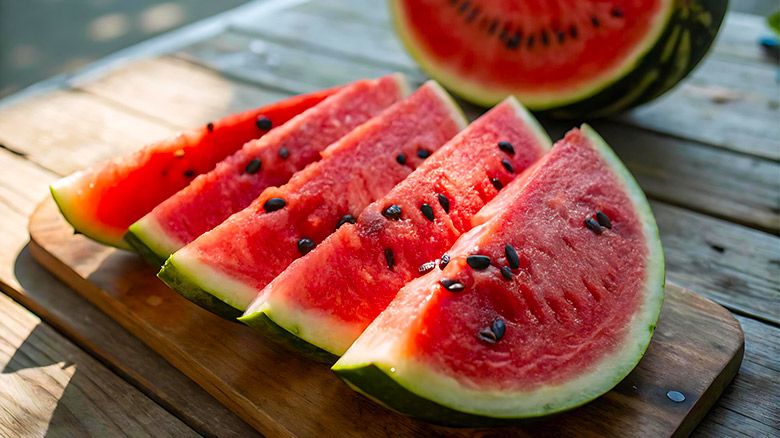
🍉 Watermelon, a true gift from Mother Nature.
In Ayurveda, watermelon (known as Kalinga or Tarbooj) is considered a highly hydrating and cooling fruit that perfectly balances excess Pitta and Vata doshas, especially in summer. It is known for its sweet, heavy, and cooling (shita) nature, which clears internal heat and helps with urinary issues. However, it may increase Kapha if overeaten.
The Watermelon is rich in essential minerals, which we refer to as Kshar, and its abundant water content makes it a fruit of considerable substance. Therefore, it is considered heavy to digest. With this wisdom, we advise against consuming it late in the evening or immediately following your main meals. Indeed, it is a general principle in Ayurveda that fruits should be eaten as a standalone meal or at least an hour before or after your principal meals (lunch or dinner).
Regarding its effect on agni, our digestive fire, watermelon may lead to increased acid production due to its heavy nature, this is quite distinct from the burning heat generated by spices like chilies or black pepper, which can directly irritate the delicate mucosal lining of the stomach. The acidity from watermelon arises from its prolonged digestion, which, when consumed in excess or at inappropriate times, can lead to indigestion, fermentation, and a feeling of bloating or gas.
What our Acharyas mentioned about watermelon:
“In Ayurveda, food is medicine and medicine is food – when we understand the subtle science of how nature nourishes us.“
Our Acharyas understood this thousands of years ago, hence defined the watermelon’s ayurvedic properties and benefits, laid guidelines on how to eat and when not to eat, etc.
कलिंद ग्राही द्रुक पित्त शुक्रहृत शितलं गुरु । पक्वंतु स उष्ण स क्षार युक्त पित्तलं कफ वात जित ।।
(आचार्य भावमिश्र लिखित भावप्रकाश संहिता खंड २)
अर्थात:
यह श्लोक तरबूज (Kalind/Tarbooj) के आयुर्वेदिक गुणों का वर्णन करता है।
कच्चा तरबूज:
– मल को रोकता है (Constipating)।
– आँखों (दृष्टि) के लिए हानिकारक हो सकता है (impairs eyesight) ।
– वीर्य को कम करने वाला या शुक्र के लिए अहितकर।
– तासीर में ठंडा और पचने में भारी होता है (heavy to digest) ।
पका हुआ तरबूज):
– गर्म तासीर का होता है (heat-producing) ।
– इसमें क्षारीय गुण होते हैं, जो पाचन में सहायक होते हैं (easy to digest) ।
– यह पित्त दोष को बढ़ाता है।
– यह कफ और वात दोष को नष्ट करता है, यानी उन्हें संतुलित करता है।
निष्कर्ष:
आयुर्वेद के अनुसार, तरबूज को पूर्ण रूप से पकने के बाद ही खाना चाहिए, क्योंकि पका हुआ तरबूज कफ और वात दोषों को ठीक करने वाला होता है, जबकि कच्चा तरबूज स्वास्थ्य के लिए भारी और अहितकर माना गया है।
🏃♂️ Energetic Profile of watermelon:
- Rasa (Taste): Madhura (Sweet) – Nourishes body tissues (Dhatus) and builds strength.
- Virya (Potency): Shita (Cold) – Acts as a natural refrigerant to counter sunstroke and fever.
- Vipaka (Post-digestive effect): Madhura (Sweet) – Continues to soothe the system after digestion.
- Guna (Qualities): Guru (Heavy) and Drava (Moist/Liquid) – While hydrating, its heaviness can challenge a weak digestive fire (Agni).
🤞 Dosha Impact on ripe watermelon:
- Pitta Dosha: Ripe watermelon is most beneficial for balancing Pitta. Due to its Madhura (sweet) taste and Shita (cold) potency, it acts as a natural refrigerant that calms internal heat, acidity, and inflammation.
- Vata Dosha: While its hydrating and sweet qualities can be soothing, it’s heavy in nature and cold potency can potentially aggravate Vata if consumed in excess or at the wrong time (such as late at night).
- Kapha Dosha: Because watermelon is heavy and mostly liquid, it can increase Kapha. Individuals with a Kapha-dominant constitution or those with weak digestive fire (Agni) should consume it in moderation to avoid mucus formation or sluggish digestion.
✨ Ayurvedic Properties & Benefits of Watermelon:
- Cooling (Pitta Pacifier): Excellent for summer, as it reduces internal body heat and calms skin issues like acne.
- Diuretic: Known as a mutravirechaniya (supports urination), easing burning sensations in the urinary tract. It is excellent for relieving burning sensations during urination and flushing out toxins from the kidneys and bladder.
- Digestive Action: Highly hydrating and easily digestible for many.
- Heart Health: Contains Citrulline, which converts to L-arginine, helping to dilate blood vessels and improve circulation.
- Skin Hydration: High Vitamin-C and antioxidant levels help repair sun-damaged skin and reduce acne.
- Helps in menopause: Watermelon has a lot of water, about 92%. This makes it a great choice for staying hydrated. This is especially important during menopause. Hormonal changes during this time can cause dehydration, hot flashes, mood swings, and perimenopause bloating.
🖥️ Modern Watermelon Nutritional Validation:
Ayurvedic wisdom aligns perfectly with modern science:
- 92% water content – validates its hydrating properties
- Lycopene – supports the heart-protective qualities mentioned in texts
- Citrulline – explains its diuretic and circulation benefits
- Vitamin C & A – support the immune and skin benefits
🌿 Ayurvedic Guidelines for Consumption of Watermelon:
- Eat Alone: Ayurveda strongly suggests eating watermelon alone and not mixing it with other foods (especially dairy or grains) to avoid fermentation in the stomach and digestive discomfort.
- Best Time: Best consumed in the daytime during summer. Daily the best time to consume watermelon is rather morning time or around 5 pm (after three hours of lunch and before two hours of dinner).
- Serving Tips: To enhance digestion and counteract potential coldness, consider sprinkling digestive spices like roasted cumin or ginger powder.
- Quantity: 1/2-1 cup of fresh watermelon juice is generally recommended.
🚫 Crucial Precautions & “Viruddha Ahara”:
- If you have a very cold, heavy, or Kapha-dominant constitution, eat it in moderation.
- If you suffer from consistent constipation or poor digestion, watermelon might slow down your system further.
- Avoid Late-Night Consumption: Ayurveda strictly forbids eating heavy, watery fruits like watermelon at night. During the night, our Agni (digestive fire) is naturally low. Eating cold, heavy fruit can lead to Ama (toxin) formation and severe gastric distress.
- Incompatible Combinations (Viruddha Ahara): Never have milk or dairy after watermelon. Milk is a laxative while watermelon is a diuretic; together they create a “clash” in the stomach that disrupts the body’s tissues.
- Beware of Adulteration: There are rising concerns about watermelons being injected with erythrosine (red dye) or saccharin (sweetener). Always buy from trusted sources and wash the rind thoroughly before cutting.
- Freshness is Key: Never eat watermelon that has been cut and left open for more than 30 minutes, as its high sugar and water content make it a breeding ground for rapid bacterial growth.
👍 Signs of Proper vs Improper Consumption of Watermelon:
- Proper consumption shows:
- Increased energy and alertness
- Better hydration and skin glow
- Comfortable digestion
- Regular and clear urination
- Improper consumption causes:
- Bloating and heaviness
- Loose stools
- Increased mucus production
- Disturbed sleep patterns
⚠️ A Grave Warning: The Family Tragedy*
We must address the heartbreaking news reported, in South Mumbai’s area, where four members of the family, tragically passed away maybe after consuming watermelon late at night 1:30 AM that had been kept in their house. By early morning, all four experienced severe vomiting and diarrhea, leading to rapid neurological decline and death. While forensic investigations are ongoing, suggesting a potent toxin or chemical contaminant might have been involved.
🩺 Doctor’s Recommendation:
Watermelon, when consumed according to Ayurvedic principles, serves as both food and medicine. Remember, even the most beneficial substance becomes harmful when consumed improperly.
Enjoy your watermelon between 10:00 AM and 5:00 PM when the sun and your digestion are at their peak. Stay safe, stay hydrated, follow ayurveda principles and respect the laws of nature.
Watch my video on properties of water melon and Ayurveda’s principles to consume watermelon
Disclaimer:
This blog information is for educational purposes only. Always consult with a qualified Ayurvedic practitioner or healthcare provider for personalized dietary advice.
*As per media report.
Share this post: