Medical Advisory: The Safety Profile of Ashwagandha (Withania somnifera)
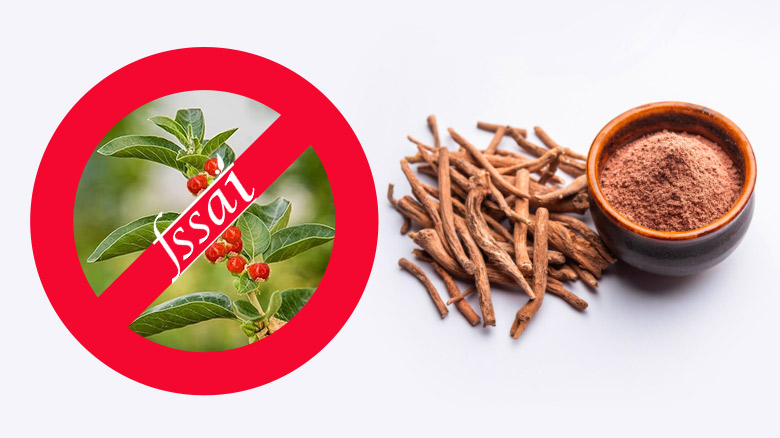
The Ministry of AYUSH, in coordination with the FSSAI (Food Safety and Standards Authority of India), has issued a serious directive prohibiting the use of Ashwagandha leaves in food, nutraceuticals, and medicinal formulations. As practitioners of evidence-based Ayurveda, we wholeheartedly welcome this decision, and we are thankful to FSSAI and Ministry of Ayush for immediately implementing such a bold directive.
The Scriptural Basis: Roots vs. Leaves
In the traditional Ayurvedic compendiums (Samhitas), Ashwagandha is classified as a Rasayana (rejuvenative) specifically through its roots. Our ancient Acharyas meticulously detailed the therapeutic potential of the root, while intentionally omitting the leaves for medicinal use and internal consumption. Modern clinical trials and pharmacological studies have repeatedly validated the safety and efficacy of the Ashwagandha root, validating the observations made by our Acharyas thousands of years ago.
The Commercial Pitfall: Why Ashwagandha Leaves Entered the Market
The inclusion of leaves in modern supplements was driven by commercial feasibility rather than therapeutic safety.
- The Active Molecule: The primary active compounds in Ashwagandha are Withanolides.
- The Extraction Reason: While these molecules are present in both the roots and the leaves, processing the leaves is significantly cheaper and faster for large-scale manufacturers than harvesting and processing the dense roots.
The Toxicological Reality: Withaferin A
The fundamental danger lies in the chemical composition of the leaf versus the root.
- The Toxicity of Leaves: Ashwagandha leaves contain a high concentration of Withaferin A. In large quantities, this compound is known to be hepatotoxic (toxic to the liver), neurotoxic (toxic to the nerves and brain), and can cause severe gastric ulcerations.
- The Safety of Roots: Conversely, the roots contain only trace amounts of Withaferin A. Furthermore, the natural harmonious compounds found within the root matrix effectively neutralize any potential toxicity, making it safe for long-term human use.
Nature’s Instinct: A Lesson from the Field
Interestingly, traditional farming practices have long recognized this toxicity. Indian farmers traditionally plant Ashwagandha trees along the periphery of their fields as a “bio-fence.” Animals instinctively avoid consuming the leaves due to their toxic nature, thereby protecting the inner crops. If nature has equipped animals with the instinct to avoid these leaves, it is a clear biological warning that we, as humans, must listen and also should have avoided.
The Rigor of Shodhana (Purification)
In the Ayurvedic tradition, we recognize that nature provides both nourishment and potent bio-active substances that require careful handling. Acharyas have clearly identified specific herbs, such as Bhallatak (Semecarpus anacardium) and Vatsanabha (Aconitum ferox), as potentially toxic in their raw state.
These herbs are never used directly. They must undergo a rigorous, multi-stage process of Shodhana. This is not merely “cleaning”; it is a sophisticated medicinal process designed to:
- Neutralize or “wash out” specific toxic compounds.
- Enhance the therapeutic bioavailability of the herb.
- Ensure the herb is converted from a potential poison into a potent life-saving medicine.
Our ancient texts provide clear marking – physical and chemical indicators -to confirm when the purification is complete and the toxicity has been successfully removed.
The Safety Net: Antidotes and Monitoring
Ayurveda is a science of contingencies. For every potent herb used, the Samhitas have detailed specific antidotes and management protocols. These are used to immediately counteract any unforeseen side effects that may arise due to individual patient sensitivity or environmental factors.
Ancient Medical Ethics and “Informed Consent”
Perhaps most impressive is the ethical practices established over 3,000 years ago. In those ancient times, the practice of medicine was governed by strict health and ethical codes:
- Patient Counselling: The Vaidya (physician) was duty-bound to inform the patient of the nature of the medicine.
This indicates that “Informed Consent” and “Regulatory Error ” were integral to Indian medicine millennia before they were collated in modern Western medical ethics.
Ayurveda has clearly defined about the use of different part of the plants for health benefits.
- Leaves: The Purifiers
Leaves are often rich in chlorophyll and volatile oils, making them excellent for detoxification and respiratory health.
- Neem (Azadirachta indica): Known as the “Village Pharmacy,” its leaves are intensely bitter taste in mouth. They are used to purify the blood, treat inflammatory skin conditions, and manage blood sugar levels due to their potent anti-microbial properties.
- Adulsa (Vasaka): The primary herb for respiratory health. Its leaves contain vasicine, which acts as a powerful bronchodilator and expectorant, helping to clear phlegm in cases of asthma and bronchitis.
- Fruits: The Restoratives
Fruits often contain the highest concentration of nutrients, organic acids, and Vitamin C.- Bel (Aegle marmelos): The fruit is a specific remedy for the digestive tract. While the ripe fruit is a laxative, the unripe or dried fruit is highly effective at binding the stool and treating chronic diarrhoea or dysentery.
- Triphala: A legendary formulation consisting of three fruits: Amalaki (Gooseberry), Bibhitaki, and Haritaki. Together, they act as a balanced Rasayana (rejuvenator) that regulates the bowel, detoxifies the liver, and supports eye health.
- Bark: The Protectors
Bark is the “shield” of the tree and often contains high concentrations of tannins and minerals.
- Arjuna (Terminalia arjuna): This is the premier herb for the heart. The bark is rich in Coenzyme Q10 and calcium, helping to strengthen the cardiac muscles, improve circulation, and maintain healthy blood pressure.
- Varuna (Crataeva nurvala): Specifically used for the urinary system. It is a natural “litholytic” herb, meaning it helps break down and prevent the recurrence of kidney and bladder stones.
- Seeds: The Metabolic Igniters
Seeds are the “essences” of the plant, often rich in essential fatty acids and digestive stimulants.
- Jeera (Cumin): A fundamental digestive stimulant (Deepana/Pachana). It kindles the -digestive fire (Agni), reduces bloating, and aids in the absorption of nutrients.
- Sesame (Til): Highly valued for its heavy, warming quality. It is used to nourish the nervous system, strengthen bones (high calcium), and as a base for many Ayurvedic medicinal oils.
- Roots: The Grounding Stabilizers
Roots are the foundation of the plant and are typically used for strength, stamina, and hormonal balance.
- Ashwagandha (Withania somnifera): As discussed, only the roots are used for internal health. They act as an adaptogen, helping the body manage stress, improving sleep quality, and building physical muscle mass.
- Erand (Castor/Ricinus communis): The root of the castor plant is a powerful “Vata-hara” (Vata-balancer). It is used to treat deep-seated inflammatory pain, sciatica, and joint stiffness. Castor oil comes from the seeds and is a powerful laxative.
Summary Table
| Parts | Herb | Primary Function |
| Leaves | Neem and Adulsa | Detoxification and Respiratory clearing |
| Fruits | Bel and Triphala | Digestive regulation and Rejuvenation |
| Bark | Arjuna and Varuna | Cardiovascular and Renal support |
| Seeds | Jeera and Sesame | Digestion and Nerve/Bone nourishment |
| Roots | Ashwagandha and Erand | Strength, Stress relief and Joint health |
Clinical Conclusion
Products using Ashwagandha leaves can give toxic side effects and used to tarnish Ayurveda for the fact which was never said by Ancient Scientists (Rishi- Munis)
When you receive an Ayurvedic formulation from a certified physician, you are not just receiving “herbs.” You are receiving the end product of a 3,000-year-old safety practices that balances potent healing with rigorous ethical responsibility. We advise all patients to verify that their Ashwagandha supplements are derived exclusively from the root. The pursuit of wellness should never come at the cost of safety.
*16 Apr 2026 | FSSAI | Advisory on non-use of ashwagandha leaves in crude or extract or any other form in food products
Share this post: